

China's PPI Sees First Growth in Over Three Years at 05%
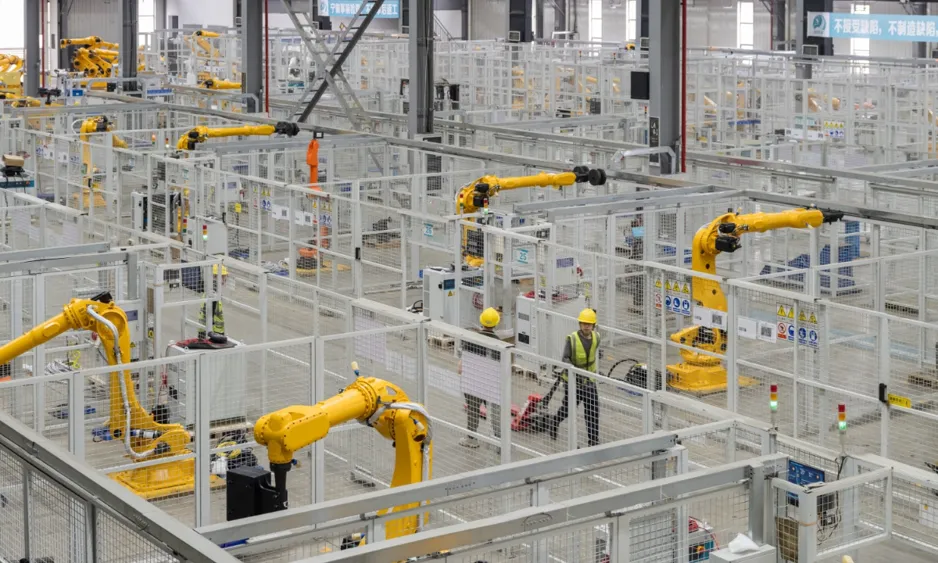
China's Producer Price Index (PPI) rose by 0.5 percent year-on-year in March, marking its first increase in over three years. This uptick represents a significant turnaround from the 0.9 percent decline observed in February, indicating a potential recovery in the nation's production sector, as reported by the National Bureau of Statistics (NBS) on Friday.
Dong Lijuan, a statistician at the NBS, highlighted that the increase in PPI can be attributed to imported inflationary pressures coupled with enhanced supply-demand dynamics in various domestic industries. These factors have played a crucial role in reversing the previous trend.
Notably, prices in the mining and processing of non-ferrous metal ores surged by 36.4 percent year-on-year in March, a substantial increase of 6.2 percentage points from February. Concurrently, prices for the smelting and processing of non-ferrous metals experienced a rise of 22.4 percent, up 0.3 percentage points from the prior month.
In the sphere of petroleum and natural gas extraction, there was a remarkable recovery from a 12.9 percent decline in February to a 5.2 percent increase in March. In contrast, prices for the processing of petroleum, coal, and various fuels saw a reduction of 4.5 percent, while those for raw chemical materials and chemical products dropped by 0.3 percent. However, both sectors' rates of decline narrowed, indicating improved conditions.
Dong further commented on the prevailing supply and demand circumstances, which have collectively influenced price adjustments in the market. This has led to greater orderliness in market competition, with prices for photovoltaic equipment and lithium-ion batteries increasing by 5.2 percent and 2.5 percent, respectively.
Emerging growth drivers are also contributing to the positive shift in industrial prices. The acceleration of AI and the increasing demand for computing power have particularly impacted optical fiber manufacturing, where prices have soared by 76.1 percent. Additionally, external storage devices and specialty electronic materials saw price rises of 21.1 percent and 18.7 percent, respectively.
The ongoing green transition is another critical aspect, with prices in the biomass fuel processing sector rising by 6.1 percent and those for the comprehensive utilization of waste resources seeing a 0.9 percent increase. This reflects a shift towards sustainable practices within the industry.
According to Li Changan, a professor at the Academy of China Open Economy Studies, while international commodity prices have played a role in boosting the PPI, the shift also underscores a gradual recovery in the domestic industrial market. This evolution corroborates the efficacy of various government policies aimed at fostering a unified national market.
The NBS data released on the same day indicated that China's consumer price index (CPI) increased by 1 percent year-on-year in March, with the core CPI—excluding food and energy prices—rising by 1.1 percent. This statistic suggests that inflation remains at a manageable level.
Yang Delong, chief economist at Shenzhen-based First Seafront Fund, noted that the CPI growth reflects a gradual recovery in domestic demand, crucial for bolstering economic growth and consumer confidence. The Chinese government is expected to maintain proactive macroeconomic policies to support concurrent recoveries in both CPI and PPI.
Furthermore, the National Development and Reform Commission (NDRC) has recently announced the allocation of 62.5 billion yuan ($9.15 billion) in ultra-long special treasury bond funds aimed at bolstering consumer goods trade-ins in 2026, which should further enhance economic stability.
Read These Next

Ireland's Fuel Protests Amid Rising Energy Costs
Protests against fuel prices in Ireland highlight deep frustrations over rising costs linked to geopolitical conflicts. The government faces challenges in addressing public dissent while ensuring economic stability.
China Actively Promotes Compliant Rare Earth Trade Globally
China emphasizes global supply chain stability in rare earth trade, assuring cooperation and regulatory compliance amid US dialogue.

Shenzhen Railway Launches New Schedule to Boost Bay Area Integration
Shenzhen railway will implement a new train schedule on April 15, enhancing connectivity and travel for the Greater Bay Area.