

China US Trade Talks Update Insights and Key Developments
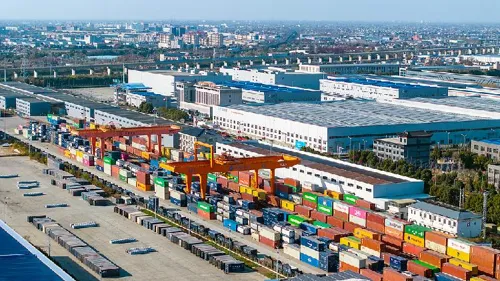
The ongoing trade discussions between China and the United States have yielded preliminary agreements despite existing tensions, underscoring the significant need to maintain trade relations between the two major economies.
Li Chenggang, the Chinese international trade representative and vice minister of commerce, announced a 'preliminary' consensus reached by both nations. He also reiterated China's firm opposition to the US Section 301 investigation, which targets various trade practices.
In a parallel comment, US Treasury Secretary Scott Bessent conveyed that the United States does not intend to 'decouple' from China, even as it seeks to prioritize the return of 'strategic industries' to American soil. Both nations are also considering the formation of a working mechanism aimed at enhancing bilateral trade and investment.
One noteworthy observation is that the US had initiated Section 301 investigations against China just prior to the talks, alleging concerns such as 'overcapacity' and 'forced labor.' This approach of 'talking while striking' illustrates the contrasting views within the US regarding how to manage its relationship with China.
Additionally, with escalating tensions in the Middle East contributing to global energy crises and economic uncertainty, the willingness of China and the US to engage in dialogue sends a positive message, fostering stability amidst tumultuous times.
Looking ahead, it appears that China-US relations may evolve towards a framework of 'managing through friction.' Observers are keenly anticipating the outcomes of forthcoming state-level interactions as important indicators of the trajectory of these relations.
It is also vital for China to maintain an inward focus. Efforts such as the 15th Five-Year Plan, advancing new quality productive forces, ensuring energy security, pursuing technological self-reliance, and enhancing domestic demand will hinge significantly on China's own initiatives.
Read These Next

Oil Prices Climb Amid Iran Tensions
Rising oil prices attribute to geopolitical tensions in the Middle East, particularly between Iran and its Arab neighbors. Analyzing market signals, corporate strategies, and macroeconomic implications provides insight into potential future trajectories for energy investors.
Middle East Tensions Disrupt Global Supply Chains
Geopolitical tensions in the Middle East disrupt global supply chains, affecting agriculture and industry, urging companies to adapt.

Unilever and Kraft Heinz Explore Merger to Unite Ketchup and Mayonnaise
Unilever and Kraft Heinz are discussing a merger of their ketchup and mayo businesses to boost efficiency and competitiveness.