

China Unveils First Fully Autonomous Humanoid Tennis Robot
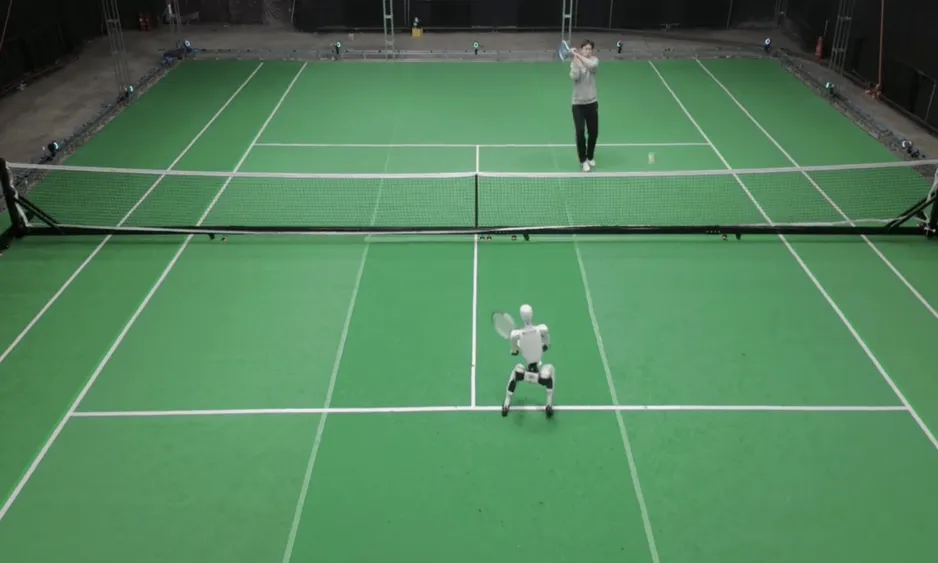
A robotics team from Beijing has unveiled what is being hailed as the world's first fully autonomous humanoid tennis robot. This innovative development marks a significant leap in the integration of robotics technology and artificial intelligence in sports, transitioning from mere assistance to creating a capable adversary on the court.
A video demonstrating the humanoid robot in action was shared on social media platform X, capturing widespread attention. Notably, billionaire entrepreneur Elon Musk reposted the footage, adding a succinct comment of approval, which contributed to an impressive tally of 8,600 likes and sparked further dialogue around the advancements in robotics.
The humanoid tennis robot, developed by Galbot, showcases sophisticated capabilities, including rapid adjustment of footwork and precise coordination between upper and lower body movements to execute swings. The robot's ability to return shots with accuracy across designated targets was highlighted in a statement by Galbot, emphasizing its adaptability in diverse match situations.
The dynamic nature of tennis, characterized by high-speed balls and unpredictable trajectories, underscores the robot's advanced real-time perception and decision-making abilities. As detailed by the company, the robot is adept at responding to evolving play rhythms, indicating its proficiency in managing the complexities of this fast-paced sport.
Perhaps most impressively, the humanoid tennis robot has achieved this level of performance not through pre-programmed routines, but via deep reinforcement learning. This novel approach signifies a substantial milestone, showcasing the robot's capability to engage in high-dynamic rallies, marking a shift from mechanical replication to intelligent response systems.
Tennis is often regarded as one of the greatest challenges for humanoid robots, and Galbot has crafted a cutting-edge, full-body intelligent control algorithm specifically tailored for the sport. This allows the robot to maintain stability and responsiveness even during intense rallies, successfully traversing an entire court and making accurate shots against varied opponents.
In a parallel development, Galbot introduced LATENT, a new research framework for robot motor learning which facilitates the acquisition of complex movement skills from imperfect human motion data. This framework enhances the humanoid robot's ability to deliver dynamic tennis strokes and sustain extended play, pushing the frontiers of embodied intelligence.
Experts in China assert that this breakthrough signals a substantial movement towards validating embodied artificial intelligence in real-world environments. By using tennis as a benchmark, they indicate that the evolution is leading to smarter, decision-driven systems that seamlessly combine perception, planning, and execution.
Beijing-based internet analyst Liu Dingding commented on the potential implications of this technological leap, suggesting that humanoid robots may soon find applications in households and various industries, including agriculture and manufacturing, as their capabilities evolve to manage complex tasks.
According to Liu, this innovation not only represents a significant advancement for robotics but also reflects positively on China's manufacturing and technology sectors. He noted the potential for far-reaching impacts as improvements in dynamic control and adaptive learning techniques could lower training costs and promote scalability across industrial, automation, and service applications.
Read These Next

Oil Prices Climb Amid Iran Tensions
Rising oil prices attribute to geopolitical tensions in the Middle East, particularly between Iran and its Arab neighbors. Analyzing market signals, corporate strategies, and macroeconomic implications provides insight into potential future trajectories for energy investors.

Middle East Tensions Disrupt Global Supply Chains
Geopolitical tensions in the Middle East disrupt global supply chains, affecting agriculture and industry, urging companies to adapt.

Unilever and Kraft Heinz Explore Merger to Unite Ketchup and Mayonnaise
Unilever and Kraft Heinz are discussing a merger of their ketchup and mayo businesses to boost efficiency and competitiveness.