

China Poised to Meet 2026 GDP Growth Target Says Expert
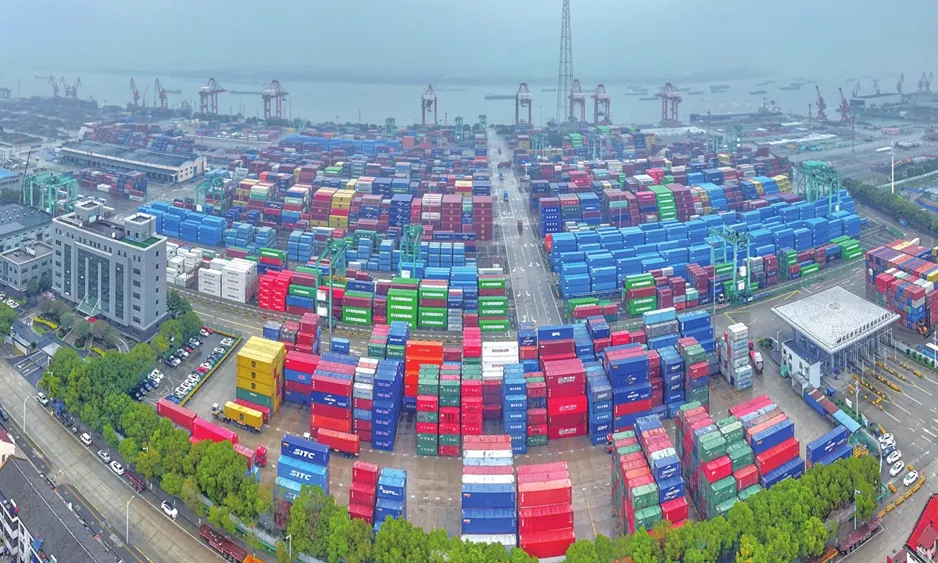
China's ambition to achieve a GDP growth target of 4.5 to 5 percent by 2026 is considered realistic by economic expert Justin Lin Yifu. In a recent discussion, Lin, a member of the 14th National Committee of the Chinese People's Political Consultative Conference and dean at the Institute of New Structural Economics at Peking University, underscored China's robust advantages that underpin this projection.
Lin pointed out that even amid a global economic slowdown, China's contribution to worldwide growth is anticipated to surpass previous levels. He addressed the current geopolitical tensions and technological shifts that have strained the global governance framework, noting the ensuing challenges that these developments pose to economies worldwide.
He expressed confidence in China's resilience, asserting that while smaller economies may struggle in turbulent times, the Chinese economy, likened to a large ship, has the capacity to navigate through challenges by effectively managing its internal dynamics.
Lin identified four major strengths that facilitate this optimism: first, an innovative edge. Traditional sectors in China, which are still catching up, are leveraging a latecomer's advantage that fosters both original innovation and the reinvention of existing technologies.
Secondly, he emphasized the advantage of human capital, highlighting China's substantial talent pool, which produces over five million graduates in science, technology, engineering, and mathematics (STEM) each year. This educational foundation is pivotal in counterbalancing the anticipated demographic challenges posed by an aging population.
Additionally, he noted the immense scale of the domestic market as a third advantage. With the world's largest consumer base and a comprehensive industrial ecosystem, China is well-positioned to foster new technological initiatives and enhance industrial continuity.
Lastly, Lin pointed to China's institutional framework, which enables effective market utilization and government intervention when necessary. This capability allows it to address challenges in technological innovation and industrial enhancement seamlessly.
In alignment with its goal to stabilize and grow economically, the Chinese Government aimed for a growth rate of 4.5 to 5 percent, which reflects both the aspiration for progress and the management of associated risks.
Lin acknowledged the global economy's challenges yet asserted that China is poised to sustain approximately 30 percent of global economic growth moving forward, bolstered by its unique advantages and conditions.
Furthermore, he discussed the evolving landscape of global commerce, indicating shifts in trading partnerships, particularly the transition from the U.S. being China's largest trading partner to ASEAN assuming that role. This change signifies robust regional collaboration amid global uncertainties.
As an advocate of globalization, China aims to contribute positively to international economic dynamics via initiatives like the Belt and Road Initiative, which seeks to improve infrastructure in partner nations and promote cooperative growth.
In closing, Lin reaffirmed China's historical contribution to the global economy, which has averaged around 30 percent of world economic growth annually since 2008, with expectations of even higher contributions in the near future.
Read These Next

Oil Prices Climb Amid Iran Tensions
Rising oil prices attribute to geopolitical tensions in the Middle East, particularly between Iran and its Arab neighbors. Analyzing market signals, corporate strategies, and macroeconomic implications provides insight into potential future trajectories for energy investors.

Middle East Tensions Disrupt Global Supply Chains
Geopolitical tensions in the Middle East disrupt global supply chains, affecting agriculture and industry, urging companies to adapt.

Unilever and Kraft Heinz Explore Merger to Unite Ketchup and Mayonnaise
Unilever and Kraft Heinz are discussing a merger of their ketchup and mayo businesses to boost efficiency and competitiveness.