

Humanoid Robot Half-Marathon Announced as China's Robotics Grows
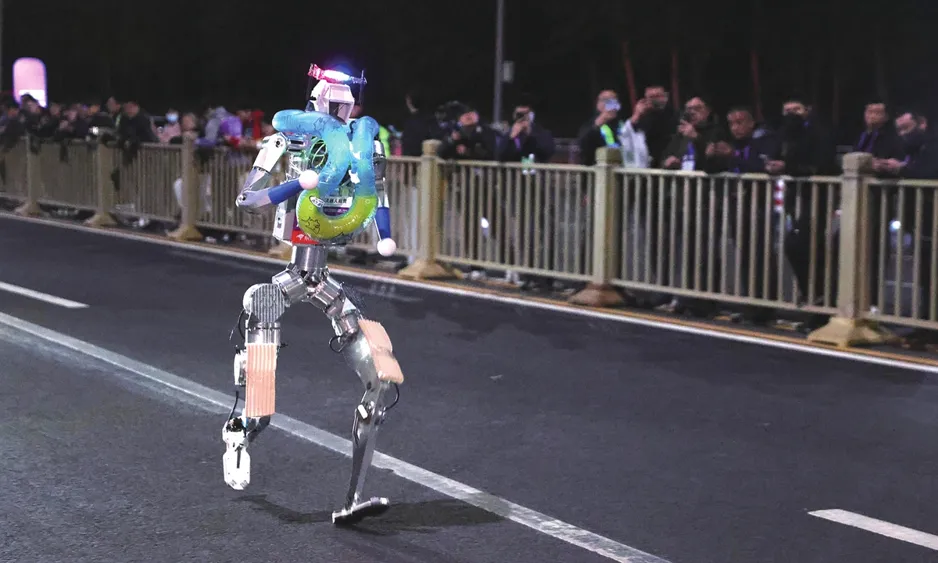
The vibrant city of Beijing is set to showcase its advancements in robotics with the highly anticipated humanoid robot half-marathon. Scheduled for April 19 in the Beijing Economic-Technological Development Area (E-Town), this event emphasizes the significant strides made in humanoid robotics, particularly in autonomous technology and its potential commercial applications.
As dusk settles upon the city, a unique set of athletes prepares for the race. This weekend, humanoid robots engaged in adaptive training, simulated real-world scenarios to familiarize themselves with the competition route. In a striking display, these machines, rather than human runners, took to the track under the cover of night.
The training drill aimed to replicate the full race experience, covering aspects such as route navigation, coordination, and emergency response. Local authorities reported that over 70 teams participated, including four international competitors, testing both autonomous and remote-controlled robots during this preparatory event.
Entering its second year, this event is recognized as the world's first humanoid robot half marathon. Last year's inaugural competition saw the Tien Kung Ultra robot, created by China's National and Local Co-built Embodied AI Robotics Innovation Center, finish first with a time of approximately 2 hours and 40 minutes.
Experts note a heightened anticipation surrounding this year's race, driven by notable breakthroughs in embodied artificial intelligence. Since the beginning of 2026, advances in AI have captivated public attention, showcased through diverse performances and synchronized demonstrations by several companies, including Unitree Robotics.
Recent footage from CCTV News illustrates the impressive agility of these robots, as they sprint off the starting line at the sound of a command, with engineers and staff trailing behind on electric carts or motorcycles to keep pace. One robot particularly stood out, gracefully navigating turns and sprinting to catch up with a rival.
On social media platforms, videos highlight the distinct designs of the competing robots, with variations in size, stride frequency, and arm movement utilized for maintaining balance. Some humanoid models closely imitate human running styles, leaning forward with rhythmic arm swings.
For the 2026 event, participation has surged, with the number of teams growing nearly fivefold, surpassing 100 teams, and approximately 40 percent competing in the autonomous navigation category. This increase reflects a vibrant interest in robotics and its practical applications.
The introduction of autonomous technology is a pivotal focus of this year's race, presenting both opportunities and challenges. Navigating complex environments requires robots to process real-time data and make immediate decisions, placing significant demands on their computational abilities.
Competition rules have been updated to better favor autonomous systems, with autonomous teams ranked by their actual completion time, while remote-controlled teams incur a penalty. This regulatory shift indicates a clear move toward promoting full autonomy and innovation in this technology.
As Chen Jing, vice president of the Technology and Strategy Research Institute, explained, this evolution in guidelines signifies a crucial transition for embodied AI from laboratory settings to practical applications as autonomous agents capable of thriving in uncontrolled environments.
The challenges of long-distance running also test the limits of robotic endurance, energy management, and dynamic balance, which are critical for success in this marathon setting. Some teams forecast that advancements in technology could soon enable humanoid robots to match the finishing times of elite human runners, highlighting the potential for industry innovation.
Read These Next

Jiangsu Lianrui's Strategy to Hedge Currency Risks
This commentary analyzes Jiangsu Lianrui New Materials Co., Ltd.'s annual report, focusing on its expansion of overseas operations and proactive hedging strategies, while examining the inherent risks and broader economic trends.
China NEV wholesale set to grow 13% to 173 million units by 2026
China's wholesale sales of new-energy vehicles expected to grow 13% this year, driven by advances in self-driving tech and global expansion.

Fitch Warns Saudi Banks May Stop Growth Amid Iran Conflict
Fitch warns that ongoing Iran-Saudi conflict could stall Saudi banking growth and dividends, raising concerns for regional stability.