

China NEV wholesale set to grow 13% to 173 million units by 2026
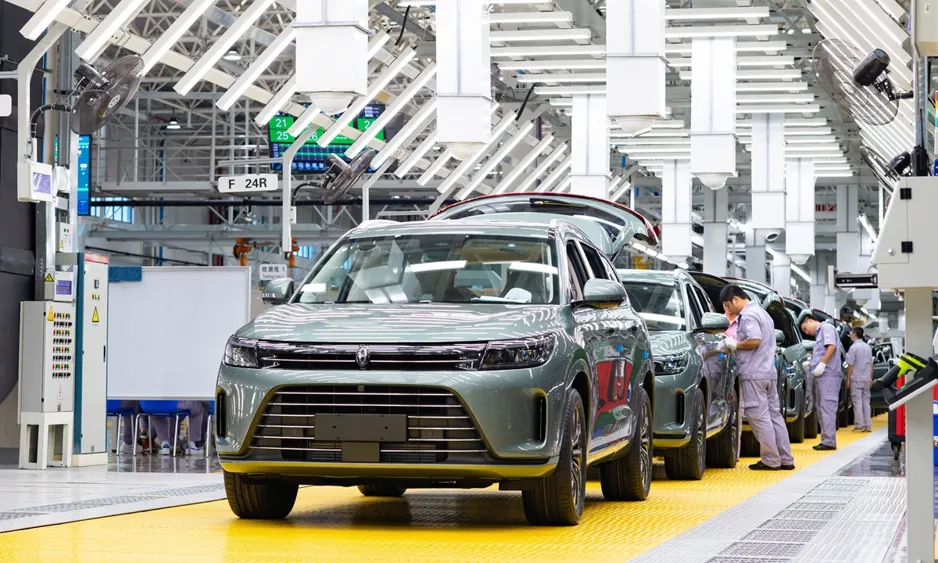
China's wholesale sales of new energy vehicles (NEVs) are forecasted to grow by 13 percent year-on-year, reaching an impressive 17.3 million units by 2026, driven primarily by advancements in self-driving technology and the ongoing global expansion of the market, as reported by Cui Dongshu, secretary-general of the China Passenger Car Association (CPCA). This positive outlook was shared at the 2026 Intelligent Electric Vehicle Development Summit Forum.
In conjunction with NEVs, Cui projected that total wholesale sales of automobiles across China would reach approximately 34.8 million units by the end of this year, marking a modest year-on-year growth of 1 percent. These insights were further confirmed during his conversation with the Global Times.
Cui highlighted a notable surge in exports of both fuel-powered and NEV passenger vehicles from China, with records set in March. This increase underscores the strengthening global competitiveness of China's automotive industry and the robust international demand for its vehicles.
According to data from the China Association of Automobile Manufacturers (CAAM), China's automobile production in the first quarter of this year reached 7.04 million units, while the sales slightly outpaced production at 7.05 million units. Within this context, production and sales of new energy vehicles amounted to 2.97 million and 2.96 million units, respectively.
Cui also cautioned about a recent dip in retail automobile sales attributed to the expiration of purchase tax exemptions. He emphasized the need for long-term support measures to invigorate the domestic auto market and unlock its full consumption potential.
Looking ahead, Cui expressed optimism that China's auto market is poised to experience a phase of gradual improvement in the second quarter. He anticipates that the market will maintain a stable trajectory, embracing positive growth in the latter half of the year.
Zhang Xiang, a visiting professor at Huanghe Science and Technology University, echoed these sentiments, forecasting stable and sustainable progress for China's automobile market. He pointed to the possibilities presented by a new round of policy support for trade-in programs, alongside significant potential for increased car ownership juxtaposed with markets in the U.S., Japan, and South Korea.
In a recent announcement, the National Development and Reform Commission (NDRC) revealed it, along with the Ministry of Finance, has allocated a second batch of ultra-long special treasury bond funds totaling 62.5 billion yuan, equivalent to approximately 9.15 billion dollars, aimed at bolstering consumer goods trade-ins in 2026.
Simultaneously, China is making strides in autonomous driving technologies, with the Ministry of Industry and Information Technology issuing permits for electric sedans to utilize Level-3 self-driving functionalities. Zhang noted that significant breakthroughs in this area could substantially enhance the automobile market.
Chinese companies are also ramping up efforts to improve their global competitiveness in autonomous driving. Notably, Pony.ai, a frontrunner in the field, has launched commercial robotaxi services in Zagreb, Croatia, in partnership with local mobility firm Verne and Uber, marking a milestone as Europe's first fully commercial robotaxi service.
Additionally, on March 19, WeRide, another Chinese autonomous technology company, declared a strategic partnership with ELEVATE Slovakia to launch Slovakia's first autonomous driving project, illustrating the dynamic developments within the industry.
Read These Next

Jiangsu Lianrui's Strategy to Hedge Currency Risks
This commentary analyzes Jiangsu Lianrui New Materials Co., Ltd.'s annual report, focusing on its expansion of overseas operations and proactive hedging strategies, while examining the inherent risks and broader economic trends.

Fitch Warns Saudi Banks May Stop Growth Amid Iran Conflict
Fitch warns that ongoing Iran-Saudi conflict could stall Saudi banking growth and dividends, raising concerns for regional stability.

Assessing Stability in Stagnant Capital Structures
Analysis of the company's stability in share capital and its implications for market activity and investor engagement.