

China's Green Power Drives New Industries and Innovations
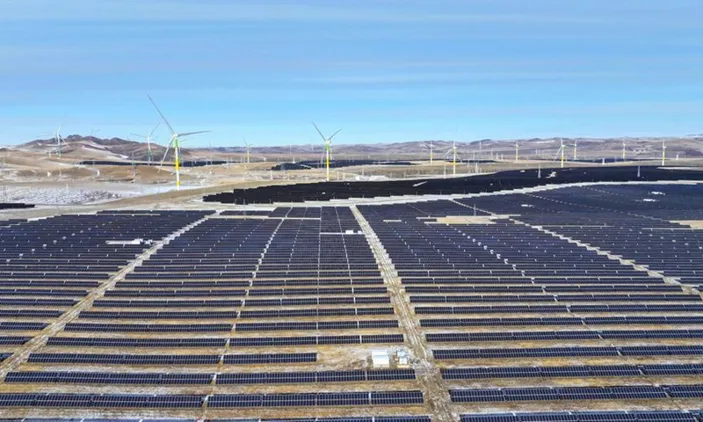
China's shift towards renewable energy is no longer merely a strategy for substituting traditional energy sources but has evolved into a fundamental production factor. This transition is facilitating the evolution of traditional industries while simultaneously powering advanced sectors such as artificial intelligence computing. Consequently, this progression positions China at the forefront of developing both emerging and future industries.
In the Inner Mongolia Autonomous Region, where wind and solar energy resources account for roughly 57 percent and 21 percent of the national total, the local industries are experiencing a significant transformation. This shift reflects a comprehensive green transformation that is expanding the economic landscape while enhancing sustainability.
Holingol, a city in eastern Inner Mongolia, serves as a prime example of this transformation. Once primarily reliant on coal and thermal power for its aluminum smelting processes, the region is now pivoting towards renewable energy. This shift responds to the high energy demands of aluminum production, which traditionally results in substantial carbon emissions.
Today, the ample wind resources of Holingol, capable of generating power for approximately 4,400 hours annually, are being harnessed through sophisticated energy management systems to provide a reliable power supply for industries. Reportedly, the city generated around 6.5 billion kilowatt-hours of green electricity in 2025, translating to a reduction of 5 million tonnes of carbon emissions.
The recent influx of cost-effective green energy, priced between 0.15 and 0.18 yuan per kilowatt-hour, has made the region appealing to numerous enterprises. A notable case is a Guangdong-based aluminum company that has relocated its operations to Holingol, benefiting from the city's strategic advantages in energy resources and pricing.
The establishment of an aluminum industry cluster in Holingol has fostered the development of a comprehensive industrial chain, paving the way for the production of high-value-added products such as battery foil and lightweight materials for automobiles. Here, energy-intensive industries, powered by green electricity, are redefining manufacturing with a focus on sustainability.
Notably, the push for renewable-powered aluminum smelting is being replicated in other regions rich in solar and wind energy. China's 15th Five-Year Plan aims to strategically move high-energy-consuming industries to locales abundant in renewable resources, further driving the green transition across the country.
Moreover, renewable energy is increasingly being utilized for data centers, enhancing high-value computing power. While other nations grapple with the power consumption of AI technologies, China is leveraging green electricity to support AI computing, exemplified by the Horinger data center cluster in Hohhot.
The Horinger cluster, primarily powered by nearby wind farms, houses over 50 data centers and boasts a remarkable computing capacity dedicated largely to AI. This model not only underscores the synergy between green energy and technological advancements but also highlights the economic potential of integrating these elements.
As part of its commitment to sustainability, China is also poised to revolutionize traditional fossil fuel systems through green energy. Initiatives such as the large-scale conversion of variable green electricity into green fuels are being explored, making it compatible with existing infrastructure.
Projects like the zero-carbon hydrogen industrial park in Chifeng underscore this ambition, with the facility expected to produce 320,000 tonnes of green synthetic ammonia annually. Through the use of advanced AI systems, the project illustrates the potential of integrating renewable energy generation with chemical production.
In conclusion, as China progresses with its 15th Five-Year Plan, there remains a concerted effort to expand the green hydrogen industry chain. Projects currently underway aim to enhance the production of green ammonia and methanol, which are pivotal components in the low-carbon fuel landscape and the broader chemical industry.
Read These Next

Jiangsu Lianrui's Strategy to Hedge Currency Risks
This commentary analyzes Jiangsu Lianrui New Materials Co., Ltd.'s annual report, focusing on its expansion of overseas operations and proactive hedging strategies, while examining the inherent risks and broader economic trends.
China NEV wholesale set to grow 13% to 173 million units by 2026
China's wholesale sales of new-energy vehicles expected to grow 13% this year, driven by advances in self-driving tech and global expansion.

Fitch Warns Saudi Banks May Stop Growth Amid Iran Conflict
Fitch warns that ongoing Iran-Saudi conflict could stall Saudi banking growth and dividends, raising concerns for regional stability.