

China's Economy Begins Strong in 2023 Towards Growth Goal

China's economy has commenced 2023 on a positive note, exhibiting signs of resilience and steady growth. This early momentum is fueled by China's structural advantages, including a comprehensive industrial supply chain, an expansive consumer market, and a strong commitment to opening its economy. These factors collectively bolster the stability of China's economic landscape.
Having established itself as the world's second-largest economy, China has set an ambitious growth target of 4.5 to 5 percent for the year, as reported in the Government Work Report. This target reflects the robust foundational elements of the economy and leaves the door open for potentially surpassing expectations.
Targeting a balanced growth rate aims to harmonize economic expansion with quality improvements, which is vital for sustainable social progress and enhancing public welfare. This pragmatic approach, grounded in China's substantial resilience, makes the growth target both realistic and attainable.
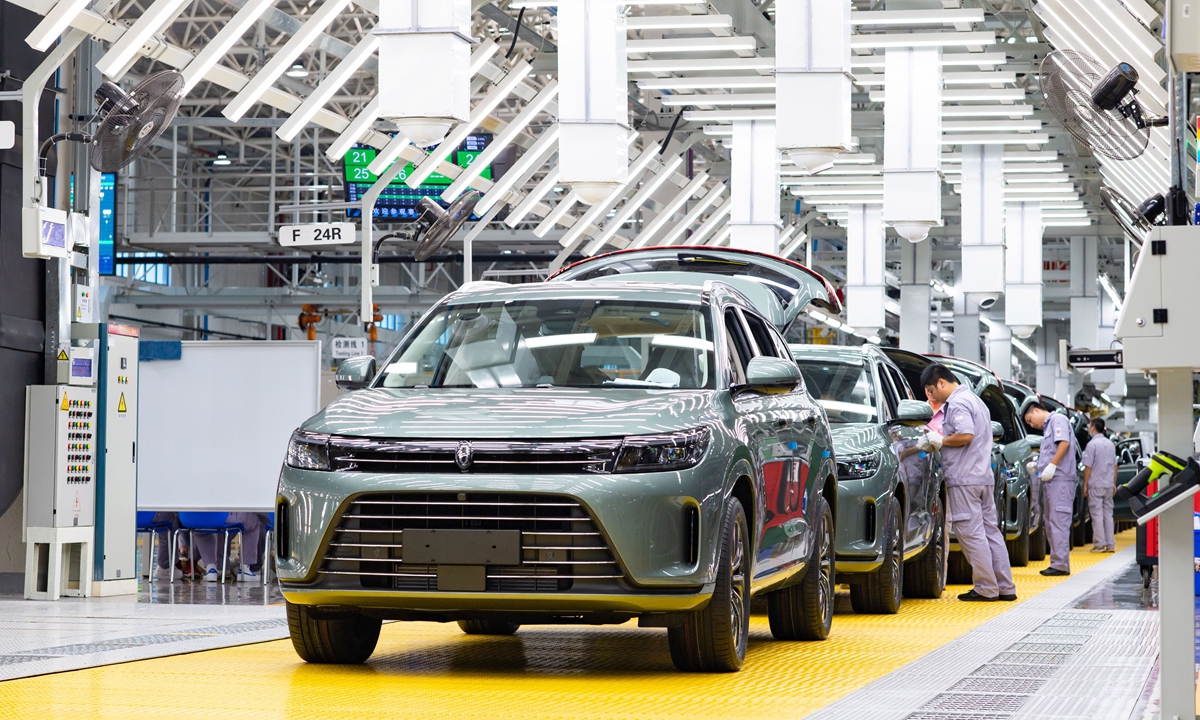
A pivotal factor driving this transformation is China's technological innovation. The country has seen large-scale advancements that have turned clean energy from an exclusive option into a mainstream solution. Significant progress in sectors such as photovoltaics, lithium-ion batteries, and new-energy vehicles has effectively reduced global costs associated with green technologies and electric transportation.
China's emphasis on tech innovation is not only reshaping its economy but also has far-reaching effects globally. By effectively lowering costs, expanding supply, and opening new market opportunities, China is redefining global supply chains and facilitating a dual transition towards green and digital development. Additionally, these advancements are instrumental in bridging the development gap between the Northern and Southern hemispheres.
Over recent years, China's approach to economic openness has evolved. Transitioning from a focus primarily on goods and capital movement, it has adopted a more holistic model emphasizing institutional frameworks, rules, and standards. This shift aims to streamline access, broaden openness, and safeguard legitimate rights and interests, aligning more closely with global standards.
This institutional approach to opening up is evident in various sectors, particularly in foreign investment. The complete liberalization of the manufacturing sector and an increase in openness in the service industry demonstrate this evolution. Moreover, the reduction of the negative list for foreign investment and the increase of zero-tariff products for least developed countries enhance China's engagement with global trade partners.
The high-quality implementation of the Belt and Road Initiative (BRI) presents new worldwide opportunities. In the initial months of this year alone, China-Europe freight services facilitated 3,501 trips, transporting 352,000 standard containers, marking significant year-on-year growth.
Collaborative opportunities with Asian nations are also promising, particularly as they share similar developmental goals and experiences. The partnership between China and ASEAN, for instance, has flourished, contributing to the formation of a pioneering economic region that emphasizes mutual growth.
As the 15th Five-Year Plan (2026-30) approaches, enhanced cooperation between China and ASEAN will focus on critical areas such as institutional opening-up, connectivity, industrial chains, digital and green transitions, and financial security. This strategic approach, in alignment with the China-ASEAN Free Trade Agreement 3.0 and the Regional Comprehensive Economic Partnership, is expected to yield strong growth engines for both parties.
Read These Next

Jiangsu Lianrui's Strategy to Hedge Currency Risks
This commentary analyzes Jiangsu Lianrui New Materials Co., Ltd.'s annual report, focusing on its expansion of overseas operations and proactive hedging strategies, while examining the inherent risks and broader economic trends.
China NEV wholesale set to grow 13% to 173 million units by 2026
China's wholesale sales of new-energy vehicles expected to grow 13% this year, driven by advances in self-driving tech and global expansion.

Fitch Warns Saudi Banks May Stop Growth Amid Iran Conflict
Fitch warns that ongoing Iran-Saudi conflict could stall Saudi banking growth and dividends, raising concerns for regional stability.