

China Announces New Pilot Free Trade Zone in Inner Mongolia
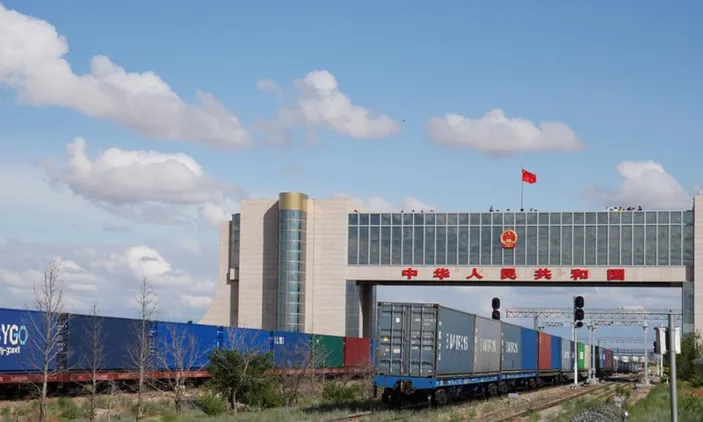
China has announced plans to establish a new pilot free trade zone (FTZ) in the Inner Mongolia Autonomous Region, a move aimed at bolstering economic integration across Eurasia. The State Council's announcement brings the total number of pilot FTZs in the nation to 23, as reported by Xinhua News Agency.
The introduction of the China (Inner Mongolia) Pilot FTZ represents a pivotal element in the advancement of China's comprehensive reform and opening-up policies. This initiative underscores China's commitment to enhancing its FTZ strategy and signifies a robust intention to expand high-level openings while promoting sustainable economic development.
The strategic framework outlined for this new FTZ provides greater autonomy for reform initiatives, stimulating innovative exploration in trade practices. A total of 19 reform and innovation initiatives have been proposed, focusing on cross-border trade enhancement, international logistics improvement, and the efficient application of technological advancements.
Moreover, the establishment of the FTZ is a decisive action taken by China's central authorities, aimed at deepening reform processes, enhancing openness, and driving high-quality growth. The proposed zone is envisioned as a critical regional hub that will serve as a connector between China and international markets.
Plans indicate that the development of infrastructure such as an information exchange center, logistics hub, and centers for resource allocation and technological innovation is a priority. The initiative also emphasizes the importance of green development and ecological protection alongside strengthening national and legal security.
Inner Mongolia plays a significant role as a gateway for China's northern economic expansion, showing promising trade growth figures; in 2025, trade volume rose by 6.4 percent, exceeding the national average. This position further catalyzes its relevance in China's broader economic strategy amid rising global protectionism.
Li Yong, a senior research fellow, emphasized that this initiative sends a clear message about China's commitment to expanded openness through practical measures, aligned with overarching trends to establish new FTZs across the country for tailored local strategies.
As a pivotal location for northward economic engagement, the FTZ aims to evolve into a high-level free trade hub characterized by investment facilitation, innovation support, and robust international collaboration. This transformation aligns with the geographical advantages of Inner Mongolia.
Zhou Mi from the Chinese Academy of International Trade remarked that the initiative seeks to craft a pioneering model of open economy in border areas, focusing on developing markets in Central Asia and the Middle East while enhancing cooperation across diverse sectors including digital economy and tourism.
Further, the FTZ spans an area of 119.74 square kilometers and comprises three specialized subzones designed to advance cross-border trade and strategic industries. Each subzone will target specific sectors to maximize regional developmental potential.
The planned sub-areas will prioritize emerging technologies, cross-border processing, and logistics services, facilitating international medical services and optimizing interactions with neighboring countries as part of the broader China-Mongolia-Russia Economic Corridor.
Ultimately, China's strategy, bolstered by its market strengths and platforms like FTZs, aims to elevate openness and present development opportunities to the global community.
Read These Next

Starmer: "I despair" over Trump and Putin's impact on UK energy
This article discusses British Prime Minister Keir Starmer's concerns regarding the influence of Trump and Putin on UK energy costs, emphasizing the geopolitical factors affecting oil prices and their implications for businesses and consumers. It evaluates the potential for long-term economic stability amidst ongoing international tensions.

UK PM Starmer Meets UAE President in Abu Dhabi Discussions
PM Starmer met UAE President in Abu Dhabi to strengthen UK-UAE economic and political ties, focusing on investment and trade.

罗博特科's Strategic Shift in Semiconductors
A commentary on the recent changes and trends in 罗博特科 and their implications for the semiconductor market.