

Xinjiang Harnesses Renewable Energy for Economic Growth
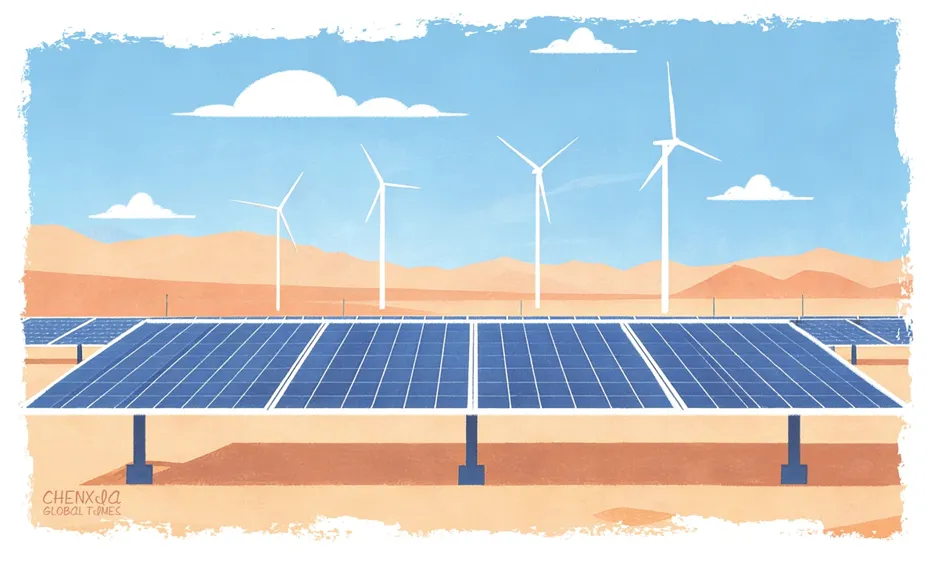
Xinjiang is emerging as a leader in China's renewable energy landscape, leveraging its vast wind and solar resources to stimulate local demand, foster job creation, and promote sustainable practices. This northwest region highlights an essential shift in China's energy strategies, illustrating how harnessing renewable resources can contribute to economic growth.
In contrast to fossil fuels, renewable energy presents a sustainable alternative for economic development. As China increasingly capitalizes on its wind and solar potential, it positions itself not just to meet domestic energy needs but also to drive industrial transformation. Xinjiang stands as a prime example of how local economies can benefit from the green energy sector, serving as a model for other regions seeking to exploit their renewable resources.
The development of Xinjiang's green electricity sector is pivotal in bolstering economic growth through various means. The establishment of numerous renewable energy installations in the area has attracted significant investment and creation of local jobs. These projects not only support substantial infrastructure advances but also enhance employment opportunities for the local labor market.
Furthermore, Xinjiang's renewable energy sources play a crucial role in supporting local industries by providing them with a reliable and affordable energy supply. This stability is vital for energy-intensive sectors, as it allows businesses to invest in operations upgrades and adopt sustainable practices. These shifts align with China's overarching goals of economic optimization and high-quality growth.
Additionally, the expansion of green electricity fosters industrial synergy, innovation, and value addition within the local sectors. The renewable energy projects stimulate economic activity throughout the industrial lifeline—from equipment manufacturing to construction and maintenance services.
The integration of green electricity is also facilitating the embrace of renewable technologies, driving advancements in related sectors such as energy storage and power electronics. This growth enhances Xinjiang's standing within the wider energy technology landscape, indicating a progressive transition towards a more sustainable industrial paradigm.
With wind turbines punctuating the Gobi Desert and the rollout of ultra-high-voltage transmission lines, Xinjiang is transforming its abundant renewable resources into a critical industrial asset. As the region capitalizes on its green energy capabilities, it reinforces China's green energy initiatives while concurrently bolstering its local economy.
In the global context, even as some Western nations leverage fossil fuels for geopolitical advantages, forward-thinking economies increasingly recognize the necessity for a diversified and low-carbon energy future. The traditional supremacy of oil faces significant challenges, and renewable energy is set to assume a larger role in this evolving energy narrative.
From this perspective, the expansion of the renewable energy sector reveals new economic prospects, driving innovation, job creation, and industrial advancement. International collaborations in this sector are being framed around these emerging economic opportunities, elucidating why renewable energy industries in Xinjiang are experiencing vibrant growth.
The development of Xinjiang's green electricity sector also offers opportunities for partnerships with countries involved in the Belt and Road Initiative. Such projects not only deliver green energy solutions but also catalyze industrial upgrades, sharing key insights into sustainable development practices.
Through equipment exports, technical collaboration, and the co-development of renewable energy parks, these initiatives enhance local industries' capabilities for transitioning to low-carbon operations, contributing to greater resilience within energy systems.
For instance, the Akmola wind power cluster in Kazakhstan, funded and built by a Chinese company, is now successfully supplying green electricity to the regional grid, thereby bolstering power availability and facilitating green growth. Similarly, the Buka solar project in Uzbekistan, established by Chinese firms, has been integrated into the local grid, providing a clean power source.
The experience indicates that cooperation in the renewable energy field offers mutual advantages, with significant economic impacts manifesting at both local and global scales. Energy remains an ongoing global priority, and the renewable sector holds substantial potential for fostering economic development.
Read These Next

Financial Transparency Amidst Accounting Corrections
Commentary on a company's accounting corrections and the implications for financial transparency and investor confidence.

Security Council Fails to Adopt Resolution on Strait of Hormuz
On April 7, a UN Security Council resolution on the Strait of Hormuz failed due to member state disagreements, impacting regional stability.

Retail Sales and Inflation in the New Economic Landscape
This article discusses the recent decline in U.S. retail sales amid rising inflation expectations, its implications for consumer sentiment, corporate earnings, and potential risks for policymakers.