

China's Border Crossings to Exceed 23 Million During Qingming
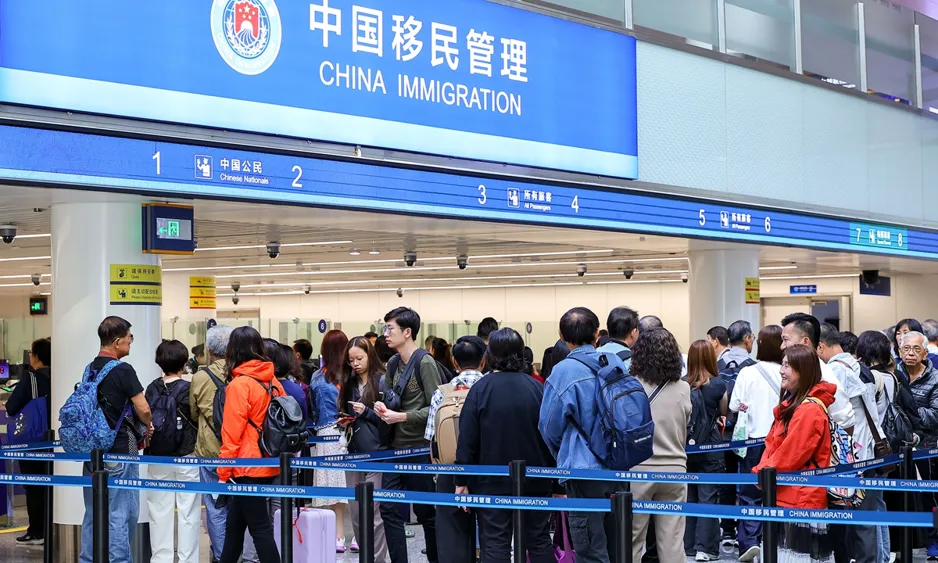
China is projecting daily border crossings to surpass 2.3 million during the upcoming Qingming Festival. This anticipated surge in travel enthusiasm reflects an 11.1 percent increase compared to the same period last year, as reported by the National Immigration Administration's official website.
The Qingming Festival, traditionally a time for honoring ancestors, also represents a peak for outdoor spring activities. This year, the alignment of school spring breaks in various regions, alongside a five-day holiday in Hong Kong and Macao, is likely to further amplify cross-boundary travel.
Experts highlight that China's favorable visa policies are yielding promising results among travelers, contributing to increased holiday spending in popular destinations. Many regions are optimistic about welcoming a higher volume of inbound tourists during this festive period.
In Hangzhou, authorities expect sustained high levels of cross-border passenger traffic at local ports. Between April 4 and April 6, over 250 passenger flights are anticipated to operate, marking a 5.5 percent increase from the previous year. Daily passenger throughput is projected to peak at around 16,000, with total traffic potentially nearing 45,000, reflecting a year-on-year increase exceeding 16 percent.
Travelers from Hong Kong, Macao, Taiwan, as well as Singapore and Malaysia, are expected to rise significantly, with numbers approaching 10,000 and marking an increase exceeding 30 percent compared to prior years.
Northeast China's Jilin Province has reported similar expectations for inbound travel during the Qingming holiday. The Changchun port is set to operate 18 cross-border passenger flights to and from Hong Kong, Seoul, and Tokyo, with total arrivals and departures anticipated to surpass 3,000 during the holiday.
At the Yanji port, approximately 32 passenger flights are scheduled to operate to and from Seoul, with cross-border passenger flows expected to exceed 6,000, and daily traffic projected to surpass 2,200.
In late 2024, China enhanced its visa-free transit stay policies to 240 hours and broadened the number of eligible entry ports to 60. Within the first year of this policy implementation, inbound foreign arrivals reached 40.6 million by December 16, 2025, with travelers utilizing the visa-free transit policy increasing by 60.8 percent year-on-year.
As China expands its visa-free policies, various popular destinations have initiated efforts to attract Chinese tourists. South Korea, for instance, has eased multiple-entry visa criteria for Chinese visitors to enhance convenience for both tourism and business travelers.
The Korea Tourism Organization has launched promotional campaigns targeting the Chinese market, reinforcing the importance of deeper platform collaboration and expanded flight networks to stimulate travel demand.
This shift towards two-way opening-up is becoming a significant trend in regional tourism. As China streamlines its visa access, neighboring countries are also adjusting their visa policies, seeking to create synergies that promote the recovery of cross-border tourism. The competition for Chinese tourists is intensifying as neighboring regions enhance their offerings.
Zhang Yi, CEO of the iiMedia Research Institute, remarked that the short-haul cross-border travel market is entering a more competitive phase. Regional coordination is expected to accelerate in areas such as reciprocal tourist flows, with a shift towards a more integrated development model that fosters mutual benefits in the tourism sector.
Read These Next

Insights on Sichuan Fulinyunyi Group's Ownership Transition
Discussion of the significant ownership change in Sichuan Fulinyunyi Group and its implications on market valuation, risks, and corporate governance.

Eli Lilly’s Foundayo: A Breakthrough in Obesity Treatment
Eli Lilly's approval of Foundayo by the FDA marks a pivotal moment in the weight loss market, introducing a new oral drug that could facilitate accessibility and attract a broader patient demographic in a competitive landscape dominated by injectables like Novo Nordisk's Wegovy. implications stretch across consumer choice, healthcare strategies, and pharmaceutical innovation amidst rising obesity rates.

Egypt Prime Minister Increases Public Sector Minimum Wage to 8000 EGP
Egypt's PM raises public sector minimum wage to 8,000 pounds/month to improve living standards amid rising living costs.