

Claim of China Economic Slowdown Found to Be Unfounded
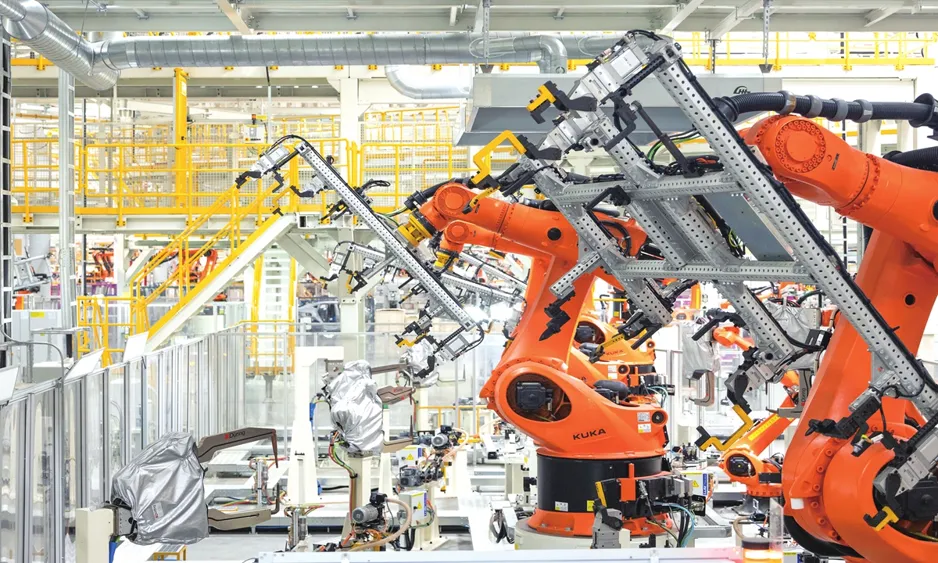
In response to claims of an impending economic slowdown, China emphasizes its ongoing strong growth, particularly in key sectors, while maintaining a commitment to quality development amid global uncertainties.
Recently, following the announcement of its economic growth target for 2026, certain voices from the United States and Western media have revisited narratives of a supposed slowdown in the Chinese economy. Notably, The Wall Street Journal stated that China signals a new era of slower economic growth, while Bloomberg illustrated this viewpoint through six charts depicting China's weakening economy. However, these assertions lack credibility.
To illuminate the actual economic situation, recent data from the first two months of 2026 shows notable increases across various indicators. Industrial value added by enterprises above a designated size nationwide rose by 6.3 percent year-on-year, while fixed-asset investment increased by 1.8 percent after previous declines. Investment in high-tech industries surged by 5.1 percent, total retail sales of consumer goods grew by 2.8 percent, and overall imports and exports surged by 18.3 percent. This robust performance raises questions about the existence of any 'slowdown'.
Moreover, the establishment of 8,631 new foreign-invested enterprises in China during these initial months represents a remarkable 14 percent growth compared to the previous year. Actual foreign investment reached 161.45 billion yuan, approximately 23.36 billion dollars, with high-tech sector investments totaling 63.21 billion yuan—evidence of a 20.4 percent year-on-year increase accounting for 39.2 percent of total investments, marking an 8.5 percentage point rise from last year.
The World Bank's latest China Economic Update underscores supportive actions such as more proactive fiscal policies and moderately accommodative monetary policies that have bolstered domestic consumption and investment while diversifying export markets. In a period of stagnation in global cross-border investment, foreign investors continue to demonstrate confidence in China as a desirable destination, citing it as a pillar of certainty and a safe harbor for stability.
Critically, the repetitious narrative presented by certain U.S. and Western media outlets indicates a pattern of selective reporting. When China experiences rapid growth, it is characterized as a 'threat'; conversely, any slight moderation is framed as a 'collapse.' This approach disregards the fundamental fact that by 2025, China's economic aggregate is forecasted to surpass 140 trillion yuan, with a yearly increase comparable to the GDP of a medium-sized economy.
A comparative analysis reveals that in 2025, real GDP growth rates for the United States, Japan, and France were reported at 2.1 percent, 1.1 percent, and 0.9 percent, respectively. Within the context of an economy surpassing 140 trillion yuan, China's growth target of 4.5 percent to 5 percent for the current year stands as not only pragmatic but ambitious in endeavoring for steady progress.
As the global economic landscape faces challenges with slow momentum and subdued international trade, China has set a prudent growth target range that captures necessary balances between short-term realities and long-term objectives. This target reflects a commitment to high-quality economic advancement while accommodating structural adjustments and risk mitigation.
The narrative around China's transformational economic model deserves attention; with a shift towards sustainable growth, sectors such as cultural tourism, leisure services, and innovative consumption continue to thrive. Emerging industries in biomanufacturing and quantum technology are also gaining traction, signaling a positive trajectory.
Overall stability in employment and prices, alongside enhanced market confidence, illustrates a shift towards higher quality economic performance. China's pathway is not indicative of a slowdown but rather a dedication to steady innovation and development. The set growth target embodies this confidence, aiming for tangible advancements amidst evolving conditions.
Ultimately, the sensationalism surrounding claims of a China economic slowdown appears not to be based on factual analysis, but rather political motivations. The reality of China's economic success results from the hard work of its people rather than external narratives. Historical trends affirm that China's economic path is on the incline towards greater quality and innovation, indifferent to the criticisms launched from the outside.
Read These Next
Rising IRS Tax Refunds: A Catalyst for Consumer Spending?
This commentary assesses the recent increase in IRS tax refunds and its implications for the economy and taxpayers, linking it to broader economic trends and potential risks for future financial planning.

China Aims to Boost Imports from Europe Calls for Trade Neutrality
China's Commerce Minister at the WTO conference urged the EU to avoid politicizing trade and increase imports from Europe.

WTI Crude Oil Futures Hit $100 According to Financial Network
WTI crude oil rises to $100 per barrel, up 5.87%, amid increased demand and positive market sentiment.