

China Sets 2026 GDP Growth Target at 45 to 5 Percent
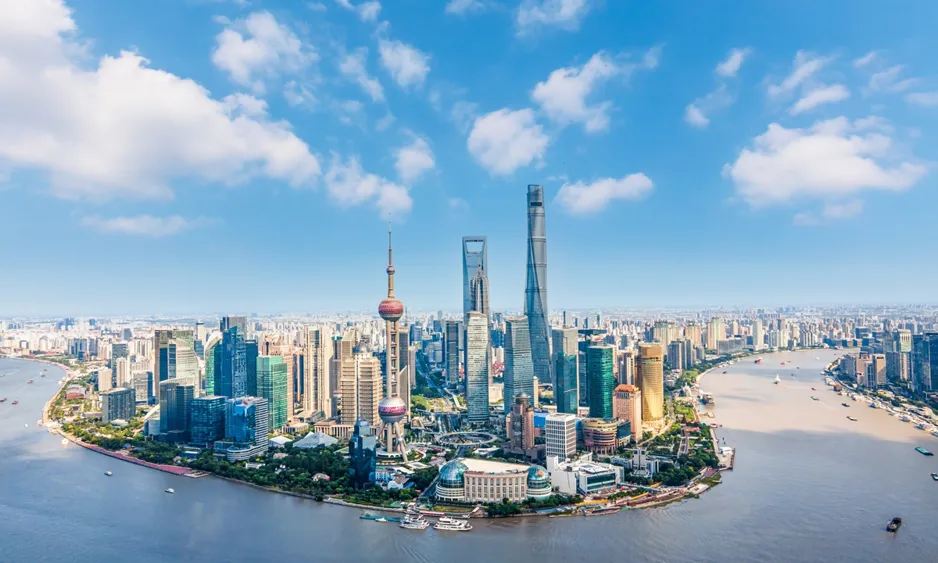
China has set its GDP growth target for 2026 at a range of 4.5% to 5%, emphasizing the importance of long-term planning, high-quality growth, and economic stability. This announcement was made during the Government Work Report presented to the National People's Congress, highlighting the government's commitment to steering the economy through uncertainties in the global landscape.
Analysts view this target as a reflection of a cautious approach to the prevailing global uncertainties, allowing for increased policy flexibility aimed at prioritizing sustainable and high-quality development. This strategy underscores the dedication of Chinese policymakers to maintain stability in the world's second-largest economy, especially amidst escalating risks and global turmoil.
Premier Li Qiang presented the annual growth target during the opening of the National People's Congress, which commenced its annual session on Thursday morning. The goal is seen as foundational for achieving China’s broader aim of doubling its 2020 per capita GDP by 2035, helping to propel the nation towards becoming a moderately developed country.
Beyond the GDP growth target, the Government Work Report outlined additional development goals. These include maintaining an urban unemployment rate around 5.5%, creating over 12 million new urban jobs, and aiming for a consumer price index increase of approximately 2%. Moreover, the report details plans for personal income growth aligning with the economic expansion, a balanced payments approach, a grain output target of about 700 million tonnes, and an estimated reduction of 3.8% in carbon dioxide emissions per unit of GDP.
The projected deficit-to-GDP ratio for 2026 is around 4%, with a total government deficit expected to reach 5.89 trillion yuan, which marks an increase of 230 billion yuan from the prior year. This statistic is particularly noteworthy as it will be reported alongside economic data that has far-reaching implications for future fiscal policy.
2026 also marks the beginning of China's 15th Five-Year Plan (2026-30), and this year's discussions at the "two sessions" serve as a crucial insight into China's macroeconomic policies and a strategic framework for the nation's development trajectory over the next five years.
NPC deputy Yu Miaojie emphasized to the Global Times that ensuring a solid economic start in the initial year of the 15th Five-Year Plan is vital. Identifying new growth engines and sustaining stable growth are paramount for continuing progress.
The prescribed growth target offers greater flexibility for local governance, enabling regions to focus on high-quality economic development and, critically, on improving the living standards of their populations. Sustaining growth within this target range translates to a reassuring signal of economic stability for China.
Despite rising geopolitical tensions and global instability, China's economy has shown resilience, underpinned by structural strengths and social stability. Yu pointed out that the nation has consistently recorded economic growth over the recent years.
Denis Depoux, the global managing director of Roland Berger, emphasized that the growth consensus is not indicative of weakness. Instead, it provides essential fiscal and political buffers that allow China to pursue reform measures and confront real economic challenges without the compulsion of chasing excessively high growth.
Depoux further noted that this approach facilitates a strategic reallocation of investment towards technology and human resources rather than inefficient ventures. Moreover, he highlighted that engaging with the dynamic ecosystem of China presents lucrative opportunities for multinational corporations aiming to gain a strategic advantage.
Read These Next

Costco Reports Q2 Revenue of 69.6 Billion on March 6
Costco's Q2 revenue hits $69.6B, beating estimates, with EPS at $4.58, driven by strong consumer demand and membership growth.
European Commission Launches Made in EU Plan Amid Protectionism
EU's 'Made in EU' initiative raises trade concerns, urging local production while warning of global supply chain disruptions.

Brazil Trade Official Says Oil Not Only Factor in Trade Balance
Brazil's trade official emphasized at a conference that multiple factors, not just oil, influence trade balance and strategies.