

Chinese Factories Serve as Training Grounds for Global Auto Executives
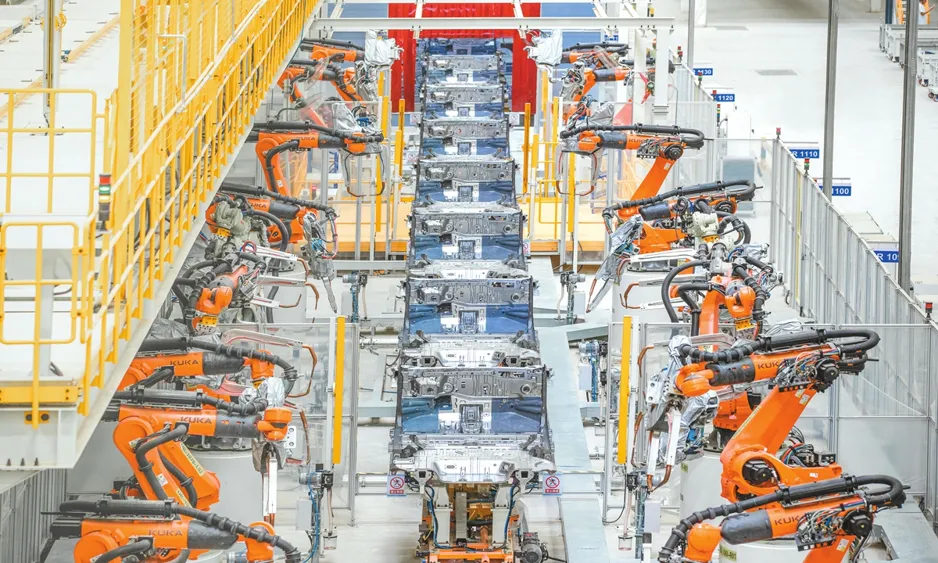
China's advancements in the new energy vehicle (NEV) sector have attracted global executives eager to gain insights into the efficiency and innovation that characterizes the country's manufacturing landscape. A recent visit to BYD's megafactory in Zhengzhou revealed a remarkably intricate transportation system designed to facilitate the flow of components and talented labor. The seamless operation of cargo trailers and sky shuttles exemplifies the modern industrial prowess that China has developed in just over a decade.
Over a century of evolution in the global automotive industry has underscored China's rapid transformation into a leading player in NEVs. The speed of this development serves not just as an indication of manufacturing capability but also as a demonstration of Chinese modernization achievements that have caught the attention of top executives from abroad, who seek to observe these innovations firsthand.
The Global Times has initiated a series of reports detailing China's rise as an automobile powerhouse, with this article serving as the second installment. The efficiency traditionally viewed as opposing fairness in Western economics has evolved within the context of China's NEV development. It now represents a holistic approach that integrates top-level design, sound institutions, technological progress, industrial synergy, and a focus on human welfare.
The remarkable increase in BYD's output from 1 million to 15 million NEVs within five years can largely be attributed to an exceptionally developed supply chain. This robust industrial framework has enabled other manufacturers, such as Tesla, to quickly ramp up operations, as seen in the rapid transition of their Shanghai Gigafactory from construction to production.
China's initiatives have redefined technological innovation, transforming it from a limited laboratory endeavor into a widespread industrial phenomenon. NEVs have shifted from status symbols to accessible consumer products, generating significant socio-economic benefits and altering the cost structures and technological benchmarks within the global automotive industry.
Moreover, China has introduced an innovative modernization pathway that other nations could emulate, one characterized by a robust industrial ecosystem and a commitment to green development. With NEVs produced at an extraordinary speed, including an average assembly time of one minute per vehicle and a battery cell produced every three seconds, China's 'China speed' continues to impress the world.
The country has consistently held the title of the largest producer and seller of NEVs since 2015, underscoring a potent combination of strategic development and efficiency. Industry analysts, like Feng Shiming, emphasize that China's success is rooted in a highly coordinated production and supply chain system that extends across various automotive components.
Regional clusters in the Yangtze River Delta, Pearl River Delta, and other areas bolster the production framework, allowing quick adjustments and responsive supply chain management. Executives from various companies have praised this system, highlighting the ease with which they can communicate and adapt.
As global manufacturing dynamics shift, traditional auto executives have shown keen interest in engaging with Chinese NEV factories as they transition their operations and R&D into China's growing sector. This engagement challenges prevailing protectionist trends, showcasing a commitment to integration and collaboration.
Further, with leaders such as Thomas Ulbrich from Volkswagen stressing the integration of 'German DNA' into 'China speed,' the emphasis on localized innovation and responsive development reflects a deepening partnership between established and emerging auto manufacturers.
Read These Next

Maritime Transport Needs to Evolve for Sustainability and Growth
Li Ying from China's National Committee stressed the need for larger, smart, eco-friendly vessels to enhance maritime transport.
Meta Platforms to Develop AI Training Silicon Chips
Meta Platforms plans to develop its own silicon chips to enhance AI training and strengthen its competitive edge.
Trade data shows a unified and accessible Chinese market
China aims to unify its market by reducing barriers and boosting trade openness, creating opportunities for foreign companies.