

China's Smartphone Market Sees Growth for Domestic Brands
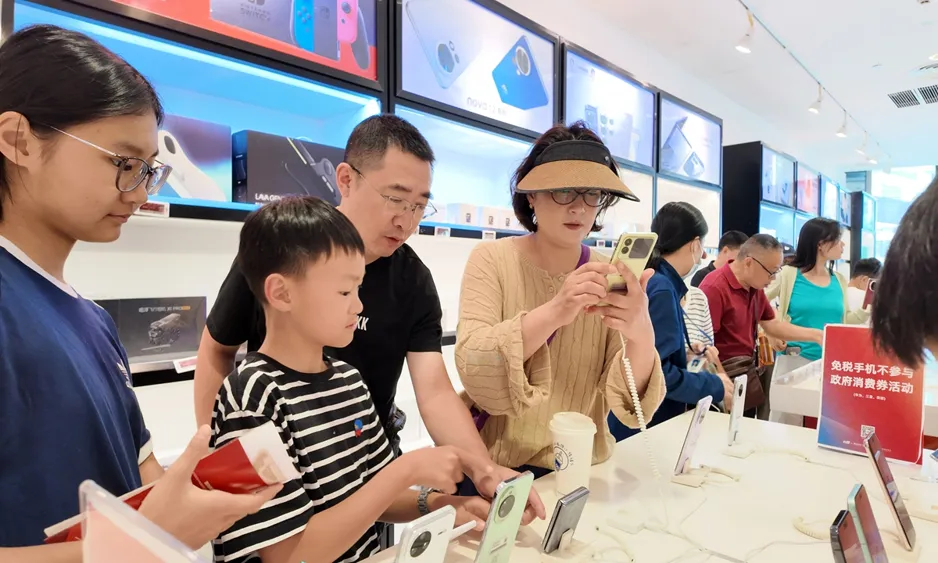
The smartphone market in China is demonstrating noteworthy resilience, highlighted by substantial growth for domestic brands, particularly through advancements in artificial intelligence and intensified competition. A recent report from the market research firm Omdia indicates that shipments in the Chinese smartphone market in 2025 have revealed a strong consumer demand for various local brands, alongside significant gains for Apple.
In the rankings for smartphone shipments in 2025, Huawei emerged on top with a market share of 17 percent, marking a 2 percent increase in year-on-year shipments according to Omdia's findings. Notably, Apple secured the third position with a 16 percent share and reported a 7 percent growth in shipments, illustrating its sustained momentum in this competitive landscape.
Also noteworthy is Xiaomi, which ranked fourth with a 15 percent market share and a growth of 4 percent year-on-year. OPPO mirrored this with a similar market share, although its shipments exhibited minimal change compared to the prior year. Analysts assert that the competitive dynamics are shifting, with Huawei forecasted to rise from sixth place in 2023 to the top by 2025.
As industry data indicates, Huawei's anticipated trajectory reflects an increase in shipments that amounted to 46.7 million units, securing it the top spot in China for the first time in five years, surpassing Apple. This evolution demonstrates a marked enhancement in competitiveness among domestic brands, as articulated by Liu Dingding, a prominent industry analyst.
Liu pointed out that the rise in shipments and market shares of domestic brands is indicative of a systematic improvement in their competitiveness. This improvement is significantly attributed to their proactive strategic positioning in AI-enabled devices, an area that is transforming the high-end smartphone sector.
He emphasized that AI technology is becoming a pivotal element in the smart device industry chain, with Chinese brands showcasing robust capabilities. As AI technology continues to evolve, it is expected to instigate fresh cycles of device replacements and upgrades, thereby optimizing consumer purchasing habits.
The favorable market conditions have not only benefited domestic brands. Foreign competitors, particularly Apple, have also experienced growth driven by strong demand for the newly released iPhone 17 series. Market data from Counterpoint Research highlights a 22 percent increase year-on-year in iPhone sales, which serves as a critical factor in Apple's recovery in China.
Data from the Business Confidence Index revealed that over 4 million iPhones were activated during the Spring Festival holidays in February 2025, indicating a striking 110 percent increase compared to the previous year. This reinforces the notion that the Chinese smartphone market is characterized by dynamic demand supported by both domestic and foreign brands.
Liu further remarked that the concurrent growth of both domestic and foreign brands reflects the multilateral demand in the Chinese market. The diverse ecosystem encourages the development of various products, presenting substantial opportunities for both local and international companies to thrive.
Analysts cite supportive policy measures and emerging consumer trends as catalysts for this sustained market growth. Following the launch of a consumer goods trade-in program, mobile phone and digital product purchases exceeded 91 million units in 2025, contributing to the mobile sector’s remarkable scale, which surpassed 1 trillion yuan, a historic peak.
On the international front, Chinese smartphone brands have demonstrated commendable performance. Omdia's recent European shipment report indicates that Xiaomi maintained a noteworthy presence with a 16 percent market share, and Honor has forayed into Europe’s top five for the first time, achieving a 4 percent year-on-year shipment growth.
As the quality and technology capabilities of Chinese brands improve, their competitiveness in global markets is poised to strengthen, reinforcing their established role within the global smart device industry's supply chain.
Read These Next

Maritime Transport Needs to Evolve for Sustainability and Growth
Li Ying from China's National Committee stressed the need for larger, smart, eco-friendly vessels to enhance maritime transport.

Meta Platforms to Develop AI Training Silicon Chips
Meta Platforms plans to develop its own silicon chips to enhance AI training and strengthen its competitive edge.

Trade data shows a unified and accessible Chinese market
China aims to unify its market by reducing barriers and boosting trade openness, creating opportunities for foreign companies.