

AI Drives Tech Growth This Holiday Season Says MIIT
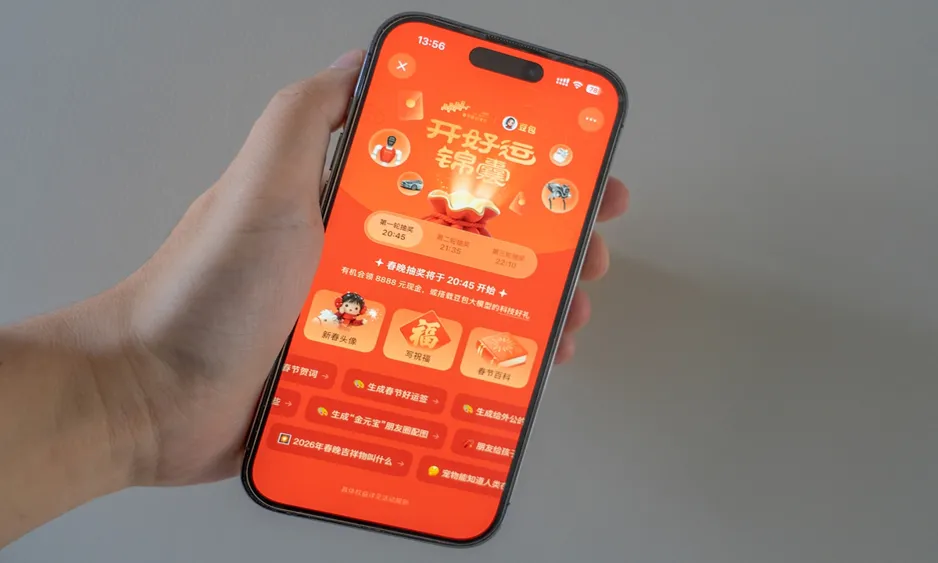
China's major telecom operators have stepped up efforts to implement the "AI+" initiative, significantly expanding the use of artificial intelligence across diverse sectors during the 2026 Spring Festival holidays. This initiative is geared towards infusing technological momentum into traditional celebrations, as reported by the Ministry of Industry and Information Technology (MIIT).
According to the MIIT's statement on its official WeChat account, telecom operators actively harnessed AI to enhance the digital experience during the Spring Festival. Notable services introduced included AI-driven content creation and intelligent interactive platforms, with applications for generating AI-generated New Year greetings witnessing remarkable popularity and user participation.
Telecom operators have also integrated cutting-edge technologies such as 5G, BeiDou, and AI to facilitate industrial upgrades. High-precision positioning services were provided to guarantee the safety of autonomous vehicles during peak travel periods. The application of AI spanned various industries, including culture and tourism, transportation, emergency management, public safety, and healthcare, resulting in improved operational efficiency and governance capabilities through the creation of "digital employees" for inspection and fault diagnosis.
Wang Peng, an associate research fellow at the Beijing Academy of Social Sciences, commented that the rising engagement with AI-generated Spring Festival greetings signifies the gradual integration of AI into everyday life. Despite its growing acceptance, many of these applications remain novelty-driven, though telecommunications providers have played a crucial role in enhancing cloud infrastructure and broadening their practical applications.
In a period of accelerated growth for AI, Bian Yongzu, a senior researcher at the China Institutes of Contemporary International Relations, noted that China has distinct strengths in both developing large models and deploying them in real-world situations. Prominent companies like Alibaba, Baidu, and Tencent are rapidly advancing their AI technologies, positioning China as a global frontrunner in this domain.
Bian pointed out that AI's influence has evolved beyond merely attracting users; it now deeply empowers various industries by enhancing operational efficiencies, optimizing product lines, and supporting market strategies and scientific research. The well-developed mobile internet ecosystem in China, paired with users' strong adaptability, has enabled AI applications to flourish rapidly.
The South China Morning Post reported that younger demographics in China are reshaping Spring Festival customs, adopting a "Cyber Chinese New Year" approach that includes virtual incense lighting, digital gifting, and regular interaction with AI companions. This trend underscores AI's integration into mainstream holiday practices.
Additionally, according to Reuters, during the holiday period, various Chinese AI startups unveiled advanced open-source models, such as Alibaba's Qwen and Moonshot AI's Kimi, which garnered international accolades for their capabilities, sometimes rivaling Western systems in reasoning and coding benchmarks.
On the final day of the Spring Festival holidays, significant technology companies reported a notable uptick in AI engagement. Ant Group revealed that Alipay's "AI Pay" surpassed 100 million users, while Baidu noted explosive growth for its "Yue Yunpeng AI co-driver" on Baidu Maps, with daily active users rising 29-fold since its launch.
During the holiday, Alibaba's Qwen app processed nearly 200 million "one-sentence" requests, while Doubao, in partnership with CCTV's Spring Festival Gala, recorded 1.9 billion AI interactions on New Year's Eve, generating over 50 million festive avatars and greeting messages. Tencent also reported significant user growth for its Yuanbao app, reaching over 50 million daily active users.
This surge in AI-driven services corresponded with unprecedented mobile data usage. Official figures indicate that total mobile internet traffic during the nine-day Spring Festival holiday in 2026 climbed to 8.783 million TB, reflecting an 18.7 percent increase from the previous year, with peak traffic hitting 993,000 TB on February 21. Notably, the usage of 5G skyrocketed by 39 percent year-on-year within this timeframe.
Wang suggested that 2026 could emerge as a pivotal year for AI's rapid deployment, although it may not signify a complete transformation. Continued support from policies and application expansions are creating a favorable landscape, albeit challenges remain in areas such as technological maturity, data security, and sustainable business frameworks. As AI continues to bolster various industries and improve governance efficiency, it is expected to facilitate digital transformation, generate innovative growth opportunities, and elevate the overall quality of the digital economy.
Read These Next

Maritime Transport Needs to Evolve for Sustainability and Growth
Li Ying from China's National Committee stressed the need for larger, smart, eco-friendly vessels to enhance maritime transport.

Meta Platforms to Develop AI Training Silicon Chips
Meta Platforms plans to develop its own silicon chips to enhance AI training and strengthen its competitive edge.

Trade data shows a unified and accessible Chinese market
China aims to unify its market by reducing barriers and boosting trade openness, creating opportunities for foreign companies.