

Spring Festival Holiday Drives Boost in Consumption Upgrades
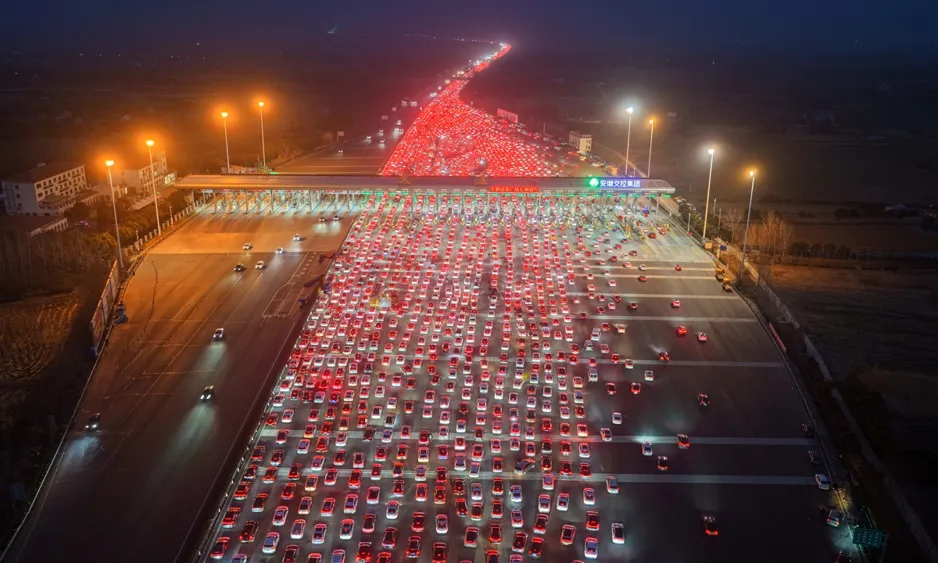
China's Spring Festival holiday, celebrated during the Year of the Horse, has set a remarkable precedent with its nine-day duration, concluding on Monday. This extended holiday period has catalyzed significant increases in both tourism and consumer spending, with key metrics reaching historic highs. Beyond mere figures, this year's festivities have illuminated a deeper evolution in consumer behavior, showcasing a transformative shift in spending that carries implications for the broader economic landscape.
The Spring Festival served as a pivotal moment, highlighting not only family reunions but also the resilience of China's consumption patterns and the structural upgrades underway in the economy. Data from the Ministry of Transport underscores this transformation, revealing that the first 20 days of the travel rush saw a staggering 5.08 billion cross-regional trips made, averaging out to around 250 million trips daily—record-setting numbers for this traditionally busy period.
Moreover, long-haul travel witnessed a significant uptick, credited to the extended holiday allowing families to engage in more enriching experiences. Insights from Chinese travel agency Mafengwo indicate that trips exceeding five days comprised 59.6 percent of bookings, with family groups making up 68 percent of the travel market. Additionally, journeys involving three generations accounted for 34 percent of reservations, reflecting the increasing prominence of family-oriented travel.
Li Changan, an academic from the University of International Business and Economics, articulated the significance of the extended holiday in promoting long-distance travel. He affirmed that this trend toward family-focused experiences would shape future tourism offerings and consumption patterns, marking a shift that could have enduring consequences.
This year's celebration has also witnessed a marked emphasis on cultural experiences. Following its recognition by UNESCO as part of the intangible cultural heritage, travel during the Spring Festival has transitioned from simple sightseeing to immersive cultural activities. A report by Tongcheng revealed that hotel bookings in Shantou, a city rich in cultural offerings, increased by over 80 percent year-on-year, while smaller cities such as Wuyishan and Yueyang enjoyed a notable rise in tourist numbers.
Zhang Yi, CEO of the iiMedia Research Institute, emphasized that the growth of heritage tourism signifies a demand for deeper cultural engagement across diverse age demographics. Many of these culturally-rich experiences are concentrated in smaller towns, contributing to a redirection of tourist traffic that is benefiting local economies.
Advancements in technology further influenced consumer behavior during the holiday. The Chinese travel agency Fliggy reported that AI-generated travel orders soared by over 800 percent compared to pre-holiday levels, underscoring a significant shift in how consumers engage with travel services. The Tongcheng report highlighted that 57.4 percent of queries managed by its AI assistant were transportation-related, pointing to a growing reliance on technology for trip planning.
The holiday spending patterns also pointed toward a notable shift in consumer preferences, with a robust retail sector reflecting these changes. Data from the Ministry of Commerce indicated that key retail and catering enterprises experienced an 8.6 percent year-on-year rise in average daily sales during the opening four days of the holiday.
Despite elevated gold prices, consumers displayed a preference for lasting value, shown in their demand for zodiac-themed jewelry and lightweight investment items. Younger individuals, in particular, balanced celebratory spending with a focus on asset preservation, a trend underscored by the popularity of small-denominational gold jewelry.
In the entertainment sector, China's box office revenue reached unprecedented levels, surpassing 7 billion yuan during the festival period, which catapulted it past North America's market. This surge in box office sales reinforces the notion of a shift toward discretionary spending, aligning with an increasing desire for experience-driven consumption.
The duty-free market in Hainan also showcased impressive results, with significant sales growth recorded during its first Spring Festival after resuming regular customs operations, achieving single-day sales of 242 million yuan, a staggering increase of 214.5 percent from the previous year. Li underlined that such spending trends emphasize the growing role of consumption as an economic stabilizer, linking policy support and festive enthusiasm to domestic recovery.
Overall, this Spring Festival not only highlighted a notable increase in spending but also indicated a critical transition in consumer culture, moving towards a model that prioritizes quality and experiences. Analysts noted that this shift includes both immediate economic benefits and signals a broader structural transformation in Chinese domestic demand.
Read These Next
Paramount-Netflix Tug-of-War: Media Landscape Implications
This commentary analyzes the implications of Paramount's increased bid for Warner Bros. Discovery amidst a competitive media landscape, exploring issues of consolidation, regulatory scrutiny, and consumer impact.
MOFCOM Sets Export Restrictions on 40 Japanese Firms Over Military Links
China limits exports to 40 Japanese entities over military ties, raising trade and economic concern amid Japan's militarization.

Touchscreen MacBook Pro Expected to Launch This Fall
Apple plans to launch a new touchscreen MacBook Pro this fall, exciting tech enthusiasts and aiming to attract creative professionals.