

China's New Breakthroughs in Shipping Energy and Space Exploration
China has showcased substantial progress in shipping, energy, and space technology during the recent Spring Festival, further solidifying its status as a leader in technological innovation. Recent achievements reflect an ongoing commitment to scientific exploration, underpinned by the country's robust manufacturing capabilities.
These advancements illustrate how technological innovations and enhanced productive forces are transforming China's economic framework. This momentum is expected to play a crucial role in the nation's quest for high-quality development as outlined in the ongoing 15th Five-Year Plan period, which spans from 2026 to 2030.
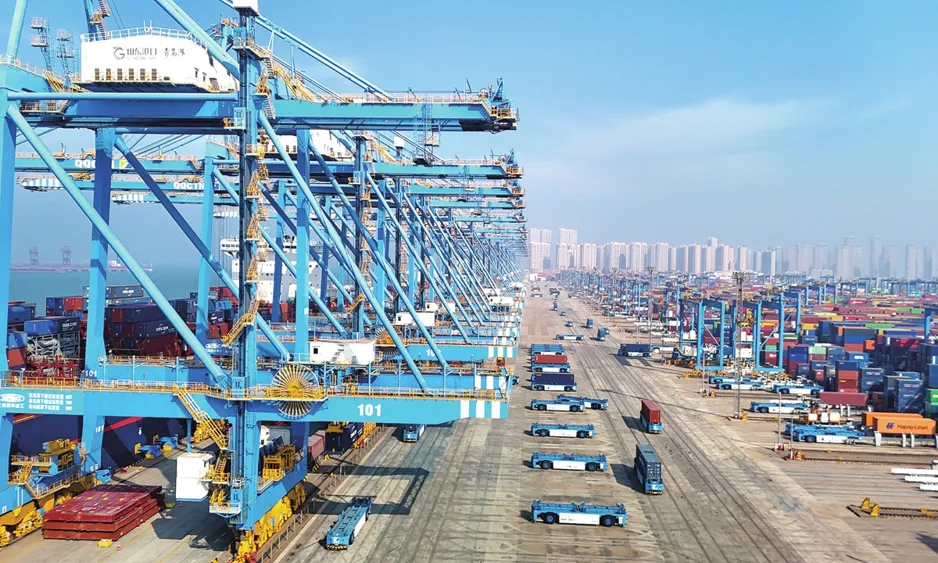
In a significant milestone, China's first commercially operated smart container ship, Zhi Fei, successfully navigated to an automated berth at Qingdao Port using autonomous technology. The vessel performed multiple automated operations, including synchronized cargo handling with terminal lifting cranes and automated vehicles, marking a groundbreaking achievement in unmanned container shipping.
This operation represents the first instance of a fully automated process for a container ocean vessel in China, encompassing navigation, berthing, and cargo loading. Qingdao Port officials remarked that this achievement signifies an important step toward integrating intelligent shipping solutions with smart port infrastructure.
Additionally, on the western Sichuan Plateau, the world's largest hybrid pumped-storage power station, the Lianghekou station, reached critical construction milestones. Recent reports indicate that excavation of the underground facilities has been completed, and work on the downstream reservoir is now underway, with expectations to produce approximately 1.4 billion kilowatt-hours of clean electricity annually.
During this period, a team from Tsinghua University unveiled the ASTERIS model, designed for astronomical image synthesis using advanced computational techniques and AI algorithms. This groundbreaking model is capable of detecting extremely faint signals from galaxies over 13 billion light-years away, paving the way for deeper insights into the cosmos.
According to economist Cao Heping, the acceleration of innovation in China is driven by a determined push for high-level self-reliance in science and technology, suggesting that the nation's science and technology sector has experienced steady progress in recent years. He noted that China's advancements are evident as the country has climbed to the 10th position globally in the World Intellectual Property Organization's Global Innovation Index 2025.
The recent Recommendations of the Central Committee of the Communist Party of China for the 15th Five-Year Plan emphasize the need for heightened self-sufficiency and prowess in science and technology, advocating for the development of new, quality productive forces in the next five years.
Prominent future industries such as quantum technology, bio-manufacturing, and advanced telecommunications have been specifically highlighted in policy documents. Furthermore, the Ministry of Industry and Information Technology has stressed the importance of mobilizing resources and supporting R&D commitments to achieve groundbreaking advancements in these fields.
Looking ahead, experts encourage the scientific community to fully leverage new opportunities for innovation and industrial development while striving for breakthroughs in technology. They believe that China's focus on fostering new productive forces will drive significant advancements in areas such as biotechnology and artificial intelligence.
The rapid uptake of 5G technology in China has also underscored the importance of digital transformation as a key strategy for multinational enterprises looking to enhance their competitive edge. According to a recent KPMG survey, 90 percent of multinationals intend to increase investments in digital initiatives, reflecting a shift in their strategic focus toward optimizing operational efficiency.
As multinationals reassess their business strategies, many are transitioning from merely expanding operations to innovating their profit models through localized digital investments. This strategic shift aims to improve pricing strategies and enhance profit margins, ultimately fostering a competitive advantage within the vibrant Chinese market.
Read These Next
Paramount-Netflix Tug-of-War: Media Landscape Implications
This commentary analyzes the implications of Paramount's increased bid for Warner Bros. Discovery amidst a competitive media landscape, exploring issues of consolidation, regulatory scrutiny, and consumer impact.

MOFCOM Sets Export Restrictions on 40 Japanese Firms Over Military Links
China limits exports to 40 Japanese entities over military ties, raising trade and economic concern amid Japan's militarization.

Touchscreen MacBook Pro Expected to Launch This Fall
Apple plans to launch a new touchscreen MacBook Pro this fall, exciting tech enthusiasts and aiming to attract creative professionals.