

Robot Calligraphers Transform China's Intelligent Services Sector
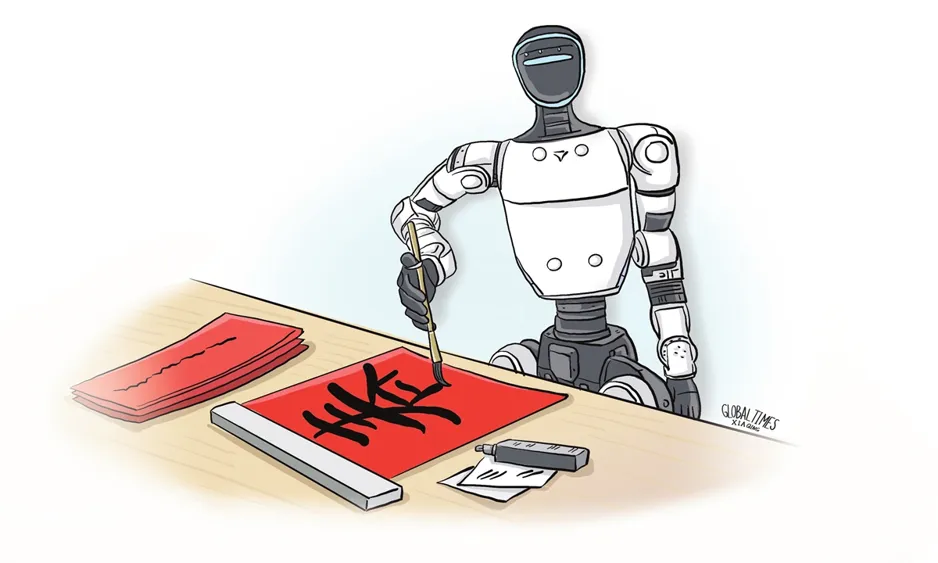
Humanoid robots in China are making headlines this Spring Festival by showcasing their ability to perform traditional calligraphy. This fusion of heritage and modern technology not only captivates the public's imagination but also serves to highlight the growing efficiency of service delivery in the country.
A recent video report by CCTV.com featured a humanoid robot dressed in traditional Chinese attire, demonstrating its skills by inscribing the character for 'good fortune' on busy streets. Meanwhile, the Sanxiang Metropolis Daily covered similar scenes at a metro station in Changsha, Hunan Province, where visitors could witness both human calligraphers and intelligent robots creating Spring Festival couplets in real-time. The robot's precise brush strokes and consistent ink application drew crowds, not just for the artistic output but also for the novelty of integrating technology into daily life.
As the Spring Festival approaches, the age-old tradition of displaying couplets and characters celebrating good fortune remains strong. This year, the popularity of robot-generated calligraphy underscores a burgeoning curiosity among consumers regarding humanoid robots' roles in everyday activities. Despite the consumer humanoid robotics market in China being in its infancy, the notable interest from the public hints at tremendous potential for future growth.
The trend is not limited to calligraphy alone; a variety of intelligent machines, both humanoid and otherwise, are increasingly employed in common settings, particularly as the Spring Festival draws near. Information-query robots are now common at transportation hubs, AI-driven security robots patrol airports, and delivery robots are utilized in restaurants and communities, all aimed at fulfilling the heightened service demands during peak times.
Focusing closely on the current travel surge resulting from the Spring Festival, numerous robots have begun to assist in service roles at train stations and airports across the nation. Local media have reported that the G1 humanoid robot from Unitree has initiated operational duties on trains in Hangzhou during this bustling travel period.
This leap in demand for intelligent service robotics has also sparked the development of a nascent rental market. Experts have noted that the performance of robots at festival events and corporate gatherings has led to a surge in short-term rentals. Data from the Shanghai-based robotics firm AgiBot reveals that rental orders on its platform, Qingtian Rent, have seen a significant upward trend, especially with a nearly 30 percent increase recorded in the first week of February compared to the previous week.
The public's enthusiasm for robots capable of calligraphy, coupled with the increased presence of intelligent machines this Spring Festival, emphasizes the emerging prospects within China's consumer robotics landscape. The readiness of ordinary consumers to interact with these innovative technologies indicates a significant and growing demand.
Currently, the market appears to be driven by vigorous consumer demand, showcasing a strong interest in new technologies and products—experimental innovations are even generating considerable feedback. This indicates that China's consumer market for intelligent service robots may be on the cusp of substantial growth, likely fueled by successive waves of new products.
Such robust demand creates opportunities for both domestic and international firms. On a domestic level, Chinese technology companies are hustling to meet the growing needs and capitalize on potential profit. The evolution of China's technological prowess is increasingly intertwined with these market dynamics.
However, misconceptions among some Western analysts tend to frame China's technological advancements solely through a geopolitical lens, presenting it as an issue of international rivalry. This perspective overlooks the importance of domestic market demand and technological progress, which together provide a more comprehensive view of the country's development trajectory.
This Spring Festival, the presence of robots engaged in calligraphy serves as an early signal of rising market demands. China's market for emerging technologies is both vast and approachable, presenting ample opportunities for domestic firms to bolster their capabilities and offering international companies pathways to engage with this swiftly advancing sector.
Read These Next

Meta and Nvidia: A Strategic Alliance in AI Hardware
This commentary analyzes the expanded partnership between Meta and Nvidia, highlighting its significance for the AI hardware market, competitive dynamics, and financial implications, while also considering future challenges and opportunities.
US Taiwan Trade Agreement Seen as Economic Trap for Taiwan
US-Taiwan trade deal faces scrutiny for harming Taiwan's economy despite reduced tariffs, raising job loss and autonomy concerns.

FTSE A50 Index Futures Rise 006 Percent for Two Nights Straight
FTSE A50 index futures rose 0.06% to 14,792 points, indicating cautious optimism in the Chinese market.