

China Summons Six Travel Platforms Over Lending Practices
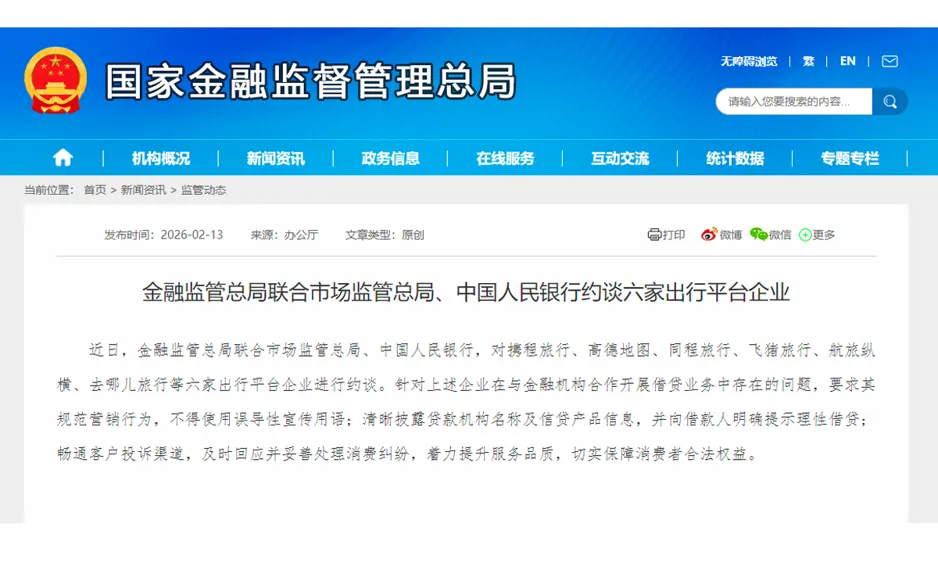
Chinese regulatory authorities have convened meetings with six prominent travel platforms in an effort to enhance lending practices within the industry. This initiative, driven by a collaborative effort between the National Administration of Financial Regulation, the State Administration for Market Regulation, and the People's Bank of China, aims to focus on improving transparency and consumer rights in digital finance.
The six travel platforms participating in these discussions include Trip.com, Amap, Tongcheng Travel, Fliggy, Umetrip, and Qunar. During the meetings, regulators expressed concerns over how these platforms have been advertising and representing their lending products in collaboration with financial institutions.
Regulatory officials highlighted that misleading advertising practices could potentially misinform consumers regarding the nature and terms of various loan products. Consequently, the parties involved were urged to adopt stricter marketing regulations to ensure that consumers are accurately informed.
As part of the regulatory guidance, the platforms were instructed to avoid ambiguous language in their advertising, clearly disclose the names of lending institutions, and provide detailed information regarding loan products. Furthermore, they were required to reinforce the importance of responsible borrowing among their clientele.
The authorities emphasized the necessity for these platforms to establish effective channels for customer complaints and to respond expediently to any customer disputes. The goal is to foster better service quality and to uphold the legitimate rights and interests of consumers in the digital lending landscape.
This regulatory move reflects a broader trend in China towards enhancing oversight in the fintech sector, particularly as digital finance continues to proliferate across various industries. Ensuring consumer protection and promoting transparency in lending practices remain top priorities for Chinese regulators in light of recent developments.
By addressing these issues, the government aims to build a more trustworthy framework in digital finance, ultimately benefiting consumers and promoting fair competition among travel platforms.
The enforcement of these guidelines is anticipated to lead to increased consumer confidence and a more stable financial ecosystem as these platforms adjust their practices in accordance with regulatory expectations.
Read These Next

China Unveils First AI Large-Model Satellite for Smart Cities
China has launched the CUHK-1 satellite, merging AI models with Earth observation for smarter city governance and environmental monitoring.

China's Rapid AI Advances in Global Tech Competition
Chinese tech giants have introduced advanced AI models, asserting strong competition in robotics and video generation against their American counterparts. The models unveiled by Alibaba, ByteDance, and Kuaishou depict rapid technological progress, highlighting China's growing prominence in the AI sector, yet regulatory hurdles loom widely ahead.

China Embraces German Investment Boost in Green Tech and Innovation
China and Germany aim for stronger ties in green tech and digital innovation, fostering investment and sustainable growth.