

Rivian Stocks Surge 15% on Strong Q4 Results

Rivian Automotive's recent performance surpassing Wall Street's expectations not only exemplifies the volatility of the electric vehicle (EV) market, but also highlights the critical dynamics at play as the company prepares for its pivotal R2 model launch. The 15% surge in Rivian's after-hours stock price following their optimistic 2026 delivery projections signals renewed investor confidence. Rivian's ambition to ramp up production to between 62,000 and 67,000 units—a staggering increase of nearly 59% compared to last year—demonstrates an aggressive strategy to capture market share as other competitors, such as Tesla and Ford, sharpen their EV offerings.
However, behind this ambitious growth outlook lies a stark reality: Rivian is bracing for significant financial losses. The projected adjusted pre-tax losses of $1.8 billion to $2.1 billion in 2026, coupled with capital expenditures nearing $2 billion, reflect a crucial period of investment and scaling that comes with inherent risk. Historically, such strategies call to mind the 2000 dot-com bubble, where numerous companies focused on growth over profitability. This raises a pivotal question: can Rivian sustain investor enthusiasm despite continued losses? With an annual net loss of $3.6 billion in the past year—a notable improvement from $4.75 billion—its ability to convert aggressive growth into profitability in the near future will be closely scrutinized by shareholders and financial analysts alike.
Furthermore, Rivian's joint venture with Volkswagen and its significant revenues from software and service solutions indicate a shift toward diversifying revenue streams, a potentially astute move as the market for high-cost luxury EVs begins to wane. The shift towards mid-range models, like the R2 priced around $45,000, could serve as a strategic response to dampened demand for Rivian's first-generation offerings unless they lower their price points significantly. The forecasted 50% reduction in material costs for the R2 could create a critical competitive advantage—paving the way for Rivian to align closely with consumer expectations and market realities, which seem to trend towards affordability.
Read These Next
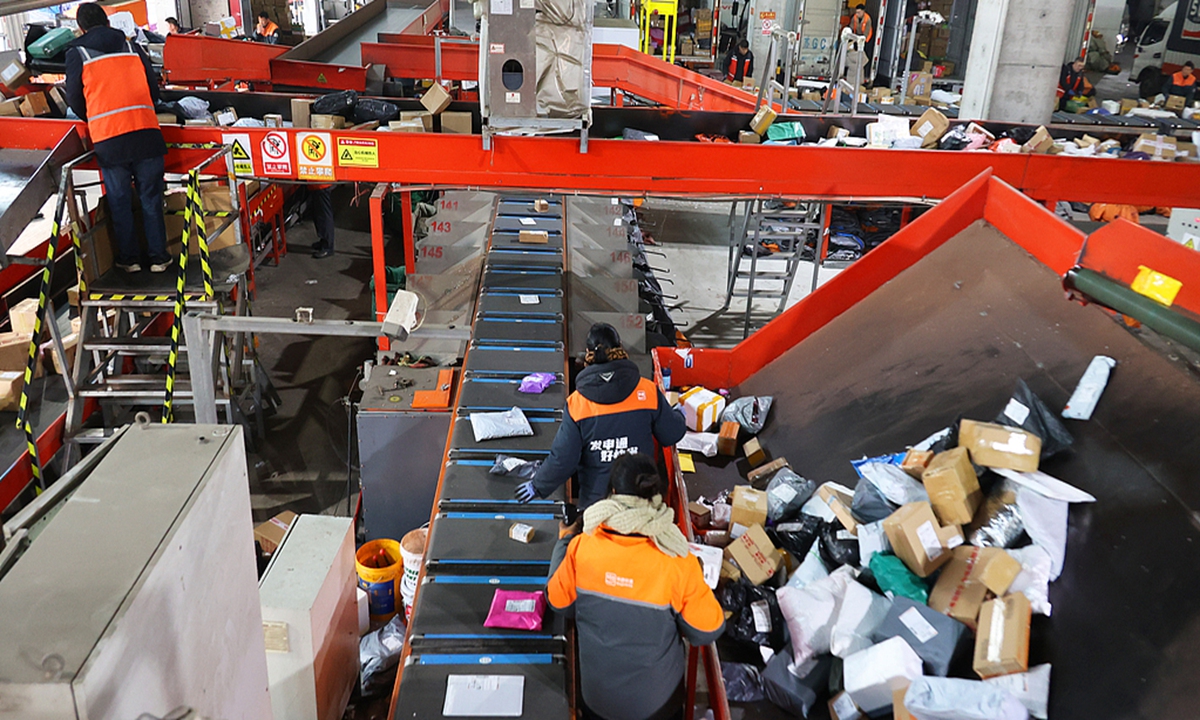
China delivers 47 billion packages before Spring Festival
China's logistics is thriving ahead of the Spring Festival, with 4.7B packages shipped, reflecting strong consumer demand.

Chris Klomp Named Chief Advisor at US Health Department
Chris Caulfield named chief advisor to the U.S. Department of Health, influencing public health policies and direction.

FedEx's Optimism: Impact on Consumer Confidence and Logistics
Analysis of FedEx's optimistic revenue growth projections fueled by the Christmas season and digital innovation, highlighting broader trends in consumer spending and market competitiveness.