

Macron Calls for EU to Reduce Dependence on US and China
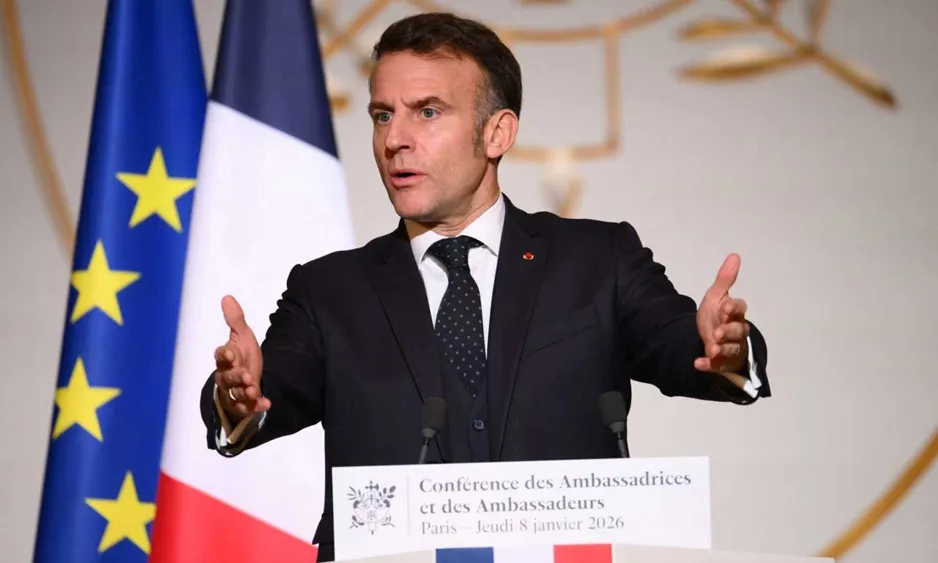
In a call for systemic change, French President Emmanuel Macron has urged the European Union to pivot away from its heavy reliance on the United States and China. This announcement comes during a time of significant economic challenges for the bloc, prompting discussions among leaders to prioritize internal reform and innovation.
Speaking to the Financial Times and other European media prior to a crucial EU summit focused on competitiveness, Macron highlighted what he described as "the Greenland moment," advocating for a united European response to the alarming shifts in global trade dynamics.
Macron expressed that Europe currently grapples with instability stemming from U.S. policies that appear increasingly hostile toward the EU, alongside a trade landscape dominated by what he termed a 'Chinese tsunami.' He asserted that these dual crises represent a critical shock to the European economic structure.
The French President's remarks come in the context of a growing anxiety within the EU, as he criticized both the U.S. administration for its perceived contempt for European interests and China for undercutting local economies with low-cost goods.
Experts have weighed in on Macron's comments, cautioning against a simplistic reliance on protectionism. Jian Junbo from Fudan University emphasized that merely blaming external parties such as China neglects deeper structural issues, such as Europe's historical investment bias towards traditional sectors while underfunding high-tech industries.
In his interview, Macron outlined a vision for a "European preference policy" that would focus on advancing domestic companies and technologies, especially in strategic fields like electric vehicles and renewable energy. Such measures are seen as vital for enhancing European competitiveness.
Macron also voiced support for regulatory simplification within the EU, advocating for the removal of internal trade barriers and reducing dependency on foreign suppliers. These proposals are set to be tabled at the upcoming summit in Belgium, where he will emphasize France's push for 'buy European' strategies.
However, the proposed policies have drawn skepticism, described as fundamentally protectionist by some economists who argue that they are unlikely to effectively tackle the EU's current challenges. Ding Chun from the Center for European Studies warned that while protectionism may provide short-term relief, it does not foster the competitive edge required in the global marketplace.
Resistance to Macron's proposals is mounting, particularly within France amid political and fiscal pressures, as well as from other EU capitals that view them as potential violations of the principles underpinning the single market.
Reports indicate that German Chancellor Friedrich Merz's government has outright rejected the idea of a joint borrowing framework ahead of the summit, suggesting a focus on productivity concerns over broader economic strategies.
Amid these discussions, experts like Jian emphasize the importance of enhancing economic integration with key markets like China as a means of strengthening and expanding industrial supply chains, rather than instituting political barriers that hinder participation in global markets.
China has consistently voiced its opposition to protectionist policies, underscoring the need for the EU to adhere to principles of technological neutrality while fostering cooperation that benefits both parties, especially in key sectors.
Read These Next

Rivian Stocks Surge 15% on Strong Q4 Results
This commentary discusses Rivian Automotive's recent quarterly performance, vehicle delivery projections, ongoing losses amid new product launches, and market dynamics influenced by pricing strategies and competitive pressures.

China delivers 47 billion packages before Spring Festival
China's logistics is thriving ahead of the Spring Festival, with 4.7B packages shipped, reflecting strong consumer demand.

Chris Klomp Named Chief Advisor at US Health Department
Chris Caulfield named chief advisor to the U.S. Department of Health, influencing public health policies and direction.