

BRI Connectivity Boosted with Major Railway Progress in Europe Asia Africa

The Belt and Road Initiative (BRI) spearheaded by China is witnessing significant advancements in its connectivity projects, underscored by the recent inauguration of key railway projects that promise to enhance global connectivity and stimulate local economies.
A Chinese analyst emphasized that the concurrent progress and initiation of several railway projects under the BRI signify China's unwavering commitment to international connectivity, showcasing the capacity of Chinese enterprises to execute large-scale projects within established timelines.
Hungarian Prime Minister Viktor Orban announced on Wednesday that the Hungary-Serbia railway is set to commence operations shortly, reflecting substantial developments on the Hungarian segment of this landmark regional project, which aims to launch cargo transport by February 20.
In October, Serbia celebrated the inauguration of its section of the Hungary-Serbia high-speed railway, providing a direct transit route between Belgrade and Budapest, as reported by Xinhua News Agency.
Additionally, notable BRI transportation projects have progressed significantly this year, including the unveiling of the first freight and passenger train sets for Malaysia's East Coast Rail Link (ECRL) in Pahang state.
Transport Minister Anthony Loke revealed that the electric multiple unit for passenger services and the freight electric locomotive, which were shipped from Dalian, China, in January, symbolize considerable advancement in construction.
By January 2026, ECRL has achieved an impressive 91.70 percent construction progress. The project, which represents the largest rail initiative in Malaysia, is now focusing on operational preparations, highlighting Malaysia-China strategic collaboration.
On a different front, Algeria's Western Mining Railway officially opened on February 1, marking Africa's first heavy-haul desert railway, which enhances Algeria's railway framework and promotes economic growth in its southwestern regions.
Spanning 950 kilometers, with 575 kilometers constructed by China Railway Construction Corporation alongside Algerian state-owned firms, this railway stands as the largest infrastructure endeavor undertaken by a Chinese company in Algeria.
According to Wan Zhe, a scholar at Beijing Normal University, the progress of these three distinct projects, covering various logistical challenges, underscores the robustness of Chinese supply chains and their adaptability.
Moreover, these railway projects are poised to yield tangible local economic benefits, improving connectivity, creating job opportunities, and potentially lowering logistics costs, thereby exemplifying the mutually advantageous nature of BRI partnerships.
As countries increasingly prioritize infrastructure development, they are likely to engage Chinese contractors who are admired for their cost efficiency, advanced technological prowess, and reliable project delivery capabilities.
Read These Next

Rivian Stocks Surge 15% on Strong Q4 Results
This commentary discusses Rivian Automotive's recent quarterly performance, vehicle delivery projections, ongoing losses amid new product launches, and market dynamics influenced by pricing strategies and competitive pressures.
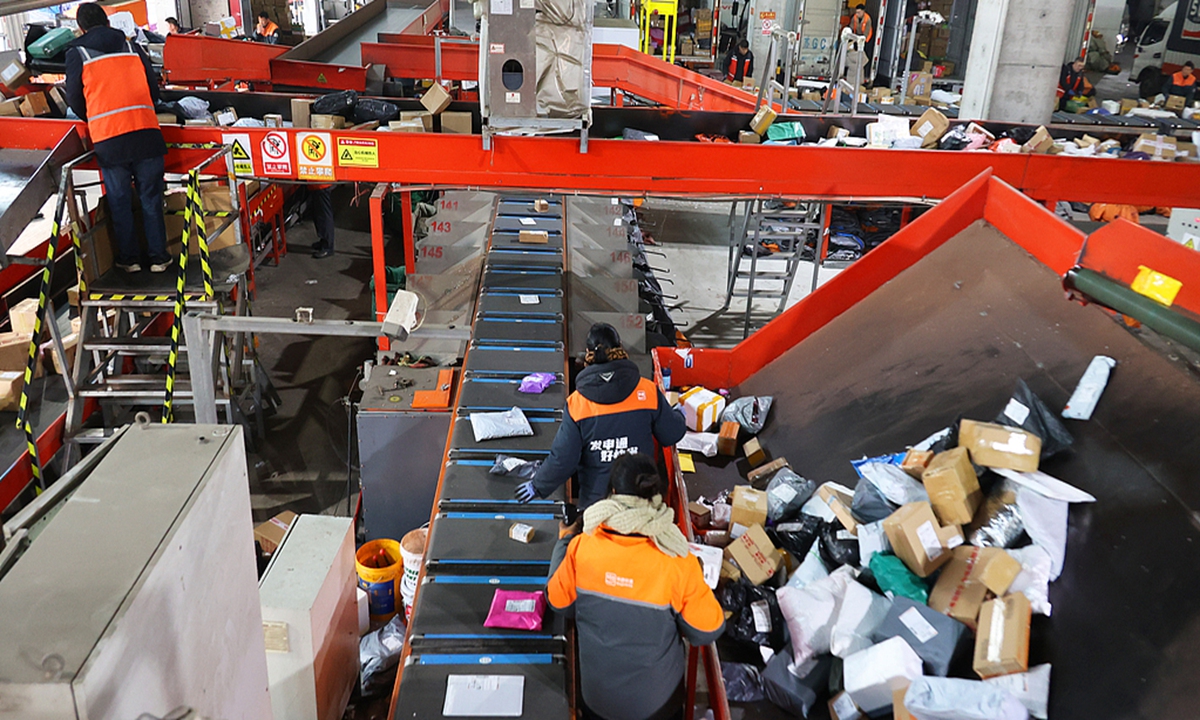
China delivers 47 billion packages before Spring Festival
China's logistics is thriving ahead of the Spring Festival, with 4.7B packages shipped, reflecting strong consumer demand.

Chris Klomp Named Chief Advisor at US Health Department
Chris Caulfield named chief advisor to the U.S. Department of Health, influencing public health policies and direction.