

Regions Embrace Nighttime Economy in Work Reports to Boost Sales
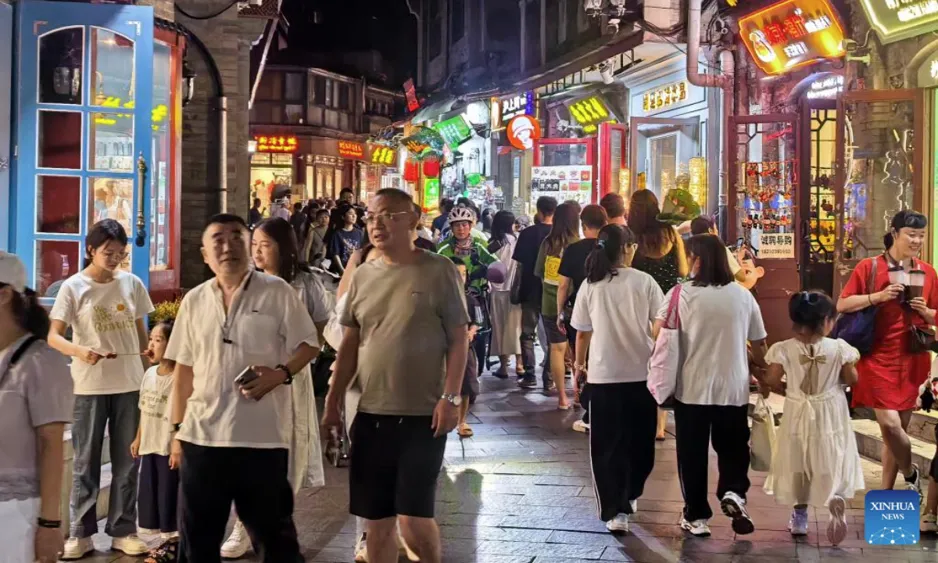
With a renewed emphasis on stimulating service consumption, several regions in China are integrating the nighttime economy into their local government work reports, marking a strategic move aimed at revitalizing local economies and enhancing consumer engagement.
Shanghai, for instance, has highlighted its intention to amplify service consumption through the development of various sectors, including the debut economy, nighttime economy, livestreaming economy, and the emerging silver-haired economy.
Meanwhile, Fujian Province has set forth its objective to foster innovation within the realms of the "ticket-stub economy" and the nighttime economy, both of which are pivotal for boosting overall consumption.
Jiangsu Province has also taken steps to craft unique consumer experiences by introducing new shopping scenarios, such as first-release stores and debut exhibitions. These initiatives support innovative business models that encompass performances and nighttime consumption, while also paving the way for instant retail opportunities.
Industry analyst Liu Dingding emphasized the nighttime economy's role as a vital driver of consumption, asserting that it possesses the capability to enhance the limitations imposed by daytime consumption patterns.
By extending operational hours and diversifying experiences, he noted, the nighttime economy nourishes growth across various sectors, including hospitality, cultural tourism, and retail, thereby converting latent demand into tangible economic benefits.
A comprehensive report, co-released by the China Tourism Academy and Landsky Technology Group, anticipates a robust demand for nighttime activities by 2025, showcasing a trend toward upgraded experiences defined by diversity, novelty, and social involvement.
According to the report, expenditures related to nighttime tourism in China saw a marked increase from January to October 2025, accounting for 32.9 percent of total daily tourism spending, with nighttime transactions making up 28.3 percent.
In alignment with these initiatives, the Ministry of Finance and the Ministry of Commerce issued guidelines in September 2025, committing to pilot programs aimed at fostering innovation in consumption patterns including nighttime cultural and tourism hubs.
These guidelines underscore China's robust consumption fundamentals, bolstered by a comprehensive transportation network and an enhanced supply of consumer goods, even while acknowledging that certain sectors still require significant improvement.
In addressing the evolving consumer landscape, policymakers highlight that traditional business models often fall short of meeting the diverse and personalized desires of consumers. This acknowledgment paves the way for the exploration of new formats, models, and scenarios in consumption, thus unlocking their potential to catalyze growth.
With consumption identified as a critical component of China's economic advancement, the Ministry of Commerce has committed to implementing various measures to bolster service consumption, declaring it increasingly vital for high-quality economic development and signaling a strategic opportunity for boosting household consumption rates.
Read These Next

Huayi Microelectronics Acquisition: Opportunities and Risks
Commentary on a company's acquisition of Huayi Microelectronics and its implications for market strategy and regulation.

Bitwise CIO Discusses Bitcoin's Four-Year Cycle Decline
This commentary analyzes the recent decline in Bitcoin prices through insights from Matt Hougan, Chief Investment Officer of Bitwise Asset Management, focusing on the cyclical nature of investing and the implications for the future of cryptocurrencies.

South Korean Firms Boost Exploration in Chinese Market After Visit
South Korean businesses are targeting China for expansion, focusing on high-tech sectors amid growing economic collaboration.