

South Korean Firms Boost Exploration in Chinese Market After Visit
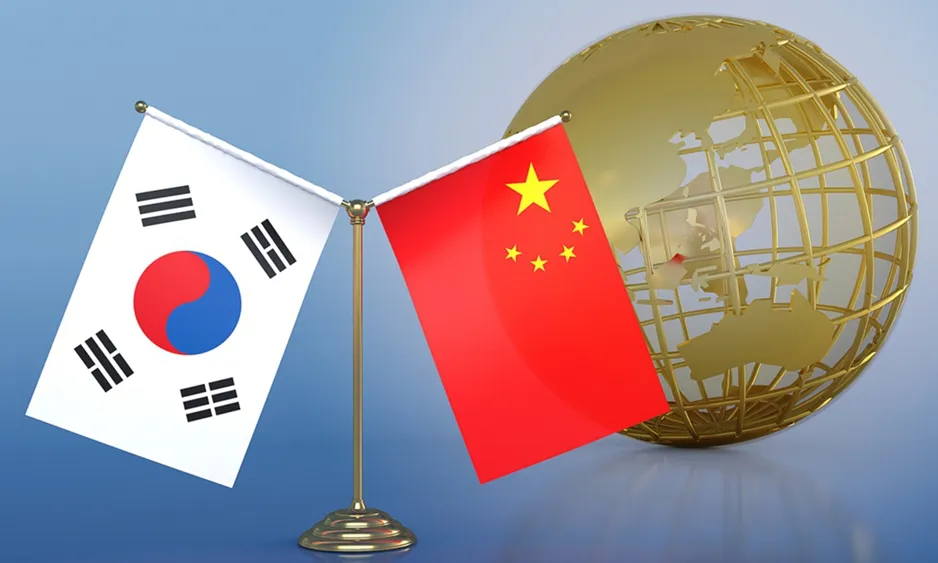
South Korean enterprises are intensifying their efforts to penetrate the Chinese market as the new year unfolds, highlighting a renewed commitment to bilateral trade and economic collaboration following South Korean President Lee Jae-myung's recent visit to China.
A significant development in this push was marked by talks held on Monday between Du Xiaogang, secretary of the Municipal Party Committee of Wuxi, and Park Sung-taek, president of SK China. The discussions, as reported by the Wuxi Daily, focused on enhancing cooperation levels and broadening collaborative areas.
According to reports, both parties aim to implement the strategic cooperation consensus established by their respective leaders, with Wuxi being positioned as a pivotal node in SK Group's global strategic layout. Their collaboration will aim to cultivate a robust local ecosystem among other initiatives for coordinated, win-win development.
Since entering Wuxi in 2005, SK Group has forged a mutual-benefit framework, exemplified by SK Hynix Semiconductor (China) Co's substantial investment of over 23 billion dollars across seven phases—marking it as the largest foreign investment project in the province.
Moreover, the SK medical complex project, with an estimated investment of around 3 billion yuan, includes the upcoming SK Wuxi Hospital, which is set to be operational this year with a capacity of 500 beds.
Meanwhile, Guangzhou in South China's Guangdong Province welcomed its first major foreign-invested manufacturing project of the year. South Korean semiconductor equipment leader STI Co announced an investment of 10 billion yuan, as detailed in a governmental social media post.
The investment agreement, signed on February 5 in Baiyun District, outlines STI's commitment to develop a power semiconductor intelligent manufacturing base totaling approximately 12.4 billion yuan.
The initial investment phase of this project is pegged at roughly 1.6 billion yuan and will focus on producing AMB ceramic substrates, essential for power semiconductor modules extensively utilized in emerging sectors like new-energy vehicles.
Construction is slated to commence after the Spring Festival with expectations for the project to become operational by year-end. Upon full operation, it is anticipated to yield an annual output value of around 3 billion yuan.
Following President Lee's visit, there has been a marked acceleration in South Korean companies exploring cooperative opportunities within the Chinese market, signaling a closer alliance in high-tech sectors, as observed by Lü Chao from the Liaoning Academy of Social Sciences.
Lü noted the considerable potential for collaboration in high-tech industries, reiterating that South Korea's total actual investment in China reached 104.65 billion dollars as of the end of November last year. The increasing importance of China-South Korea economic and trade cooperation as a stabilizing force in bilateral relations cannot be understated.
Lü concluded by emphasizing that mutual benefits and win-win outcomes remain at the core of the economic exchanges between China and South Korea, urging the latter to adopt a pragmatic stance, free from external interferences, to foster an enduring environment for business communication.
Read These Next

Huayi Microelectronics Acquisition: Opportunities and Risks
Commentary on a company's acquisition of Huayi Microelectronics and its implications for market strategy and regulation.
Bitwise CIO Discusses Bitcoin's Four-Year Cycle Decline
This commentary analyzes the recent decline in Bitcoin prices through insights from Matt Hougan, Chief Investment Officer of Bitwise Asset Management, focusing on the cyclical nature of investing and the implications for the future of cryptocurrencies.

Antimony CEO Sets $20 Per Pound Price Floor for Market
U.S. CEO Gary Evans urges a $20/lb price floor for antimony to secure supply of military minerals amid national security concerns.