

Foreign Trade Resilience Grows Through Innovation Amid Uncertainty
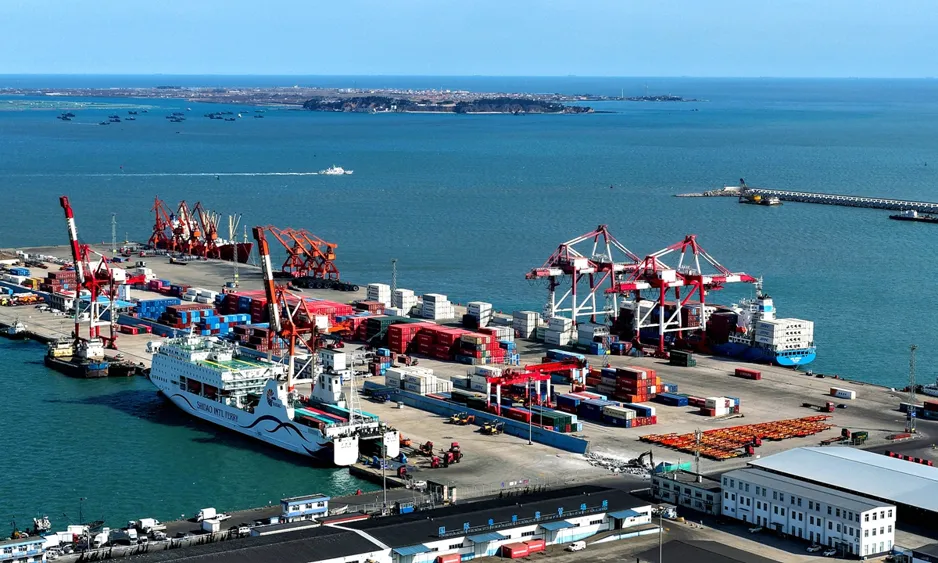
In 2025, China's foreign trade reached a notable milestone, surging to 45 trillion yuan, equivalent to around 6.48 trillion dollars. This figure represents a year-on-year growth of 3.8 percent, highlighting the resilience of China's trade amidst increasing global challenges. A detailed analysis reveals the forces behind this performance and their implications for 2026.
Central to China's trade resilience is the significant technology-led transformation of its industrial system. Historically, the global perspective of 'Made in China' was defined by low-cost, labor-intensive exports. However, the data from 2025 indicates a marked transition, with electromechanical products constituting roughly 60 percent of exports and equipment manufacturing nearing a similar percentage, signifying a rapid ascent in the value chain.
This evolution is indicative of a broader enhancement in industrial capacity. Decades of capital investment, supply chain integration, and entrepreneurial dynamism have enabled China to forge one of the most extensive manufacturing ecosystems globally. The competitive prowess seen in both traditional and contemporary manufacturing sectors stems not from short-lived policy interventions, but rather from sustained investments, technological progress, and industry evolution.
Moreover, the bolstering of technological expertise plays a critical role in the competitiveness of China's high-tech exports. This enhancement, fueled by intensified research and development efforts, supportive policies for innovation, and an expanded education and research framework, promotes synergies between technological advancements and industrial accumulation. Consequently, the escalation in high-tech production capacity not only escalates export volumes but also strengthens China's positioning within global value chains.
Looking ahead, the trend of innovation-driven industrial and trade upgrades is expected to continue. China's foreign trade is forecasted to maintain steady growth accompanied by qualitative improvements in structural composition and value addition.
As the landscape of exports transforms, imports are increasingly pivotal for achieving a balanced trade environment and tapping domestic demand. China has notably prioritized import expansion in recent years, striving for a more sustainable and balanced trade model.
Imports have historically facilitated industrial enhancement, with substantial volumes of intermediate goods and high-tech components enabling Chinese manufacturers to integrate into international production frameworks and climb the technological ladder. The import dynamics are shifting, however, with a growing share of high-end consumer goods and premium completed products reflecting an upgrade in consumption patterns alongside rising household incomes.
Institutional support remains a critical factor reinforcing this trend. Since the inception of the China International Import Expo in 2018, there has been a discernible increase in intended deal values along with widening positive spillover effects. Notably, despite ongoing trade tensions, multinational participation remains robust, illustrating the enduring attractiveness of China's market. The expo has evolved from a platform for trade matchmaking to a hub for facilitating investments, with numerous exhibitors transitioning to long-term investors.
In conjunction with conventional trade, emerging business models like cross-border e-commerce are taking center stage as significant contributors to growth. The rise of these models is a byproduct of the intersection of digital technology and trade innovation, positioning China's competitive edge not solely on manufacturing volume, but also on its digital infrastructure and smart manufacturing capabilities.
As logistical networks improve, and with the proliferation of overseas warehouses, cross-border e-commerce is anticipated to continue its expansion, creating new growth opportunities for China's foreign trade in 2026 and beyond.
Amid the challenges of rising protectionism and fragmented global trade, diversifying trade partnerships has emerged as another pillar of resilience. Developed markets retain their importance due to their purchasing power, while the stabilization of economic relations between China and the United States, along with potential support from U.S. macroeconomic policy, may bolster import capacities in the upcoming year.
Emerging markets are also becoming increasingly relevant, with trade with nations involved in the Belt and Road Initiative exceeding 50 percent of China's total trade in 2025, underscoring the initiative's growing commercial significance. Countries in Africa and Latin America are making strides as vital incremental markets, with their demand propelled by industrialization and infrastructure needs that align closely with China's manufacturing strengths. Collectively, the combination of technological upgrades, import expansion, digital trade innovation, and market diversification forms a resilient framework that underpins China's foreign trade outlook for 2026.
Read These Next

LABUBU sales hit 100 million units globally by 2025
Pop Mart's LABUBU doll series has sold over 100 million units globally, highlighting growth in China's trendy toy market.

Eskom Secures Approval for $34 Billion Price Hike in South Africa
Nersa allows Eskom to raise electricity prices by up to 8.3% annually to recover 54.7 billion rand over three years.

Argentina's Foreign Minister says US trade deals include China
Argentina emphasizes non-exclusivity in US-China trade ties, recognizing China's key global market role for sustainable growth.