

Chinese and European Companies Pursue Collaboration Amid Competition
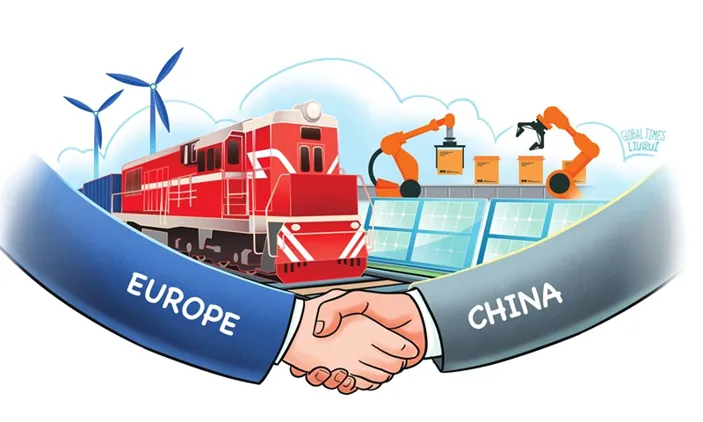
Chinese and European companies are increasingly finding common ground for collaboration, exemplified by the recent partnership between Renault Group and Geely in Brazil. The two firms have announced plans to manufacture two new car models in Brazil by the latter half of 2026, leveraging Geely's vehicle designs. This initiative is further bolstered by a substantial investment of 3.8 billion reais, approximately 713.9 million dollars, aimed at enhancing the industrial landscape in Brazil.
The alliance between Renault and Geely transcends mere market expansion; it showcases a paradigm shift in how Chinese and European enterprises can work together effectively despite the competitive backdrop. Amid concerns in Europe about increasing pressures from Chinese industries, this partnership clearly challenges the notion that economic relations between China and Europe are simply a zero-sum game. Instead, this collaboration illustrates the potential for mutual benefit and shared growth.
There has been rising discourse in Europe emphasizing the threats posed by Chinese economic advancements, which often leads to perceptions of rivalry rather than partnership. The collaboration in Brazil exemplifies that cooperation can yield tangible benefits. By bridging cultural and geographical divides to tap into the Brazilian market, Renault and Geely highlight the importance of collaboration over competition, emphasizing that their relationship is built on a foundation of substantial potential benefits.
As China's manufacturing sector continuously evolves with technological developments, the competitive landscape between China and the European Union in high-end manufacturing, particularly in the automotive sector, has intensified. Alongside this, geopolitical factors and concerns regarding supply chain security have prompted heightened policy discourse in the EU, with an evident trend toward safeguarding domestic industries, complicating opportunities for productive engagement.
Despite these complexities, there remains a profound opportunity for synergy between Chinese and European economies. The automotive industry, recognized as a core sector of global advanced manufacturing, has become a battleground of competition. European manufacturers bring esteemed brand recognition and exceptional engineering skills, while their Chinese counterparts excel in innovative battery technologies and intelligent connectivity.
The Renault-Geely partnership exemplifies how complementary strengths can be maximized for collaboration. By granting Geely access to an established network of plants and dealerships, and enabling Renault to optimize its production capacity while expanding its model range, this joint venture serves as a blueprint for future partnerships.
This partnership trend reverberates across the automotive industry, with notable collaborations like BMW's alliance with Chinese autonomous driving firm Momenta to enhance driving assistance technology for the Chinese market. Additionally, BMW and Alibaba have broadened their partnership to integrate cutting-edge technology into BMW's upcoming electric vehicle lineup.
These collaborations indicate a shift toward a more integrated future for China-Europe industrial relations, characterized not solely by competition but by strategic alliances that maximize collective strengths. This win-win approach fosters innovation, allowing both sides to share resources and unlock new markets, ultimately elevating the automotive sector's quality and efficiency.
The Renault-Geely joint venture offers significant insights for broader China-EU economic cooperation. Enhanced collaboration is not merely a strategic move; it is essential for navigating shared global challenges. By fostering deeper ties in investment, technology, and market development, both regions can establish resilient supply chains and reduce vulnerabilities from over-dependence on single markets.
As both economies explore opportunities in green development, digital innovation, and advanced manufacturing, their complementary capabilities lay the groundwork for new growth avenues. Against a backdrop of sluggish global recovery and increasing protectionism, more profound China-EU collaboration will bolster collective resilience against external threats.
Practical collaborations between Chinese and European firms will continue to cultivate shared interests, leading to stronger synergies in tackling crucial global issues such as climate change and economic instability. Ultimately, these cooperative efforts will instill greater stability and predictability in the international economy.
Read These Next

Shanghai Fengyuzhu's Annual Report: Navigating Change
A critical analysis of Shanghai Fengyuzhu Cultural Technology Co., Ltd.'s annual report focusing on strategic shifts in project funding and potential implications for investors.

South Korea Targets Chinese Tourists to Boost Consumption Potential
South Korea aims to attract more Chinese tourists, leveraging China's economic recovery for tourism and cultural exchange.

Brazil's State Oil Company Boosts Aviation Fuel Prices by 55%
On April 1, Brazil's national oil company announced a 55% rise in aviation fuel prices, affecting airline costs and travel.