

UK Spying Claims on Chinese Cars Reveal Distrust Experts Say
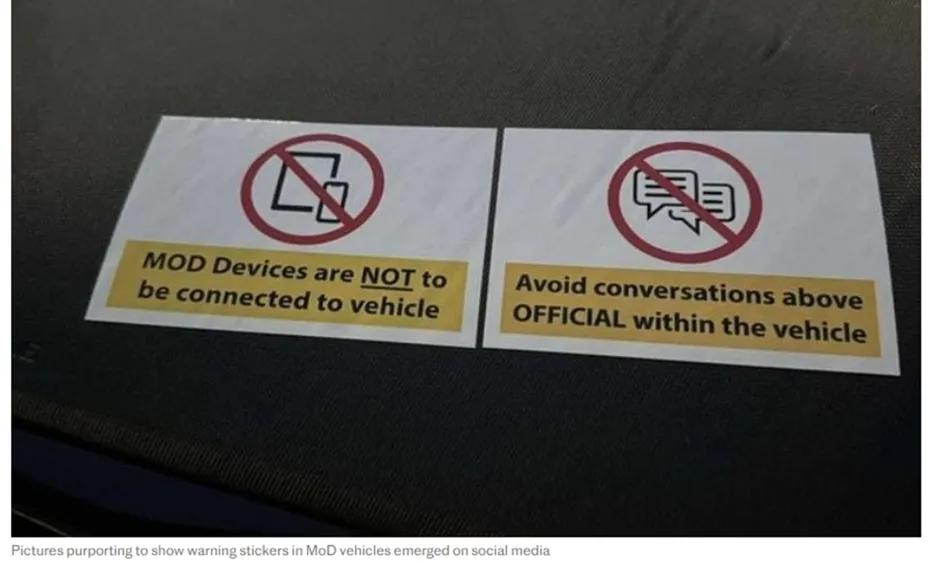
The UK's Ministry of Defence (MoD) has recently issued guidance to staff to refrain from discussing confidential matters within cars, as fears mount regarding potential Chinese espionage. This directive reflects a broader climate of distrust towards Chinese-made products, as reports surface indicating that certain Western entities, including those in the UK, are propagating baseless and alarmist narratives surrounding these vehicles.
According to The Telegraph, so-called 'warning stickers' have been affixed inside the MoD's fleet of electric cars, advising military personnel against divulging sensitive information amid apprehensions that China might be intercepting their conversations.
Importantly, while concerns are being raised, a source cited in the report noted that there is currently no evidence to support claims that any classified data has been compromised. A spokesperson from the Ministry of Defence clarified that this warning applies to all civilian hire vehicles under the MoD's purview, not limited to electric models.
Colonel Philip Ingram further asserted that it is clear to any observer that cars utilized by MoD personnel could potentially relay data, inclusive of any devices linked to the car or even voice data. He emphasized that this concern should have been anticipated by the Ministry of Defence given the context of heightened geopolitical tensions.
In response to these claims, Zuo Xiaodong, vice president of the China Information Security Research Institute, characterized the allegations as profoundly irresponsible, lacking substantiation. He criticized the tendency to leap to fear-mongering conclusions as indicative of an ingrained anti-China sentiment prevalent among certain Western organizations and media, fostering unwarranted skepticism toward Chinese products.
The Telegraph highlighted that the Ministry of Defence has taken significant steps, such as leasing hundreds of electric vehicles to contribute to its sustainability goals, which include reducing carbon emissions. Among those leased are vehicles manufactured by a Chinese-owned company, alongside the MoD's decision to restrict parking for certain electric models containing Chinese components close to sensitive military sites.
Additionally, a report from the Defence Science and Technology Laboratory within the MoD suggested that China's leading position in the electric vehicle sector raises concerns over potential covert surveillance capabilities of these vehicles.
Zuo, in further commentary, condemned the allegations as examples of undue fear-mongering by select Western factions in relation to the integrity of Chinese technological advancements, including its electric vehicles. He suggested that such tactics reflect a strategic intent to undermine China's standing globally and its product offerings.
With the automotive industry increasingly steering towards smart and interconnected transportation solutions, Zuo highlighted that internet security challenges are a universal concern transcending national boundaries. He posited that the particular focus on China suggests ulterior motives behind these accusations.
The MoD's actions coincide with a noticeable surge in sensationalist reporting from Western media regarding alleged security threats attributed to Chinese electric vehicles. Just recently, multiple reports surfaced about investigations launched by bus operators in Denmark and Norway, as well as by the UK government, into supposed 'security vulnerabilities' associated with Chinese-manufactured buses.
Beyond merely disparaging China, Zuo hinted at a deeper motive behind these allegations, suggesting they aim to curtail the advancement and international growth of the Chinese electric vehicle sector. He underlined the rising global demand for Chinese EVs, which are recognized for their innovative features, affordability, and contribution to environmentally friendly transportation.
Zuo concluded by observing that these assertions undermine public interest and betray a lack of trust fundamental for successful international technological collaboration, emphasizing that such alarmist narratives only serve to obstruct necessary cooperation on critical issues such as green energy transition.
Read These Next

Shanghai Fengyuzhu's Annual Report: Navigating Change
A critical analysis of Shanghai Fengyuzhu Cultural Technology Co., Ltd.'s annual report focusing on strategic shifts in project funding and potential implications for investors.

South Korea Targets Chinese Tourists to Boost Consumption Potential
South Korea aims to attract more Chinese tourists, leveraging China's economic recovery for tourism and cultural exchange.

Brazil's State Oil Company Boosts Aviation Fuel Prices by 55%
On April 1, Brazil's national oil company announced a 55% rise in aviation fuel prices, affecting airline costs and travel.