

China's youth jobless rate drops to 173 percent in October
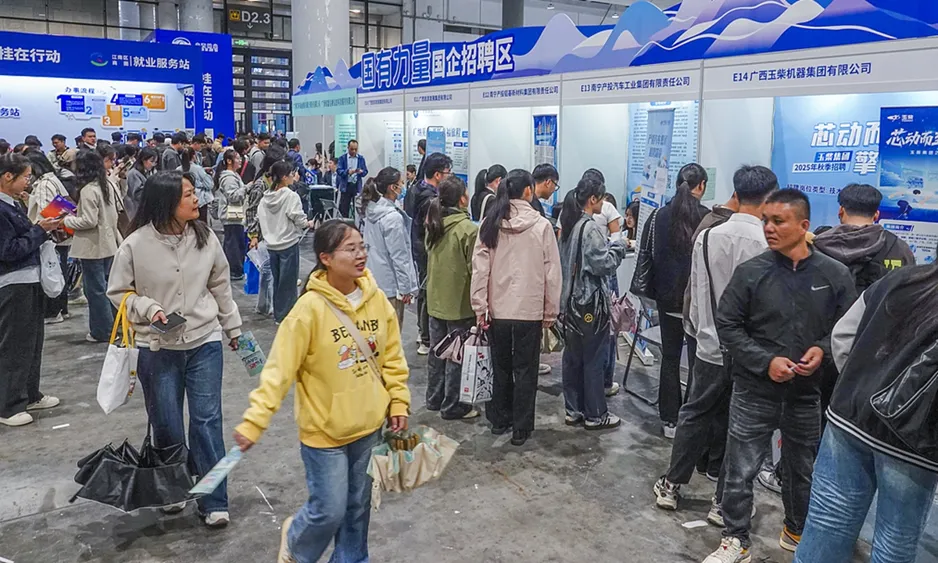
The unemployment rate among young job seekers in China has seen a decline, illustrating the effectiveness of government initiatives aimed at boosting urban employment. The National Bureau of Statistics reported that the jobless rate for urban workers aged 16 to 24, excluding students, dropped to 17.3 percent in October, a slight decrease from the 17.7 percent observed in September.
This improvement in job prospects is part of a broader trend, with the jobless rate for urban workers aged 25 to 29 recorded at 7.2 percent, while those aged 30 to 59 experienced a lower rate of 3.8 percent. The decrease in youth unemployment is particularly notable given the challenges faced by this demographic in the past months.
The decline in unemployment among young people can be attributed to a series of strategic policy documents released by the Chinese government this year. These measures aim to stabilize urban employment through various fiscal, tax, and financial support initiatives, creating a substantial buffer for the labor market.
Historically, the unemployment rate for workers aged 16 to 24 tends to increase during seasonal downturns, particularly from July to September. However, it has notably decreased from 18.9 percent in August, reflecting the positive impact of the government's employment strategies.
In the first three quarters, significant financial measures have been enacted, including a temporary reduction in unemployment insurance contributions, which resulted in a decrease of labor costs for businesses by 138.4 billion yuan. Additionally, the government allocated 19.6 billion yuan in job stabilization subsidies and 16.6 billion yuan for labor training.
Efforts to bolster employment opportunities also include programs like the 'Rural Service Support' initiative, which successfully recruited 42,500 college graduates nationwide, helping to address job market pressures.
Provincial governments are also ramping up their efforts to tackle unemployment challenges. For instance, Sichuan Province recently implemented guidelines focused on revitalizing high-quality employment by enhancing market-driven mechanisms and creating more job opportunities in line with economic development.
Nationally, from January to September, China created 10.57 million new urban jobs, achieving 88 percent of its annual target. Furthermore, the surveyed urban unemployment rate decreased to 5.2 percent in September, highlighting a continuing trend of improvement.
On November 10, China announced further measures to invigorate private investment and support business growth, focusing on easing market access, eliminating institutional barriers, and enhancing financial support for private sector investors.
Experts suggest that the private sector, particularly small and medium-sized enterprises, will play a crucial role in sustaining employment growth in China. Enhanced government support through tax reductions and improved access to financing is seen as vital to fostering this segment of the economy.
Looking ahead, as the Chinese economy matures, the services sector is anticipated to become a more significant generator of job opportunities. Areas such as culture, healthcare, and education are particularly poised for growth, provided that the government removes unnecessary barriers for entrepreneurship and start-ups.
Read These Next

Shanghai Fengyuzhu's Annual Report: Navigating Change
A critical analysis of Shanghai Fengyuzhu Cultural Technology Co., Ltd.'s annual report focusing on strategic shifts in project funding and potential implications for investors.

South Korea Targets Chinese Tourists to Boost Consumption Potential
South Korea aims to attract more Chinese tourists, leveraging China's economic recovery for tourism and cultural exchange.

Brazil's State Oil Company Boosts Aviation Fuel Prices by 55%
On April 1, Brazil's national oil company announced a 55% rise in aviation fuel prices, affecting airline costs and travel.