

80 Percent of Winter Wheat Sown as Provinces Race to Plant
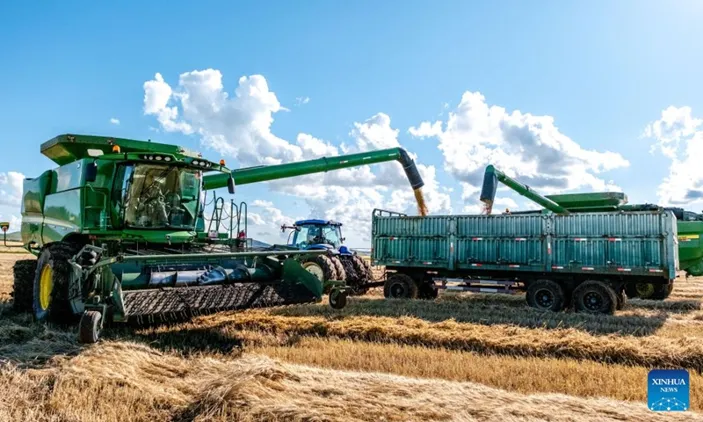
In a significant advancement for China's agricultural sector, the Ministry of Agriculture and Rural Affairs reported that over 80 percent of the nation's winter wheat has been sown, reflecting the rapid progress made by various provinces in autumn-winter planting. This move underscores China's commitment to enhancing food security through agricultural technology.
The data reveals that nearly 85 percent of the winter wheat crop has been sown in the Huang-Huai-Hai region, a crucial agricultural area. Central China’s Henan Province has approached 80 percent sowing completion, while East China’s Anhui Province has already surpassed this threshold. In contrast, East China's Jiangsu Province stands at about 65 percent, although the more populous provinces of Shandong and Shaanxi are nearing a notable 90 percent.
As provinces continue to expedite the autumn-winter sowing process, it has been reported that winter rapeseed planting is mostly completed. However, persistent rainfall has caused delays in some key wheat-producing regions, leading localities to intensify their efforts to make up for lost time.
In Anhui Province, proactive measures have been implemented with over 43 million acres being mapped for effective cultivation. Meanwhile, Jiangsu is focusing on the implementation of mechanical uniform-seeding technology to ensure consistent seedling emergence, complemented by the deployment of 13 provincial expert teams for tailored regional guidance.
The importance of winter grains for national food security cannot be overstated, as they play a vital role in maintaining a stable supply of staple foods and supporting related processing industries. The extended growing cycle of these crops provides a necessary buffer against climate variability, thereby safeguarding economic stability and rural livelihoods.
Bian Yongzu, a prominent researcher at the China Institutes of Contemporary International Relations, emphasized the significance of wheat as a crucial staple crop, particularly in the densely populated northern provinces where wheat-based foods dominate. Timely planting is essential to ensure that food security remains intact for the future.
He further explained that the winter wheat growth cycle allows for the possibility of farmers planting a second crop of corn or soybeans. Delays in sowing can adversely affect next year's grain output and compromise land use efficiency.
Addressing the weather challenges posed by late autumn rains, Bian noted that while sowing in parts of Shandong and Henan was initially hampered, planting rapidly resumed once conditions improved. This additional moisture can actually aid in seed germination.
Advancements in agricultural mechanization—from soil preparation to sowing and fertilization—have significantly reduced reliance on favorable weather conditions compared to the past. Bian highlighted that current machinery and agricultural technology have notably improved efficiency, allowing for better adaptation to weather-related risks.
Read These Next

Shanghai Fengyuzhu's Annual Report: Navigating Change
A critical analysis of Shanghai Fengyuzhu Cultural Technology Co., Ltd.'s annual report focusing on strategic shifts in project funding and potential implications for investors.

South Korea Targets Chinese Tourists to Boost Consumption Potential
South Korea aims to attract more Chinese tourists, leveraging China's economic recovery for tourism and cultural exchange.

Brazil's State Oil Company Boosts Aviation Fuel Prices by 55%
On April 1, Brazil's national oil company announced a 55% rise in aviation fuel prices, affecting airline costs and travel.