

FCC's New Restrictions on Chinese Telecoms Spark Expert Concerns
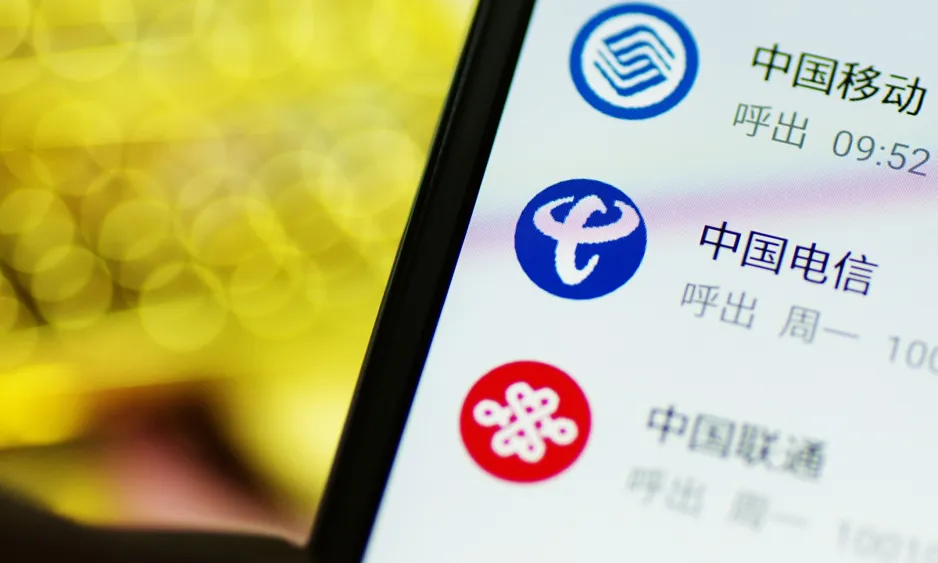
The Federal Communications Commission (FCC) is considering imposing new restrictions on Chinese telecom companies, an action analysts label as an intensification of Washington's technology-related constraints, driven more by political motives than actual security concerns. This move raises significant worries about the ramifications for economic and trade stability between the United States and China.
According to a recent report by Reuters, the FCC may prohibit major Chinese telecom carriers such as China Mobile, China Telecom, and China Unicom from establishing data centers within U.S. territory. Additionally, there is a potential ban on American telecom operators connecting with these Chinese companies.
The FCC's tentative conclusion suggests that American and other telecommunications carriers should refrain from interconnecting with entities identified on its so-called 'Covered List' due to purported national security threats. This list includes well-known companies like China Mobile, China Telecom, and China Unicom.
Moreover, the FCC is contemplating restricting Chinese firms operating data centers or Points of Presence at internet exchange points from engaging with other companies. It is also exploring an expansion of existing service bans to cover subsidiaries associated with companies on its national security list.
The agency may go so far as to prevent telecommunications carriers from interconnecting with companies using equipment from entities on its restricted list, which includes major manufacturers like Huawei and ZTE.
Li Yong, a senior fellow at the China Association of International Trade, criticized these measures as an irrational expansion of the U.S. national security narrative. He argues that the underlying motivations are more about political objectives aimed at fostering a decoupling in the technology and telecommunications sectors between the two nations.
The FCC is slated to hold an initial vote on this new directive at its upcoming meeting on April 30, further emphasizing the urgency and seriousness with which the issue is being treated.
In the face of these actions, the Chinese Embassy in Washington has firmly opposed what it describes as the excessive interpretation of national security and suppression of Chinese businesses by the United States.
These latest proposals align with a broader trend of U.S. restrictions on Chinese technology firms throughout various segments of the communications supply chain. Days prior, the FCC advanced a proposal to ban the import of telecommunications equipment from companies already on its 'Covered List,' intensifying its prior actions.
Looking back, the FCC's stance became more pronounced in December when it indicated potential prohibitions against Chinese carriers accessing U.S. networks, an effort that has increasingly marginalized these companies from the market.
Currently, Chinese telecom operators have a markedly reduced footprint in the U.S., maintaining minimal engagement primarily through cloud services and wholesale internet routing, as previously noted by Reuters.
Li emphasized that these recurring and arbitrary restrictions negatively affect the credibility of the U.S. market. He warned that the vague rationale behind these extensive limitations is fostering an increasingly unstable investment climate, ultimately deterring multinational corporations from engaging with the U.S. economy.
Read These Next
China willing to negotiate trade agreements with EU says MOFCOM
China's Ministry of Commerce is open to negotiating bilateral economic agreements with the EU to enhance trade relations.
Istanbul Stock Exchange Extends Short Selling Ban to April 24
Turkey extends short-selling ban on the Stock Exchange until April 24, 2026, to stabilize markets amid economic volatility.

Trump to Attend Meeting at Virginia National Golf Club
President Trump will attend a key meeting at Trump National Golf Club in Virginia, engaging with supporters and discussing policies.