

Premium rice highlights China’s growing organic consumption
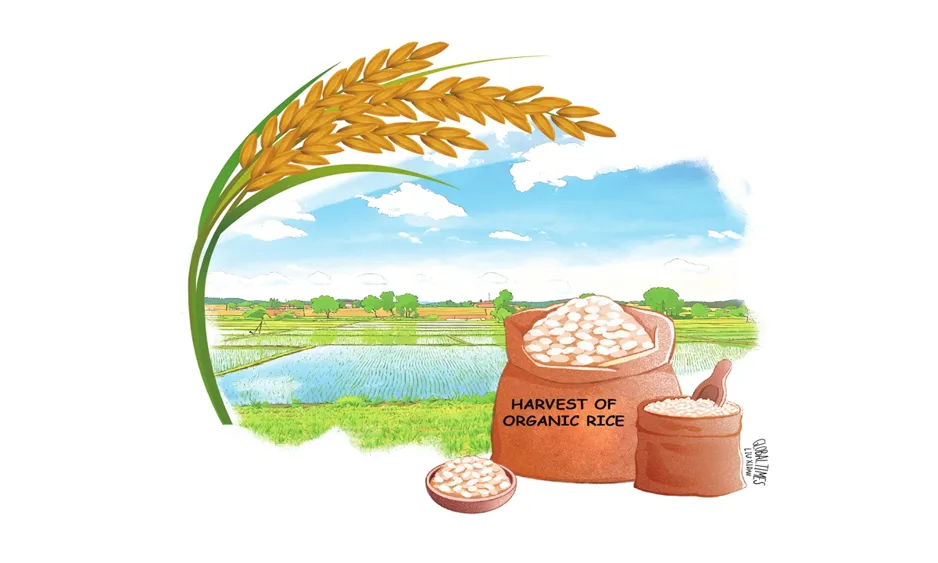
The organic rice market in China is experiencing significant growth as consumers increasingly prioritize healthier lifestyles. This shift is not only enhancing farmer profits but also elevating the overall market value of organic products.
Recent reports indicate that farmers transitioning from conventional green rice to organic varieties have seen their profits soar by as much as five times. While the average profit from cultivating green rice sits at around 400 yuan, or approximately 58.50 dollars, organic rice yields about 2,000 yuan per mu. This notable increase in profitability highlights not only a transformative shift in agricultural practices but also a rising consumer demand for organic and higher-quality goods.
Despite the premium pricing of organic rice, consumer demand continues to surge. A report published by People's Daily on April 5 reveals a 25 percent year-on-year rise in organic rice sales, according to data from JD.com. This trend suggests that more consumers are willing to invest in organic products, signifying a broader movement towards health-conscious consumption.
Moreover, the demand for organic offerings extends beyond rice alone. In both online and brick-and-mortar retail sectors, organic vegetables, fruits, and condiments like soy sauce are becoming increasingly accessible. The growing availability of these products demonstrates that organic items are gradually becoming mainstream.
The rapid expansion of China's organic product market presents substantial growth potential. Factors such as escalating consumer demand, enhanced value in agriculture, and the integration of technology in retail are driving this dynamic shift across the nation.
In 2024, organic product sales in China reached an impressive 124.7 billion yuan, reflecting a year-on-year growth rate of 22.79 percent. As reported by Farmers' Daily in October 2025, China retains its position as the world's third-largest market for organic consumption, underscoring the remarkable momentum in this sector.
The prospects for organic consumption in China are poised for further expansion, spurred by a multitude of factors that are likely to elevate organic products within the consumer market. With increasing incomes and rising awareness of health and food safety, demand for organic items continues to climb.
As incomes rise, so does the emphasis on health-conscious consumption. For instance, the National Bureau of Statistics reported that China's per capita disposable income in 2025 reached 43,377 yuan, reflecting a real increase of 5 percent year-on-year. This growing affluence is accompanied by a shift in consumer preferences, with organic foods being perceived as safer and of superior quality.
Additionally, the growing appetite for high-end products is creating fertile ground for higher-value agriculture. Typically, organic products offer significantly greater profit margins compared to their conventional counterparts, motivating producers to adopt improved practices. This trend not only supports sustainable agricultural methods but also benefits both farmers and consumers.
Furthermore, organic products are increasingly accessible to a wider audience, unlocking the potential of lower-tier markets. Current statistics reveal that express delivery services now reach 95 percent of China's administrative villages. As logistics and warehousing capabilities expand into these regions, fresh food e-commerce and retail channels are swiftly growing in lower-tier areas.
Lastly, the boom in organic consumption is fostering growth in related services, such as certification processes, testing organizations, and traceability systems using QR codes and blockchain technology. These elements are part of the modern service sector that ensures product safety, builds consumer trust, and enhances supply chain efficiency.
Read These Next

Growth and Sustainability in Modern Manufacturing
The commentary analyzes a company’s strategic shift towards sustainability and technological innovation, evaluating financial trends, risks, and broader market implications.
Canton Fair Launches with Record Exhibitors and Buyers
The 139th Canton Fair will feature 32,000 enterprises and over 210,000 buyers, boosting China's trade and global connections.

World Bank Aids Countries in Energy Diversity and Autonomy
The World Bank is working with countries to diversify energy sources and boost energy autonomy amid a global energy crisis.