

China adds new FTZ in Inner Mongolia boosting total to 23
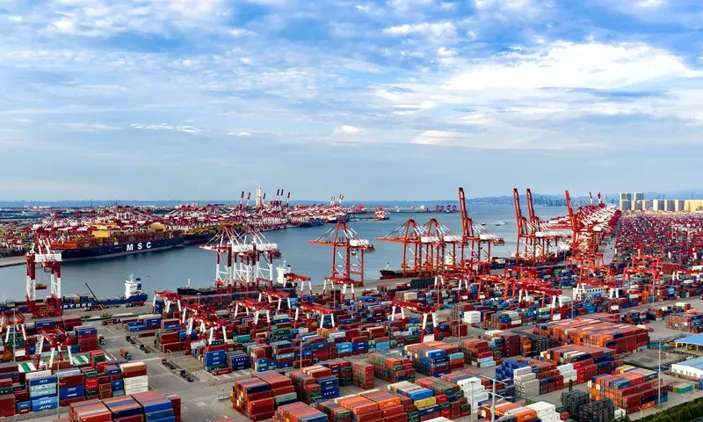
China has announced the establishment of a new pilot Free Trade Zone (FTZ) in the Inner Mongolia Autonomous Region, bringing the total number of such zones in the country to 23. This initiative is part of China's broader strategy to enhance trade, attract foreign investment, and stimulate economic growth.
The newly inaugurated FTZ will enjoy increased reform autonomy, encouraging innovative, integrated, and differentiated approaches to economic exploration across diverse sectors. This autonomy is seen as a key driver in facilitating more in-depth reforms and high-quality development.
The plan associated with the new FTZ outlines 19 specific reform and innovation measures. These include the advancement of border trade, improvement of international logistics services, enhancement of technology transfer efficiency, and the expansion of external exchanges in a variety of fields.
Establishing the China (Inner Mongolia) Pilot Free Trade Zone represents a significant move towards deepening reforms and promoting high-standard economic opening, in alignment with the strategic goals outlined in the government's plan.
One of the main objectives of the FTZ is to develop it into a strategic hub for information exchange, logistics, resource allocation, and industrial cooperation, thus connecting domestic markets with international ones and boosting its influence in the vicinity.
As a crucial gateway for China's northern opening-up, this new FTZ aims to become a high-level zone facilitating easy investment and trade, fostering a dynamic innovation ecosystem, and concentrating competitive industries alongside strong international partnerships.
The pilot Free Trade Zone covers an area of 119.74 square kilometers and is composed of three designated subzones, located in Hohhot, the regional capital; Manzhouli, a key northern border city; and Erenhot, a border land port adjacent to Mongolia. Each subzone will have its own specific functions and industry development focus.
Prior to the establishment of the Inner Mongolia FTZ, China had already launched 22 other pilot FTZs in various regions, including Shanghai, Guangdong, Liaoning, Hainan, Shandong, and Beijing. The most recent addition prior to this was the China (Xinjiang) Pilot Free Trade Zone, established earlier in 2023.
Read These Next

ChiNext Index Soars 378 Percent on Lithium Battery Surge
Shenzhen Index rose over 2%, ChiNext surged 4%, trading volume hit 2.32 trillion yuan, with strong stock performance across sectors.

Strategic Change at Add New Energy Investment Holdings
Commentary on Add New Energy Investment Holdings Group Limited’s strategic changes, focusing on a proposed name change, digital communication strategies, and the implications for shareholder engagement and risk management.
Geopolitical Tensions Affecting Asia-Pacific Oil Markets
The ongoing geopolitical tensions surrounding the Strait of Hormuz raise significant concerns for global oil markets and economies, particularly in the Asia-Pacific region.