

Chinese Firm Launches Robotaxi Service in Croatia Competitors Emerge
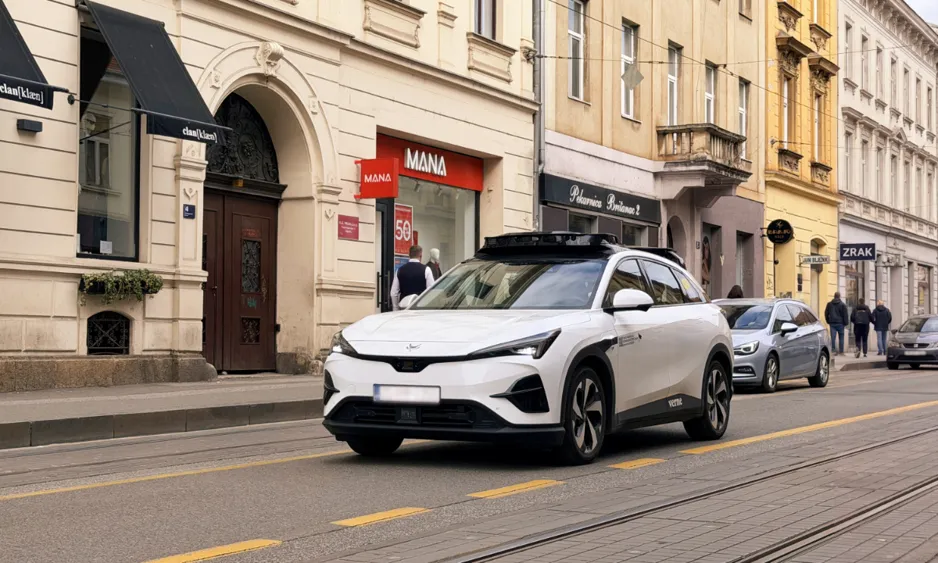
Pony.ai, a prominent leader in the field of autonomous driving, has officially launched its commercial robotaxi services in Zagreb, Croatia, in collaboration with local mobility company Verne and global ride-hailing giant Uber. This groundbreaking service represents the first fully operational robotaxi offering available to the public in Europe.
This launch signals Europe's emergence as a key market in the autonomous driving arena, where Chinese and European companies are advancing distinct strategies to capitalize on the region's surging demand for autonomous transport solutions.
Commencing operations on Wednesday, customers in the Croatian capital can now book rides through the Verne app, with plans for future integration into Uber's platform, as stated by Pony.ai in a release to the Global Times.
Pony.ai's entry into the European market reflects a broader trend of Chinese autonomous driving enterprises gaining traction across the continent, positioning Europe as the next frontier after extensive development and testing phases in the United States and China.
Adding to this dynamic landscape, WeRide, another Chinese autonomous technology firm, recently disclosed a strategic partnership with ELEVATE Slovakia, thereby launching Slovakia's inaugural autonomous driving project. This marks WeRide's fourth market in Europe, following its initiatives in France, Belgium, and Switzerland.
Momenta, another key player in the autonomous sector, announced plans to initiate Level 4 autonomous vehicle trials in Germany by 2026, with the goal of introducing safe and scalable robotaxi services across Europe and beyond.
Additionally, Baidu's Apollo Go platform is set to start autonomous ride-hailing tests in London in 2026, a move aimed at contributing to a more digital and environmentally sustainable transport system in the city.
European manufacturers are also making strides, with Volkswagen ramping up pre-series production at its Hanover plant for the fully autonomous ID. Buzz AD, designed for robotaxi applications. The first 500 units are projected for production by the end of the year, with full series production slated to begin in 2027.
As the landscape for autonomous driving intensifies in Europe, significant collaboration is being observed between Chinese and European companies. Experts suggest that both sides have unique strengths that foster this cooperative relationship, with Chinese firms leading in technology and practical experience, while European companies excel in vehicle manufacturing.
However, local manufacturers like Volkswagen lag in autonomous technology, highlighting a gap that Chinese firms have the potential to bridge, especially when forming partnerships to meet stringent regulatory standards in Europe.
According to projections by Boston Consulting Group, by 2035, around 120,000 robotaxis could be cruising the streets of European cities. The analysis suggests that both the US and China will play significant roles in this growth due to favorable regulations and investment infrastructures.
The report estimates that the US robotaxi fleet could reach approximately 350,000 vehicles by 2035, while China may see about 850,000 vehicles on the roads. In a more optimistic scenario, global adoption could escalate these numbers toward 3 million vehicles.
Read These Next

Growth and Sustainability in Modern Manufacturing
The commentary analyzes a company’s strategic shift towards sustainability and technological innovation, evaluating financial trends, risks, and broader market implications.

Canton Fair Launches with Record Exhibitors and Buyers
The 139th Canton Fair will feature 32,000 enterprises and over 210,000 buyers, boosting China's trade and global connections.

World Bank Aids Countries in Energy Diversity and Autonomy
The World Bank is working with countries to diversify energy sources and boost energy autonomy amid a global energy crisis.