

China's Consumer Market Vitality Revealed Through Tea Leaf Story
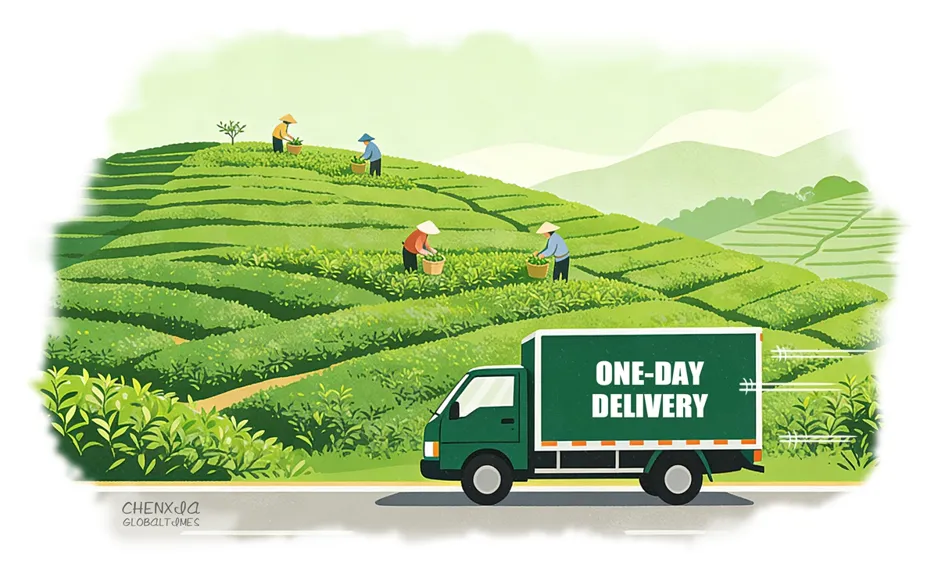
China's tea harvest this spring has invigorated the country's supply chain, demonstrating a remarkable blend of logistics and innovation to satisfy modern consumer demands. Every stage of the supply chain—from the initial harvesting and processing stages to transportation and retail—has been meticulously integrated to ensure efficiency.
In efforts to expedite the delivery of spring tea, local postal services have optimized their operations significantly. According to tidenews.com.cn, 32 new collection points have been introduced in Huzhou, creating direct links between tea plantations and processing factories. Additionally, 20 mobile collection vehicles are in sync with harvesting and production schedules, while five autonomous delivery vehicles handle door-to-door collection along with real-time payment processing.
At the heart of this sophisticated supply chain lies the consumer market. It is consumer demand that accelerates the journey of tea from the distant mountain plantations to the hands of everyday consumers, driving the entire supply chain forward. The complexity of this process underscores the significance of consumer preferences in shaping market dynamics.
Behind each tea leaf is an intricate and multi-layered industry fueled by a vibrant consumer market. As reported by the Xinhua News Agency, specialized tea-processing enterprises in China generated over 120 billion yuan, approximately 17.5 billion dollars, in revenue in 2025. The overall supply chain has exceeded 1 trillion yuan and supports employment for more than 60 million individuals annually.
The sector continues to evolve through emerging business models such as 'satellite +' tea planting, intelligent manufacturing facilities, and the rise of innovative tea beverages. The integration of tea tourism into the industry is also developing rapidly, contributing to the sustained growth and diversification of the sector.
The current figure of 1 trillion yuan in the tea industry is significant, yet the potential for further expansion is even more compelling. According to Xinhua, a directive from the Ministry of Industry and Information Technology and other related organizations has set a target for the entire supply chain to reach 1.5 trillion yuan by 2030, reflecting an ever-growing consumer market and a steady rise in consumer demand.
The growth within China's tea industry is not solely reliant on traditional practices; it is enhanced by the adoption of modern business models and adaptations to changing consumer trends. A particular focus has emerged on attracting younger audiences who value convenience and health.
New-style tea beverages serve as a prime example of this trend, as they have gained immense popularity, especially among younger consumers. In Meitan, located in Southwest China's Guizhou Province, an advanced processing facility utilizes robotic technology to seamlessly blend jasmine and osmanthus flowers, indicating a shift toward modern methods of production.
This rapid evolution within the tea consumption market encompasses not only new-style beverages but also a variety of trends like tea tourism, accommodations themed around tea culture, wellness retreats in tea-growing areas, and cultural products inspired by tea. These developments enhance tea's prominence in contemporary lifestyles, appealing to a wide and discerning consumer base.
Ultimately, the tale of a single tea leaf serves as a microcosm of the resilience and vitality of China's consumer market. Tea offers a distinctive perspective from which to observe the rapid progression of the market, characterized by continuous emergence of new trends and business models. For businesses, the challenge lies in effectively navigating this swift growth while remaining attuned to ongoing change.
Moreover, the quick delivery of Anji tea exemplifies this dynamic market, mirroring consumers' escalating demand for fresh spring tea and their heightened expectations for speed and convenience. As demand persists and the market evolves, these shifts are catalyzing the broader trend of consumption upgrading, thereby injecting new energy into the consumer sector.
Read These Next
Growth and Risk: Strategic Acquisitions and Tech Innovation 2025
Analysis of recent shifts within a business sector, highlighting strategic acquisitions, technological advancements, financial trends, and associated risks.

China MIIT Invites Global Cities to Join New Industrial Revolution
China's MIIT invites global cities to join an initiative for industrial cooperation and a network for the New Industrial Revolution.

Shanghai Export Container Freight Index Rises to 1854.96 Points
Shanghai export container freight rate index rises to 1854.96, signaling growth in China’s export confidence amid global recovery.