

2026 ZGC Forum Highlights Rapid Growth of Embodied Intelligence
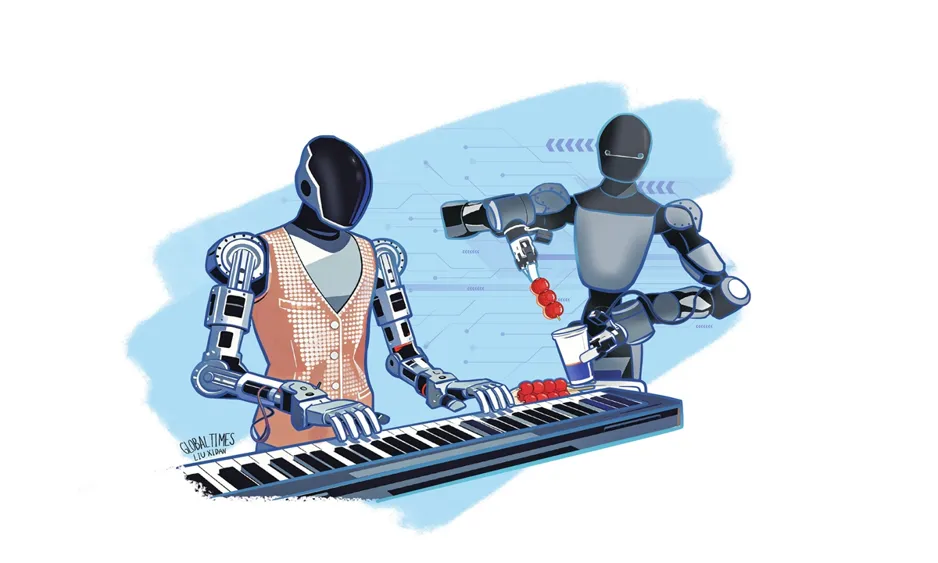
The 2026 Zhongguancun Forum has become a pivotal event, showcasing the rapid advancements in embodied intelligence in China, particularly in the realms of robotics and artificial intelligence. This annual forum has served as a platform to unveil the transformative potential of these technologies, underscoring their role as a key emerging industry that is set to attract significant investments and opportunities.
Throughout this year's Government Work Report, China emphasized embodied intelligence as a focal point for industrial development. The quick progression of the robotics and embodied intelligence sectors—from initial research in labs to large-scale production—is expected to facilitate the emergence of numerous start-ups into leading global technology firms, fostering a competitive edge on the international stage.
Driving this rapid evolution in embodied intelligence is not merely a series of technological breakthroughs; it also stems from a convergence of advantages. Factors such as advancements in large-language AI models, decreasing hardware costs, and an expanding array of application scenarios are accelerating the transition of Chinese high-tech products from theoretical prototypes to practical real-world applications.
Zhongguancun is actively cultivating a robust cluster for businesses in the embodied intelligence sector, illustrating a broader trend in China's robotics landscape. The Zhongguancun (Haidian) Embodied Intelligence Innovation Industrial Park has successfully attracted 14 companies specializing in embodied intelligence, along with seven AI firms, creating a comprehensive industrial ecosystem that fosters inter-business collaboration and rapid technological innovation.
Certain start-ups in China are already leading the way in the worldwide embodied intelligence arena. LINKERBOT, a producer of advanced robotic hands, demonstrated its innovative models at the forum. Co-founder Zhang Yanbai indicated that Beijing is emerging not just as a production center but also as a hub for algorithm development, allowing these robotic hands to acquire specialized skills modeled on human professions.
At the forum, a number of foreign investors expressed strong interest in bringing Chinese-made robots into their native markets, pointing to a significant demand that goes beyond the confines of the exhibition space. Supporting this optimism, customs data indicated a noteworthy increase in China's industrial robot exports in 2025, which surged by nearly 49 percent, marking the first occurrence of industrial robot exports exceeding imports, thereby categorizing China as a net exporter.
This remarkable export growth reflects both growing international confidence in Chinese robotics technology and the country's ascending status within the global value chain. Locally produced robots are gaining traction in various markets, from Southeast Asia to Latin America, further diversifying market presence and enhancing China's influence in global industrial automation.
The Development Research Center of the State Council has projected in its China Development Report 2025 that the embodied intelligence market could surpass 1 trillion yuan, or approximately 145 billion dollars, by 2035. Such forecasts indicate not just significant market potential but also the development of a new growth engine that could substantially reshape both manufacturing and service industries.
According to the co-founder of LINKERBOT, their products, which include dexterous robotic hands coupled with mechanical arms, are set to enter industrial applications in the upcoming year. These advancements will enable robots to perform tasks deemed hazardous, repetitive, or undesirable for human labor, with intentions to enhance precision in manufacturing processes.
Chinese entrepreneurs and investors are displaying an increasing level of confidence, bolstered by a diverse array of versatile embodied intelligence robots showcased at the forum. The emergence of this technology is poised to enhance productivity, reduce costs, and fundamentally transform China's evolving manufacturing landscape, with robots taking on more complex and high-risk tasks.
Following its emergence as a net exporter of industrial robots in 2025, China's manufacturing sector is accelerating toward a crucial transformation toward higher-end, smarter, and increasingly globalized production. During the 14th Five-Year Plan period (2021-2025), China's manufacturing accounted for over 30 percent of global manufacturing growth, maintaining its position with the largest manufacturing scale globally for 15 consecutive years.
Read These Next
Insights on Asset Write-Offs Amid Financial Turbulence
A critical commentary analyzing the recent asset write-offs and financial strategies of a company, providing insights into potential risks, historical comparisons, and the implications for investors.

Russia's Oil Deliveries to Cuba: Geopolitical Implications
This commentary presents a critical analysis of the implications surrounding a Russian oil shipment to Cuba, evaluating its impact on oil markets, U.S.-Cuba relations, and potential responses from the Biden administration while considering historical contexts and future opportunities for investors.

Recent Survey Reveals Insights on US Stock Market Trends
The Nifty Bank Index dropped 4.1%, raising investor concerns about market performance and potential global impacts.