

Markets Brace for Fed's Potential Rate Hike Amid Inflation
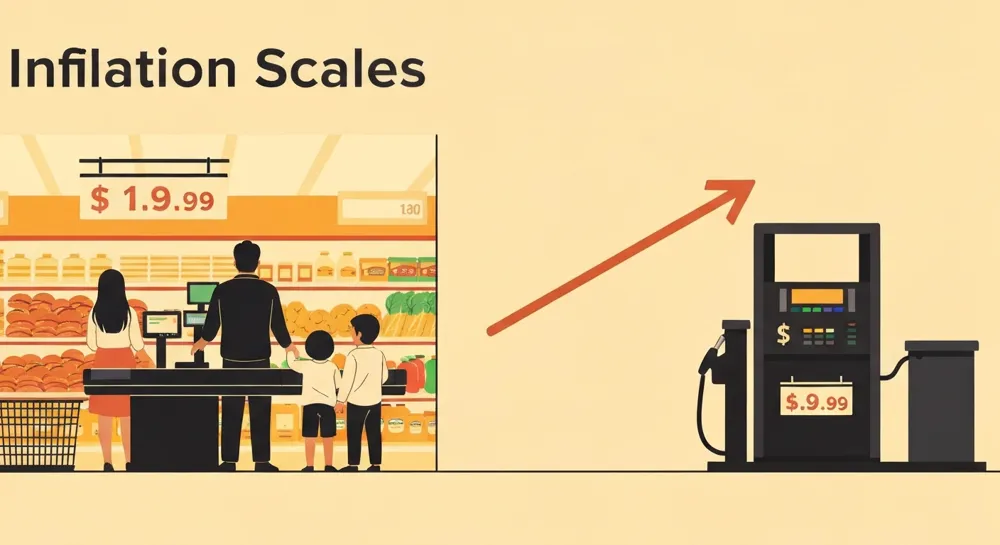
In recent weeks, markets have been gripped by heightened scrutiny of Federal Reserve policy as inflation continues to surge, driven primarily by rising energy costs and escalating prices due to geopolitical tensions in the Middle East. Notably, Brent crude oil prices have surged above $110, inciting speculation regarding future interest rate hikes. As traders in the futures market now assign a 52% probability to a rate increase by the end of 2026—marking the first time this threshold has been breached—stakeholders must prepare for the potential ramifications of such a pivot in monetary policy.
Economists and market analysts have begun to draw connections between these inflationary pressures and the likelihood of a recession within the next year, with figures ranging from Moody's 50% likelihood to Goldman Sachs' adjusted forecast of 30%. Such sentiments are worrisome, particularly given the Fed's dual mandate of price stability and full employment. A higher interest rate, meant to combat inflation, could stifle consumer spending and business investment, thereby exacerbating the risk of an economic downturn. However, sectors that could benefit from rate increases, such as financials, may find their margins expanding as banks potentially charge higher loan rates. Conversely, the retail and consumer discretionary sectors may suffer as households tighten their belts in response to increased borrowing costs and eroding purchasing power.
A critical examination of this scenario reveals a high stake for multiple stakeholders. Investors in growth sectors, particularly technology, may cringe at the prospect of interest rate hikes as these typically lead to higher discount rates, adversely impacting future cash flows and valuations. Conversely, fixed-income investors might welcome a modest increase in rates, potentially reinvigorating a bond market long dulled by the era of quantitative easing. It is also imperative to consider the actors in low-margin industries, such as small businesses, who may endure heightened operating costs driven by inflation coupled with a decreased consumer base, resulting from reduced disposable incomes.
As the Federal Open Market Committee prepares for its April meeting, expectations lean heavily toward maintaining the current interest rate structure. With only a 6.2% probability of an increase, the Fed may opt for a cautious approach. However, as Phillip Jefferson wisely noted, complexities in the current economic landscape mean that policymakers must navigate a path amidst rising uncertainty. As such, the question looms: how will the Fed balance its dual mandate without pushing the economy into recession as inflationary pressures escalate? One route is through clearer communication to markets to manage expectations effectively.
Read These Next

Pursuing Economic Development as Central Task Constanly
China clarifies its growth-focused economic strategy, ensuring stability and resilience amid global challenges.

Iranian Military Claims Attack on US Naval Vessel
Iranian military hit a U.S. Navy vessel off Salalah, Oman, escalating tensions and impacting U.S.-Iran relations.

Yancoal's Strategic Spin-Off: A Double-Edged Sword?
Yancoal Energy's strategic spin-off of Wubo Technology Co., Ltd. reflects a strong performance in share prices prior to the decision, despite broader market downturns. However, potential regulatory scrutiny from the CSRC poses a significant risk that could affect the success of this initiative. Investors must balance the optimism of this spin-off with the inherent risks.