

China uncovers massive rare-earth deposit in Sichuan Province
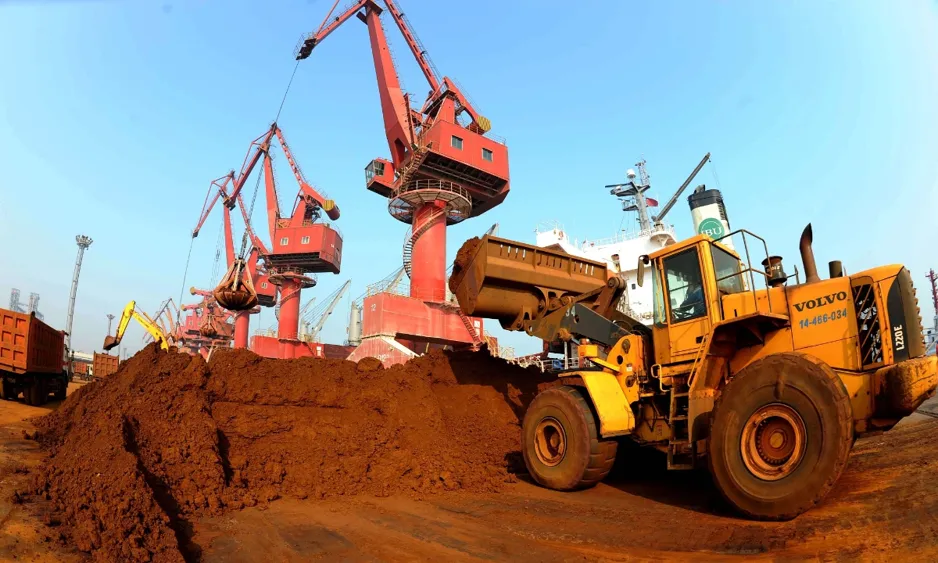
China's Ministry of Natural Resources has recently unveiled that significant rare-earth reserves have been discovered in Maoniuping, Mianning County, in the southwestern region of Sichuan Province. This revelation, reported by the China Central Television Finance Channel, highlights the importance of rare-earth minerals in powering the growth of clean energy and advanced technology.
The Ministry's report indicates that the Maoniuping mining area harbors a staggering 9.6656 million tons of rare-earth oxides, along with 27.1354 million tons of fluorite and 37.2277 million tons of barite. This substantial find is a testament to the region's rich mineral resources.
Notably, the newly identified rare-earth oxide has led to a remarkable increase in the site's reserves by over 300 percent, positioning it as the second-largest light rare-earth mine worldwide, trailing only behind the renowned Bayan Obo deposit in Inner Mongolia.
Experts in the field are emphasizing the significance of this discovery, as it greatly bolsters China's strategic rare-earth reserves. This expansion not only enhances the nation's resource base but also promises to support a variety of industries that are pivotal to high-tech manufacturing and clean energy systems.
Rare-earth elements are increasingly recognized as critical strategic resources, with their effective mining and processing proving essential for national resource management and the sustainability of emerging sectors. Wu Chenhui, a specialist in critical minerals, underscored the pressing need for robust supply chain security amid rising global demand for these minerals.
The applications of rare-earth oxides are vast, spanning from their roles in magnetic materials and phosphors to their necessity in cutting-edge manufacturing. Known as the "vitamins of modern industry," these elements possess unique optical properties and substantial magnetic characteristics that make them indispensable in fields such as energy generation, aerospace, and advanced materials.
In practical terms, electric vehicles rely heavily on high-energy rare-earth magnets to enhance their efficiency, while fiber optic communications utilize erbium and other rare-earth elements for reliable signal transmission.
Furthermore, the byproducts of this discovery—fluorite and barite—also hold significant value; fluorite is crucial for producing refrigerants and non-stick coatings, while barite is a key component in oil drilling and medical imaging.
Chinese industry analysts have noted that the recent advancement at Maoniuping not only reinforces China's position in light rare-earth resources but also instills confidence in the strategic development of emerging technologies.
This finding joins a series of successful mining explorations in China's efforts to enhance its mineral reserves, including the recently reported discovery of a large antimony deposit in Gansu Province. With proven reserves of 44 million tons, the Bayan Obo mine remains the largest rare-earth mine globally, constituting over 80 percent of the country's total rare-earth output.
As the predominant global producer of rare-earth elements, China accounts for more than 80 percent of the global annual output, solidifying its pivotal role in the international minerals market.
Read These Next

Jury Finds Meta, YouTube Negligent in Addiction Trial
The jury in Los Angeles ruled against Meta and YouTube for negligence in a landmark trial regarding social media addiction, with significant implications for the industry.

Pop Mart's Labubu Makes Global Splash at World Cup Debut
Pop Mart's Labubu debuts at FIFA World Cup, marking a milestone for Chinese brands in global recognition and collaboration.

Zelensky aims for long-term drone deal with Gulf nations
Ukrainian President Zelensky seeks a long-term drone supply deal with Gulf nations, enhancing military cooperation and defense.