

South Korea Delegation Visits China for Autonomous Driving Policies
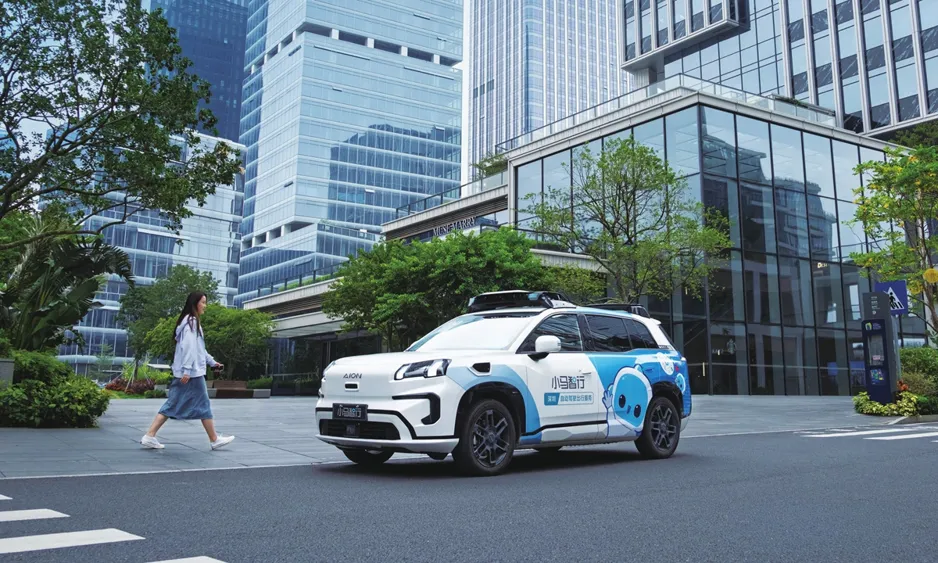
A South Korean delegation is currently visiting China to explore policies surrounding autonomous driving, continuing efforts to promote international collaboration and technological exchange. This visit, which spans from Wednesday to Friday, represents a significant step by the South Korean government as it aims to bolster the competitiveness of its autonomous driving industry.
According to a report by the Yonhap News Agency, this initiative is the first time that South Korea has dispatched a cross-ministerial research team to an advanced technology nation. The delegation seeks to gain insights from China's leading technologies and policy frameworks in autonomous driving, as well as to identify supportive measures for commercialization.
Comprising over 20 officials from eight different government bodies, including the Ministry of Land, Infrastructure and Transport, the Ministry of Finance and Economy, and the Ministry of Trade, Industry and Resource, the delegation is expected to conduct a thorough investigation of China's autonomous driving landscape.
Their agenda includes studying China's policies regarding physical artificial intelligence and its associated regulatory frameworks. They are also scheduled to visit Beijing's innovation and operation center within a high-level autonomous driving demonstration zone, along with engaging with some of the leading local autonomous driving enterprises.
During the visit, members of the delegation will experience autonomous vehicles from Baidu and Pony.ai, with a focus on evaluating their operational capabilities and safety performance. Specific feedback and insights from these companies regarding the visit have not been disclosed.
The South Korean government has emphasized the necessity of on-site examination of physical AI support policies and models for public-private partnerships, recognizing the urgency of competing with frontrunners like China and the United States in the autonomous driving sector.
Industry observers in China highlight that the nation has developed a comprehensive policy framework for its autonomous driving industry, covering areas such as road testing, unmanned pilot operations, and compliance data management. This positions China as a model for global industry study.
The South Korean delegation's visit aims to understand how China has effectively unified multiple government entities to transition fragmented testing into integrated 'pilot cities', which allow for the establishment of thriving commercial ecosystems.
Chinese experts like Wang Peng, an associate research fellow at the Beijing Academy of Social Sciences, noted that a major advantage for China lies in its ability to coordinate across ministries effectively, leading to a unified regulatory framework that addresses the typical governance and regulatory fragmentation challenges faced by other countries, including South Korea.
As the global autonomous driving sector moves into a period of intense commercialization, gaps in regulation have emerged as more of a constraint than technological hurdles.
By the beginning of 2025, significant legislative actions regarding autonomous driving are expected to emerge across China, with continuous refinement of safety requirements being pursued by relevant authorities.
The Ministry of Industry and Information Technology has introduced draft revisions to five mandatory national standards pertaining to intelligent connected vehicles and safety specifications for autonomous driving systems, marking a critical advancement in the industry.
Read These Next

Opportunities and Risks in Semiconductor and IoT Growth
This commentary discusses the recent developments and financial trends in a company heavily invested in semiconductor and IoT technologies. It evaluates the underlying economic forces, corporate strategies, and potential risks while maintaining a balanced perspective for all stakeholders.

US Lawmakers' Concerns on China Drug Supplies Called Baseless
Analysts refute US lawmakers' drug supply concerns about China, calling it a politically driven narrative; China is a vital partner.

NASA Boosts SpaceX Role in Lunar Mission Challenging Boeing
NASA will assign SpaceX a bigger role in lunar missions, increasing competition with Boeing and reshaping space exploration.