

Mountain Greens and Modern Logistics Redefine Consumer Market
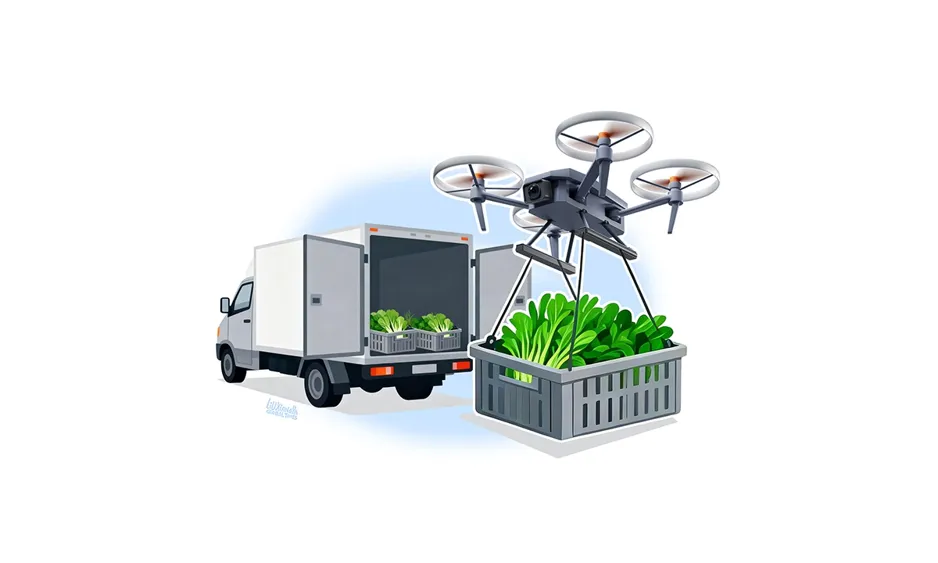
Innovative logistics solutions, particularly drone transport for wild vegetables, are significantly transforming the way fresh food is delivered to urban markets across China. A report by CCTV.com highlights that these mountain-harvested vegetables are now reaching consumers in mere hours, facilitated by a well-organized logistics network.
Upon arrival, drones efficiently transfer the produce to cold-chain vehicles, which play a crucial role in maintaining the freshness of the goods throughout their delivery journey. This effective integration of technology and logistics systems exemplifies larger trends within China's supply chains, where innovation is redefining how goods move from rural producers to urban consumers.
At the heart of this transformation is a noticeable shift in consumer demand. More consumers are prioritizing the freshness, health benefits, and safety of their food products. With spring approaching, there is a surge in interest for seasonal vegetables, including freshly harvested wild greens from the mountains. According to the general manager of a Sichuan-based company, sales of wild vegetables sourced by their firm face no difficulties, as demand is robust enough to maintain a steady supply.
This evolving consumer preference not only boosts the use of drones for transporting wild vegetables but also stimulates broader innovations within both production and logistics processes. Various advanced technologies, including precision navigation systems, are now being incorporated throughout production and distribution chains, enhancing operational efficiency and speed.
As a result, vegetable prices in China have largely remained stable. Analysts are coining the term 'vegetable freedom' to describe the accessibility and affordability of a wide variety of fresh produce available to consumers, a reflection of the benefits derived from these advancements in agricultural logistics.
Moreover, the advancements in China's production and logistics sectors are part of a larger interconnected transformation that is reshaping the nation's infrastructure. These modern developments are significantly improving the entire supply chain, benefiting both producers and consumers alike.
In particular, the cold-chain logistics sector in China continues to flourish. Data from the China Federation of Logistics and Purchasing indicates that the demand for cold-chain logistics reached approximately 381.4 million tons in 2025, marking a 4.5 percent increase year-on-year, with growth accelerating by 0.2 percentage points compared to 2024.
The expansion of the cold-chain market is also evident around peak seasons. For instance, during the 2026 Spring Festival, a notable increase in orders for food and fresh goods was recorded. Data reported from the freight platform Huolala showed that orders from January 1 to 25 doubled compared to the same period before the holiday in 2025.
These developments collectively highlight the increasing demand within China's consumer market, demonstrating a clear connection between consumer preferences and actual purchasing behavior. The integration of new technologies and advanced logistics capabilities are allowing China's massive consumption potential to manifest in real economic activity.
Beyond the domestic market, China's agricultural imports are also growing steadily. In 2025, total imports of agricultural products approached 1.5 trillion yuan, approximately 217.8 billion dollars, while the number of foreign agri-food enterprises registered with Chinese customs has surpassed 500,000.
The case of drones transporting wild vegetables serves as a microcosm of the larger shifts taking place in China's agricultural production and logistics systems. Such examples, while small, weave into a broader narrative of comprehensive change that offers exciting new opportunities in the evolving consumer market.
Read These Next

Opportunities and Risks in Semiconductor and IoT Growth
This commentary discusses the recent developments and financial trends in a company heavily invested in semiconductor and IoT technologies. It evaluates the underlying economic forces, corporate strategies, and potential risks while maintaining a balanced perspective for all stakeholders.

US Lawmakers' Concerns on China Drug Supplies Called Baseless
Analysts refute US lawmakers' drug supply concerns about China, calling it a politically driven narrative; China is a vital partner.

NASA Boosts SpaceX Role in Lunar Mission Challenging Boeing
NASA will assign SpaceX a bigger role in lunar missions, increasing competition with Boeing and reshaping space exploration.