

US Investigation into Excess Capacity Risks Global Trade Disruptions
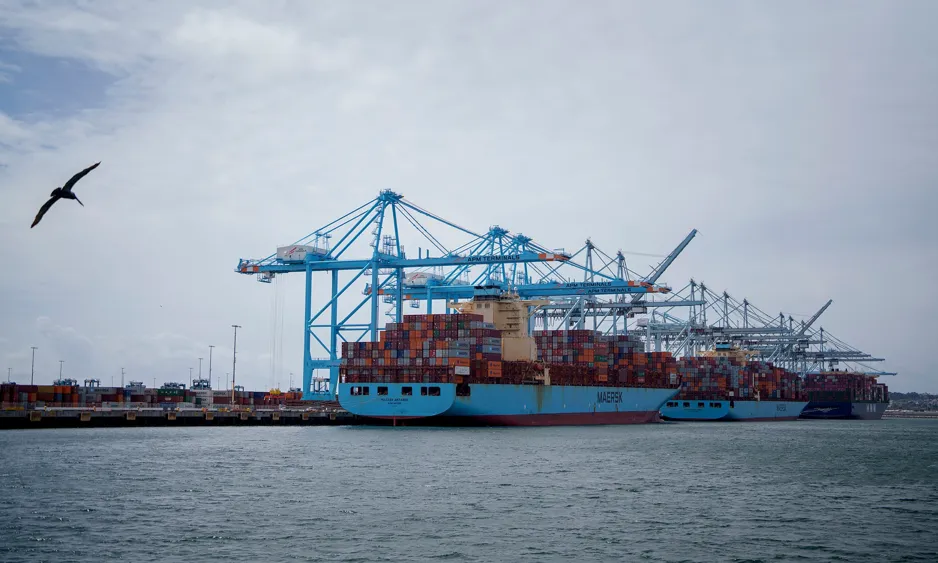
The U.S. Trade Representative's office (USTR) has officially launched Section 301 investigations into multiple trading partners, including China, the European Union, and India, targeting concerns about structural excess capacity and production challenges within their manufacturing sectors.
Experts in international trade have expressed that this latest action underscores the U.S.'s intent to leverage its economic influence for unilateral, politically driven objectives. A Chinese analyst remarked that such measures could exacerbate the already precarious state of global trade and supply chains, which are being strained by ongoing geopolitical tensions and previous protectionist policies.
In its announcement, the USTR stated that the investigation aims to ascertain whether the identified acts, policies, and practices are unreasonable or discriminatory, thereby imposing burdens on U.S. commerce. Over a dozen countries, such as Singapore, Switzerland, Japan, and Indonesia, along with the aforementioned partners, have been included in the investigation's scope.
This move follows U.S. President Donald Trump's recent decision to elevate global tariffs to 15 percent, a proclamation made shortly after the U.S. Supreme Court ruled that the broad tariffs enforced under a national emergency law were illegal. The ruling had been positively received by many American businesses, which have begun seeking refunds as a result.
The USTR's actions suggest a continuation of the U.S. administration's reliance on tariffs as a diplomatic tool, as noted by He Weiwen, a senior fellow at the Center for China and Globalization. He indicated that this investigation appears to set the groundwork for introducing a new series of tariffs, effectively following the invalidation of prior initiatives.
Furthermore, any invocation of overcapacity as justification for unilateral trade restrictions has been characterized as a tactic driven by political considerations. This reflects a longstanding hegemonic view within U.S. trade policy, emphasizing power dynamics over collaborative international relations.
With a global division of industrial labor in play, differing priorities regarding manufacturing capabilities and consumption across countries are evident and should be perceived as normal market behavior. Gao Lingyun, a research fellow at the Chinese Academy of Social Sciences, remarked that these dynamics encapsulate the essence of global trade.
While the United States benefits from access to affordable and high-quality goods produced abroad, it simultaneously voices complaints regarding perceived excess capacity. Gao highlighted the contradiction of pursuing administrative measures that compel companies to relocate production to the U.S., noting that such a shift would likely inflate production costs and negatively affect American consumers.
At a moment when the geopolitical climate—especially tensions linked to the Strait of Hormuz—has significantly disrupted global industrial and supply chains, the U.S.'s attempt to reinvigorate a unilateral tariff approach is viewed as a misguided strategy. Experts have cautioned that this could destabilize an already vulnerable global production network.
Read These Next

FY 2023 Financial Overview of Company XYZ
Overview of Company XYZ's fiscal performance including revenue growth, margin improvements, operational challenges, and strategic initiatives.

Persian Gulf Conflict's Impact on Oil Markets
The commentary explores the escalating conflict in the Persian Gulf and its implications for the oil markets, particularly the potential for rising oil prices due to disruptions in key supply routes. It discusses the historical parallels with past oil shocks, the impact on economies that rely on imports, and broader repercussions for global supply chains and consumer prices.

RWE CEO Says U.S. Market Urges Maximum Capacity Expansion
Rhine Group's CEO highlighted rising U.S. energy demand, urging increased investments for production and insights for global renewable energy.