

Understanding China's Institutional Opening Up Strategies
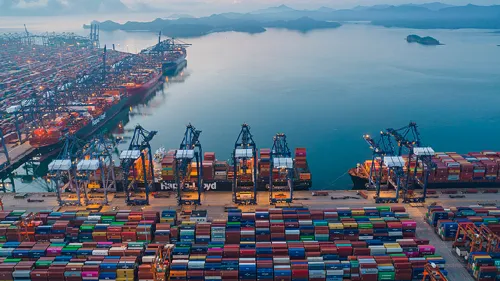
China is embarking on a comprehensive reform of its institutional framework, aimed at fostering economic integration through enhanced transparency and global cooperation across various sectors. This initiative, notably discussed during the 2026 national Two Sessions, signifies a concerted effort by legislators, experts, and industry leaders to devise systematic, predictable, and high-quality approaches to enhance the nation's economic openness.
The concept of institutional opening-up represents a significant strategic transition from previous practices that largely focused on the movement of goods and resources. China is now looking to harmonize its regulations and standards internationally, thus promoting a more transparent and stable environment for business.
In conversations with key figures during this year's Two Sessions, insights were provided on the implications of institutional opening-up for global partners. Notably, Peng Shou, a member of the Chinese Academy of Engineering and a deputy of the National People's Congress, pointed out that long-lasting, systemic institutional reforms are essential. He stressed, 'A system is about lasting effectiveness. It's not a short-term action,' highlighting the need for a holistic approach that engages society as a whole.
To bring this vision into reality, practical pilot programs have been initiated throughout China. With 22 Free Trade Zones established across the nation, more than 110 innovative measures are being implemented in key locations like Shanghai and Hainan, effectively uniting previously disparate policies into streamlined frameworks.
A prime illustration of these efforts can be seen in the special customs operations at the Hainan Free Trade Port. This initiative not only streamlines cross-border trade but also enhances digital infrastructure and encourages the development of high-tech industries.
Peng elaborated on how the utilization of processing technology and value-added services can invigorate various sectors, from high-tech manufacturing to services driven by innovation. He suggested that the negative list approach might be applied more broadly to other cities and development areas.
Moreover, institutional opening-up extends beyond trade regulations. Kenneth Fok, a deputy from the Hong Kong Special Administrative Region to the NPC, noted the significance of fostering people-to-people exchanges. In 2025, China reported 697 million entries and exits, signifying a 14.2% increase from the previous year. Significant strides have also been made with mutual visa exemption agreements with 29 countries, showcasing Hong Kong's strategic role in enhancing international cooperation.
Song Zheng, another NPC deputy and president of the Hunan branch of the China Development Bank, discussed the benefits of institutional opening-up for foreign investors. She conveyed that this reform enables investors to appreciate China's unique advantages, providing stability in a turbulent global economy. 'We are achieving this by uniting people's insights across the nation,' she asserted.
The importance of institutional opening-up transcends mere alignment with global practices. It is fundamentally about crafting a transparent, predictable, and inclusive atmosphere designed to attract international partners while fortifying China's own economic resilience. Through this approach, China not only positions itself more firmly in the global marketplace but also redefines the framework of its economic development for the future.
Read These Next

China Spring Travel Market Sees Rising Demand and New Trends
China's travel market is booming as spring approaches, with innovative trends boosting bookings and unique attractions.
China Responds to G7 Oil Reserve Release with Energy Security Measures
China vows to maintain energy security amidst rising tensions and G7 policy shifts, ensuring stable oil supply in a volatile market.
CBO Estimates US February Budget Deficit at 308 Billion
CBO forecasts U.S. budget deficit to hit $308B by Feb 2026, raising market concerns on fiscal policy and Fed decisions.