

The End of AI is Electricity What Fuels Power Advantage
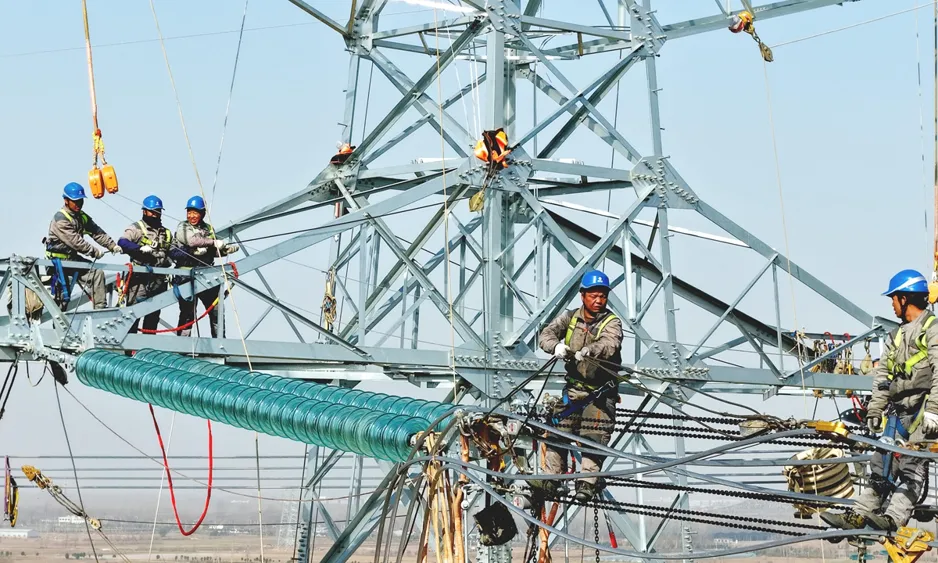
US tech giants are currently facing significant pressures in an evolving energy landscape that underscores the importance of electricity as a driving force for artificial intelligence advancements. Microsoft has taken a decisive step by constructing its own gas turbine generator to safeguard its power supply, while Google has entered into a substantial power purchasing agreement with a nuclear energy provider. These moves reflect a growing acknowledgment that robust and reliable electricity access is critical for sustaining technological momentum.
A pivotal focal point in this context is the recent Government Work Report, which for the first time articulated plans for creating new forms of a smart economy and launching infrastructure projects centered on hyperscale intelligent computing clusters. This strategic emphasis lays a strong foundation for a significant leap in socioeconomic progress and illustrates China's commitment to enhancing its technological framework.
Examining this report alongside the operational status of power equipment manufacturers in provinces such as Guangdong and Jiangsu reveals a dynamic landscape. These manufacturers are currently operating at full capacity, bolstered by surging global demand for computing power. The resultant increase in overseas orders for China's power equipment aligns with investor sentiment that views electricity as fundamental to the future of AI.
Moreover, from February 9 to 15 of this year, Chinese AI models processed an impressive 4.12 trillion tokens, surpassing their American counterparts for the first time. This indicated that developers worldwide have identified a cost advantage in utilizing Chinese models over US alternatives. This evolution marks a significant shift in the AI landscape propelled by the availability and efficiency of electrical resources.
The demand for electricity is projected to escalate, driven by the essential conversion process where electricity is transformed into computing power and subsequently into intelligence. Entities that can secure access to cheaper and more stable electricity, supported by a more efficiently dispatchable grid, will be positioned to thrive in the AI-driven future. A saying has recently emerged to encapsulate this notion: 'The end of electricity is China.'
A disparity has become evident between China and the United States regarding their respective support systems for AI development. An analysis of the US power infrastructure indicates a fragmented grid structure, composed predominantly of the Eastern, Western, and Texas interconnections. This fragmentation has resulted in a persistent inability to effectively transmit power to regions of high demand while exacerbating shortages, ultimately hindering development.
On March 4, Wang Jian, a member of the Chinese People's Political Consultative Conference National Committee, highlighted that the US's approach to power infrastructure must begin at the transformer level, which are primarily manufactured in China. This emphasizes the strategic advantage China holds in the energy sector, reinforcing the pressures faced by American tech giants.
As electricity shortages loom, regional grid operators in Michigan and Virginia have alerted the public to impending increases in electricity bills of 20 to 30 percent, affecting approximately 67 million residents. This financial burden underscores the precariousness of the US energy landscape and raises concerns about the sustainability of tech industry operations.
In contrast, China is navigating its energy sector with a fundamentally different philosophy. In 2025, advancements led to China's electricity consumption surpassing 10 trillion kilowatt-hours, more than double that of the United States, achieved without any record of power outages or price spikes.
China's strategy revolves around the principle of electricity as a public good, supported by the construction of 46 ultra-high-voltage transmission projects that enable the efficient transfer of power across vast regions. Initiatives such as 'East Data, West Computing' have positioned China's data centers in areas rich in renewable energy sources, facilitating a sustainable model for future growth.
This comprehensive approach highlights China's capability to orchestrate significant resources toward essential energy initiatives, a contrast to a US market hesitant to incur upfront costs for long-term returns. China adopts a forward-thinking methodology, focusing on building infrastructure in anticipation of future needs rather than responding reactively to shortages.
During the recent National People's Congress, extensive discussions on energy security focused on both immediate challenges and the long-term stability of energy supplies for the next decade and beyond. In mid-March, China announced plans for fixed asset investments of 4 trillion yuan, demonstrating a commitment to proactive energy development as the US grapples with its pressing supply issues.
Read These Next
China Responds to G7 Oil Reserve Release with Energy Security Measures
China vows to maintain energy security amidst rising tensions and G7 policy shifts, ensuring stable oil supply in a volatile market.

CBO Estimates US February Budget Deficit at 308 Billion
CBO forecasts U.S. budget deficit to hit $308B by Feb 2026, raising market concerns on fiscal policy and Fed decisions.

Share Buybacks: Strategies in a Changing Market
This commentary analyzes the newly proposed share buyback program by the company, exploring its significance, underlying financial strategies, and potential risks and opportunities amidst current market dynamics.