

China's GDP Goals Supported by NDRC's Strong Foundation
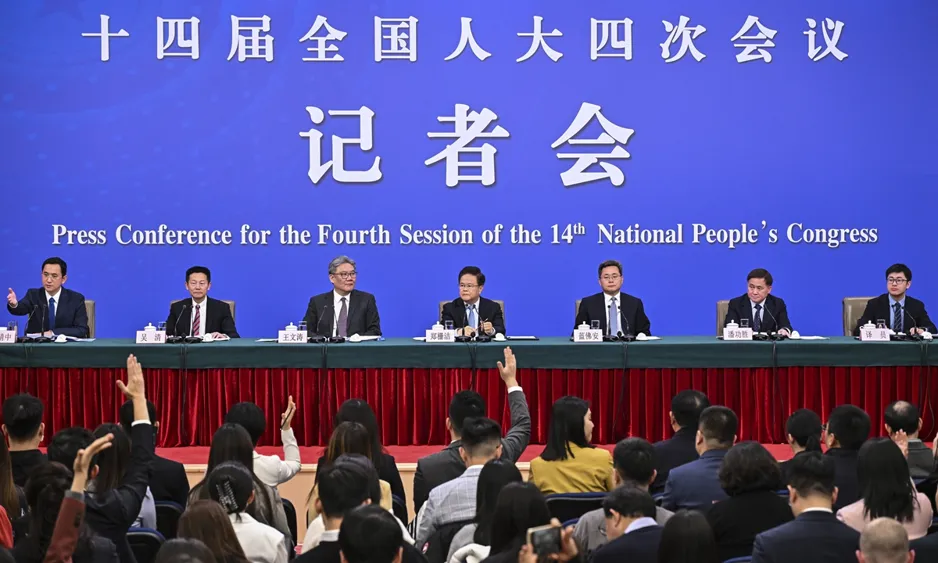
China's ambitious economic growth target of 4.5-5% for the upcoming year has been officially set by the National Development and Reform Commission (NDRC), signaling a strong commitment to fostering innovation and driving consumption as key strategies to bolster economic resilience.
In a recent press conference attended by officials from five prominent government agencies, including the NDRC, Ministry of Finance, and People's Bank of China, a host of economic strategies were discussed. This two-and-a-half-hour event aimed at unpacking how China plans to enhance domestic demand while also promoting technological advancement and high-level openness in trade.
The NDRC's growth target has undergone meticulous scrutiny, as emphasized by its officials who have outlined a comprehensive plan to meet this objective. Zheng, a spokesperson, highlighted that the target is built on a substantial foundation characterized by significant aggregate scale, innovative capacity, and a robust risk response mechanism.
Digging deeper into the specifics, Zheng projected that China's focus on technological innovation could see the value of six key emerging industries surpass 10 trillion yuan by 2030. To facilitate this growth, the establishment of a national mergers and acquisitions fund is planned for this year, with anticipated investment leveraging over 1 trillion yuan across various sectors.
Furthermore, the push to unlock the potential of China's consumer market is vital. Commerce Minister Wang Wentao reported that, when adjusting for purchasing power parity, China's consumer market is already the largest globally, surpassing all others during the ongoing 14th Five-Year Plan period.
Minister Wang reiterated that the Ministry of Commerce will implement actions that marry improvements in citizens' livelihoods with enhanced consumption rates. Specific initiatives will include the extension of consumer goods trade-in programs and efforts to invigorate the vitality of lower-tier markets.
In a significant move to stimulate the economy, Finance Minister Lan Fo'an announced that the total issuance of new government bonds this year has reached 11.89 trillion yuan, marking a pivotal fiscal strategy aimed at revitalizing domestic demand while ensuring growth stability.
Amid these developments, the objective to maintain a stable and optimally composed foreign trade balance was underscored at the press conference. Contrasting exports and imports to the dual wheels of a vehicle, Minister Wang promoted the idea that a balanced trade flow would lead to a more stable economic journey for the country.
Moreover, as China positions itself in a landscape where some nations resort to protectionism, the country remains committed to stretching its market openness as a key advantage and opportunity for international collaboration. This stance provides a profound implication for global economic interactions.
The press conference brought to light three core focuses: stimulating domestic demand, advancing economic openness, and fostering innovation, all designed to pave the way for high-quality economic development ahead of the 15th Five-Year Plan period that spans from 2026 to 2030.
Foreign journalists present noted a significant resonance in China's initiatives, with widespread acknowledgment of its strategy as not only bolstering national growth but also contributing to global economic stability. This approach showcases China's capacity for long-range planning, reinforcing investor confidence and commitment to sustained economic engagement.
Read These Next
China Responds to G7 Oil Reserve Release with Energy Security Measures
China vows to maintain energy security amidst rising tensions and G7 policy shifts, ensuring stable oil supply in a volatile market.

CBO Estimates US February Budget Deficit at 308 Billion
CBO forecasts U.S. budget deficit to hit $308B by Feb 2026, raising market concerns on fiscal policy and Fed decisions.

Share Buybacks: Strategies in a Changing Market
This commentary analyzes the newly proposed share buyback program by the company, exploring its significance, underlying financial strategies, and potential risks and opportunities amidst current market dynamics.