

Supreme Court Curbs Trump Tariff Powers Affecting Global Trade
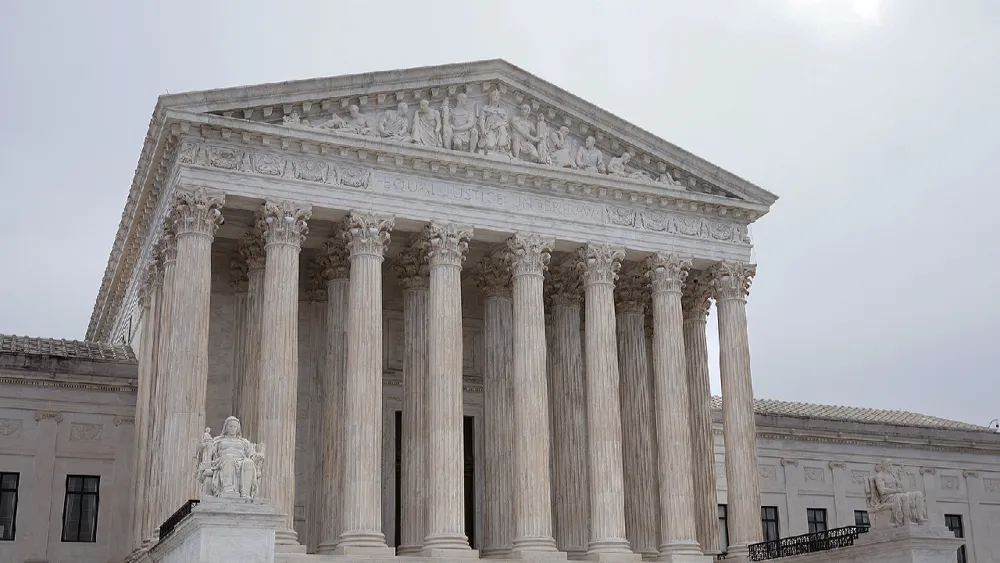
In a landmark ruling, the U.S. Supreme Court has curtailed the tariff powers exercised by the Trump administration under the International Emergency Economic Powers Act, significantly impacting global trade relations. The decision, reached with a 6-3 vote in February 2026, declared these extensive tariff measures unenforceable citing a lack of legal foundation, thereby rebalancing the trade authority dynamics between the Legislative and Executive branches.
The crux of the Supreme Court's ruling is not an outright denial of the President's tariff-imposing powers, but rather a clarification regarding the extent and legal basis on which these powers can be exercised. This clarification serves to reaffirm the principle of separation of powers as outlined in the U.S. Constitution, which designates Congress with the authority to impose tariffs.
Specifically, Article I, Section 8 of the Constitution establishes that only Congress holds the power to lay and collect taxes, duties, and imposts. The Trump administration's broad imposition of tariffs, purportedly under IEEPA, manifested an overstep of executive authority, effectively misinterpreting import regulation provisions in the law.
Legal challenges to these tariffs were previously mounted by several U.S. businesses and states, culminating in lower court decisions that ruled the measures unlawful. The Supreme Court's affirmation has reinforced these rulings, marking a pivotal shift in the legal landscape surrounding U.S. tariff policy.
In response to the ruling, the Trump administration initiated a 15% tariff on global goods under Section 122 of the Trade Act of 1974. This policy is anticipated to have immediate ramifications for international trading partners and industrial supply chains, signaling a potential escalation in global trade tensions.
Though the new tariffs are temporarily set to last 150 days, they encompass a multitude of products, raising global trade costs. U.S. importers, including major retailers such as Costco and Reebok, have begun legal proceedings to recover what they claim are improperly levied tariffs. Additionally, increased export costs to the U.S. could deter businesses from expanding, threatening the stability of international supply chains.
Various nations are closely monitoring the implementation of the new tariff policy, with trading partners like the European Union and Canada indicating potential countermeasures. Countries throughout Asia and Latin America, including China and Brazil, have similarly expressed concerns about the implications for global industrial networks.
With tariff powers diminished, the Trump administration may resort to alternative methods to uphold its trade strategies, potentially intensifying sanctions or implementing expansive investigations under claims of national security. However, these alternative measures come with significant limitations and are likely to provoke legal challenges and international disputes.
Overall, the Supreme Court's ruling has curtailed the President's ability to misuse tariff powers, but the implications of subsequent policy shifts continue to cast uncertainty over global trade dynamics. This transition towards alternative trade measures could exacerbate tensions and demand more robust international cooperation in response to evolving trade threats.
In summary, while the Supreme Court has imposed restrictions on the executive use of tariff authority, the evolving landscape under the Trump administration remains fraught with uncertainty, posing both challenges and opportunities for global trade.
Read These Next

Geopolitics: Impacts and Opportunities for Emerging Markets
This analysis highlights the risks and opportunities in emerging markets following the U.S.-Iran military conflict, emphasizing concentration risks tied to technology stocks and the volatility of Asian markets.

Fed Official Warns Energy Shocks May Raise Inflation Pressure
Fed's Harker warns energy price fluctuations may raise inflation risks; interest rate hikes could be reconsidered if inflation persists.

Oil Prices Up 35% Amid U.S.-Iran Conflict: Global Impact
This article analyzes the unprecedented rise in oil prices and its potential consequences for the world economy, with a particular focus on emerging markets that are sensitive to price fluctuations due to increasing geopolitical tensions in the Persian Gulf. We will investigate how disruptions in supply chains and production may pose risks for major industries and consumers.