

MOFCOM Slams EU Industrial Accelerator Act as Investment Barrier
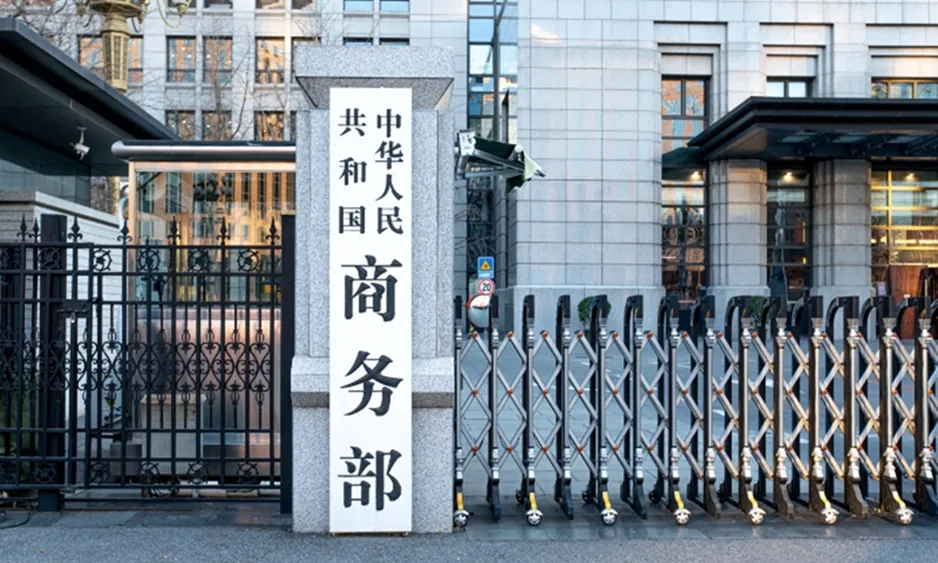
China's Ministry of Commerce (MOFCOM) responded with serious concern over the European Union's recently proposed Industrial Accelerator Act (IAA), highlighting that the legislation could impose significant barriers to investment and foster institutional discrimination against Chinese firms.
This reaction came after a media inquiry concerning the EU's announcement of the IAA, which was unveiled on Wednesday. The act is targeted at restricting foreign investment in four emerging strategic sectors, prompting MOFCOM to provide its insights.
China acknowledged that the EU had introduced a relevant bill on March 4, detailing stringent measures for foreign investment specifically in the sectors of batteries, electric vehicles, photovoltaics, and critical raw materials. The provisions include mandatory technology transfer, restrictions on foreign shareholding, and requirements related to local content and employment.
The bill particularly targets third-country investors whose global production capacity exceeds 40 percent in the specified sectors. Furthermore, it promotes a 'Made in the EU first' approach in public procurement, as per insights from MOFCOM.
"These measures represent serious investment barriers and institutional discrimination, potentially violating the principle of most-favored-nation treatment," a spokesperson conveyed, indicating that such provisions could heighten uncertainty for Chinese companies seeking to invest in the EU.
China contends that buried beneath the EU's aim to support local industries and facilitate a green transition lies a practice of protectionism that generates barriers. MOFCOM warned that this would not only be counterproductive but could also undermine regulations, distort competition, and disturb global industrial and supply chains.
The spokesperson emphasized that historical experience demonstrates that protectionism does not enhance competitiveness. Instead, maintaining openness and fostering cooperation remain the cornerstone of shared development, particularly between China and the EU, which are crucial economic partners.
"We urge the EU to adhere to World Trade Organization rules and return to a fair, transparent, and non-discriminatory partnership promptly, rather than pursuing a path of rule-breaking and protectionism," the spokesperson concluded.
MOFCOM indicated that China would diligently monitor the legislative process, assess its potential consequences on Chinese interests, and remain committed to safeguarding the legitimate rights and interests of Chinese companies.
The China Chamber of Commerce to the EU also weighed in on this topic, asserting that the current design of the bill risks evolving towards a more protectionist and exclusionary framework. They cautioned that restricting European industries' access to Chinese supply chains could hamper the EU's decarbonization initiatives, leading to mutually detrimental outcomes.
This ongoing dialogue highlights the delicate nature of international trade relations, especially amid rising tensions surrounding investment policies and global economic stability.
Read These Next
China's AI Ecosystem Drives Global Adoption and Innovation
China advances global AI with smart glasses and AI smartphones, showcasing leadership at events like Mobile World Congress.

Education Ministry Implements 15 Minute Breaks and Daily PE
On March 7, Minister Huai Jinpeng announced that "15-minute breaks" and "2 hours of PE daily" are fully implemented, improving student health.

Geopolitics: Impacts and Opportunities for Emerging Markets
This analysis highlights the risks and opportunities in emerging markets following the U.S.-Iran military conflict, emphasizing concentration risks tied to technology stocks and the volatility of Asian markets.