

Draft Environmental Code and Two Laws Presented at NPC Session
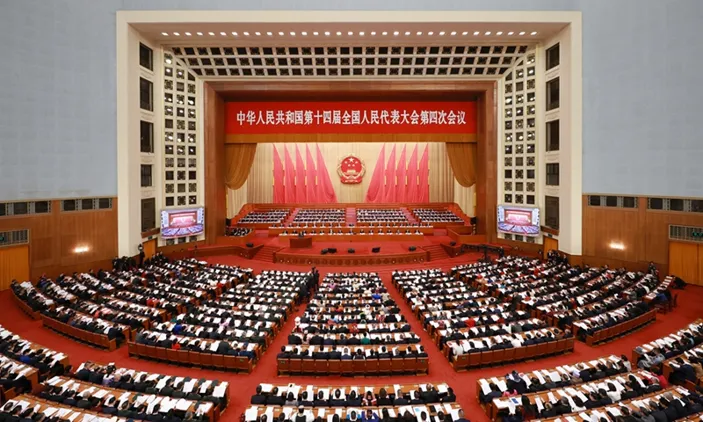
During the recent session of the National People's Congress (NPC), Vice Chairman Li Hongzhong presented three significant draft laws for discussion: an environmental code, a national development planning law, and a law aimed at promoting ethnic unity and progress, as reported by the Xinhua News Agency.
The draft environmental code aspires to consolidate the principles of green development within a legal framework by systematically updating and integrating existing environmental laws. The timing of this initiative is particularly crucial, as China has made a commitment to peak carbon emissions by 2030.
The proposed law on promoting ethnic unity is designed to bolster social cohesion and nurture a shared sense of community among the diverse populations within China. Concurrently, the national development planning law is intended to serve as a foundational legal structure to guide the formulation and implementation of national development strategies.
Comprising 1,242 articles, the environmental code is organized into five sections: general provisions, pollution prevention and control regulations, ecological conservation measures, frameworks for low-carbon development, and ensuing legal liabilities and supplementary provisions.
One of the core objectives of the environmental code is to eliminate the existing fragmentation and overlaps seen in China's current ecological laws. By consolidating regulations governing water, air, noise, solid waste, and ecological protection, the code aims to foster a more coherent and integrated approach to environmental legislation.
Lou Qinjian, the spokesperson for the NPC, remarked that entering an era of high-quality economic growth necessitates stringent regulations and robust legal measures aimed at protecting the environment while advancing green development.
The draft code is distinctively marked by its dedicated section on low-carbon development, a pioneering institutional enhancement that has captured considerable international attention. It seeks to elevate green development to a formal legal status, laying down fundamental principles for reducing carbon emissions.
In conjunction with the discussions at the NPC, a government work report emphasized the plan to accelerate the nation's green transition, targeting a 17% reduction in carbon emissions per unit of GDP from 2026 to 2030.
China's dual commitment to peaking carbon emissions before 2030 and achieving carbon neutrality by 2060 has garnered increased global focus, illustrating the country's proactive stance in addressing climate change.
Furthermore, reports highlight that China's shift in its energy paradigm is yielding promising results, as carbon emissions decreased while electricity demand continued to surge, challenging long-held assumptions in climate economics.
In a broader context, experts suggest that China's approach may redefine the traditional conflicts between environmental protection and economic growth, indicating a new development model where sustainability and economic progress can harmoniously coexist.
Read These Next

China's AI Ecosystem Drives Global Adoption and Innovation
China advances global AI with smart glasses and AI smartphones, showcasing leadership at events like Mobile World Congress.
Education Ministry Implements 15 Minute Breaks and Daily PE
On March 7, Minister Huai Jinpeng announced that "15-minute breaks" and "2 hours of PE daily" are fully implemented, improving student health.
Geopolitics: Impacts and Opportunities for Emerging Markets
This analysis highlights the risks and opportunities in emerging markets following the U.S.-Iran military conflict, emphasizing concentration risks tied to technology stocks and the volatility of Asian markets.