

China's Consumption Trends Uncovered by Single Internet Connection
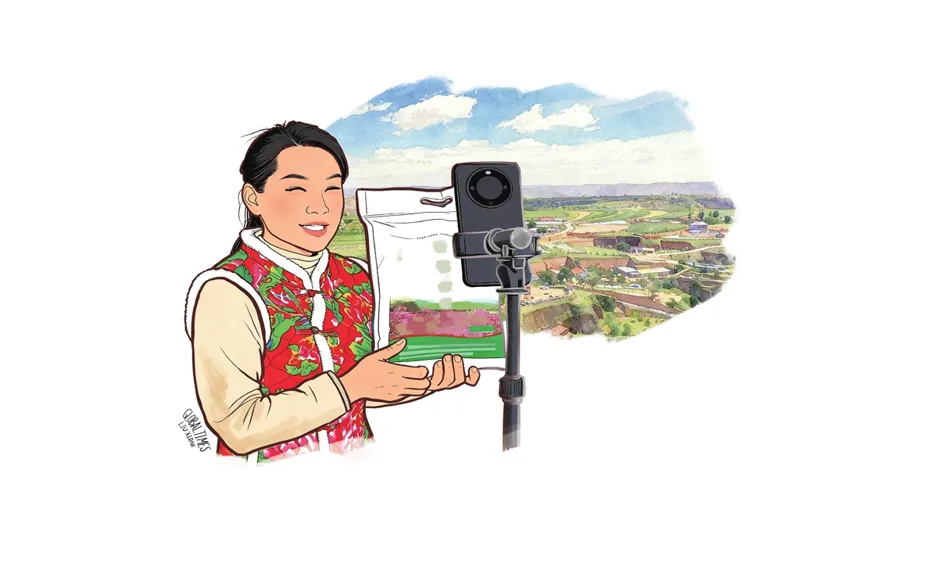
In rural China, the evolution of digital infrastructure is actively transforming consumption patterns, particularly through the rise of e-commerce and livestreaming, which are providing fresh opportunities for local economies and improving household incomes.
A report from China National Radio indicated that the annual household income in Zhuangzimao has surged to over 100,000 yuan, equating to approximately 14,510 US dollars, with the per capita annual income exceeding 22,000 yuan.
Despite some Western commentators expressing undue pessimism about China's economic outlook, the atmosphere within Zhuangzimao's livestreaming venues conveys a contrasting narrative. Livestream hosts, filled with enthusiasm, showcase local products, while order quantities steadily rise, illustrating how a micro-level commerce surge reflects broader economic trends.
The improvement of digital infrastructure across China has spurred growth in the digital economy, enhancing internet services, e-commerce, and livestreaming across rural areas, thereby providing new commercial opportunities and increasing household income.
In Zhuangzimao, the proliferation of livestreaming signifies a larger trend in Huanxian, where locals increasingly use the internet to market goods from rural settings directly to urban consumers. According to a January report by the People's Daily, 17 villages have adopted livestreaming, contributing to rural e-commerce sales in Huanxian surpassing 360 million yuan by 2025.
This phenomenon is not limited to Huanxian; across rural China, the use of e-commerce and livestreaming is transforming agricultural product sales, fostering local entrepreneurship, generating jobs, and augmenting household incomes. Data from the Ministry of Commerce highlights that online retail sales of agricultural goods in China reached 783.31 billion yuan in 2025, showing a 9.9 percent increase year-on-year.
The transformation brought about by a single internet connection can yield numerous economic benefits. Digital access allows rural households to sell products and generate supplementary income through e-commerce and livestreaming, with the per capita disposable income for rural residents escalating to 24,456 yuan in 2025, marking a 6 percent real-term growth year-on-year.
These developments foster consumption upgrades in China's lower-tier markets. Retail sales in rural areas reached 6.82 trillion yuan by 2025, a 4.1 percent yearly increase, exceeding the nationwide growth rate of 3.7 percent and the 3.6 percent growth recorded in urban markets.
The rise of consumption in lower-tier markets is a noteworthy trend, as it creates a self-reinforcing cycle where new business models generate income, which in turn spurs additional consumer demand. This cycle often initiates with straightforward innovations like internet connectivity, yet it influences purchasing behavior across a spectrum of products, from basic necessities to automobiles.
The 2025 initiative to bring new-energy vehicles to rural areas expanded the catalog to 124 models, with sales increasing dramatically from 397,000 units in 2020 to approximately 3.21 million units in 2023, reflecting the burgeoning demand.
China's rural markets present vast potential for consumption growth, positioning them as vital contributors to economic momentum and as integral components of the nation's evolving domestic landscape.
Nevertheless, some Western analyses continue to depict China's economic prospects in a significant negative light. A closer examination reveals a more nuanced reality: emerging business models, innovative consumption behaviors, and dynamic market activities are consistently generating income and enhancing consumer spending, showcasing a strong and resilient economy.
Read These Next

China's AI Ecosystem Drives Global Adoption and Innovation
China advances global AI with smart glasses and AI smartphones, showcasing leadership at events like Mobile World Congress.

Education Ministry Implements 15 Minute Breaks and Daily PE
On March 7, Minister Huai Jinpeng announced that "15-minute breaks" and "2 hours of PE daily" are fully implemented, improving student health.

Geopolitics: Impacts and Opportunities for Emerging Markets
This analysis highlights the risks and opportunities in emerging markets following the U.S.-Iran military conflict, emphasizing concentration risks tied to technology stocks and the volatility of Asian markets.