

High-tech Manufacturing Boosts China's Industrial Upgrades
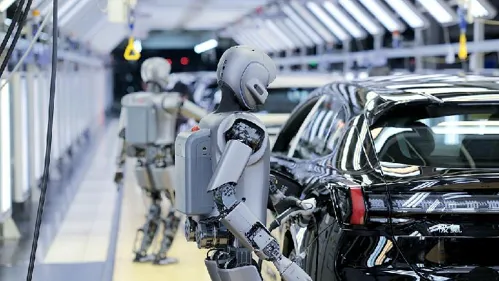
China's high-tech manufacturing sector continues to enhance the nation's economic resilience and competitiveness, emphasizing quality, innovation, and collaboration. This ongoing transformation is critical as the country navigates pressures from more traditional industries.
The National Bureau of Statistics and the China Federation of Logistics and Purchasing recently released the manufacturing Purchasing Managers' Index (PMI) for February, which registered at 49.0, reflecting a slight decrease of 0.3 points from the previous month. This decline signals waning momentum in the manufacturing sector, attributed to both seasonal factors and challenges in traditional industries.
Despite the overall dip indicated by the PMI, high-tech manufacturing has exhibited remarkable stability, with its PMI reaching 51.5 in February. This marks a consistent three-month period of remaining within a robust expansion range, reinforcing its status as a vital growth driver in China's manufacturing landscape.
The contrasting data between the overall manufacturing sector and high-tech production presents a clear picture of China's industrial dynamics. While traditional industries face challenges due to decreased demand and seasonal fluctuations, high-tech manufacturing is thriving. This sector benefits from advancements in technology, high-end equipment, and next-generation information technology, establishing itself as a pivotal force in industrial stability and transformation.
Evidence of high-tech manufacturing's potential can be seen in the 2025 industrial economic data, which highlights an impressive 9.4% year-on-year growth in the added value of high-tech industrial enterprises. This growth rate significantly outpaces the average for all industrial entities, illustrating a rising influence in the broader industrial context.
The industrial structure has evolved into a diversified framework, with the added value of equipment manufacturing experiencing a 9.2% increase and digital product manufacturing rising by 9.3%. Notably, intelligent products like service robots and mobile communication equipment have seen double-digit growth, further reinforcing high-tech manufacturing's expanding export capabilities and competitive stance in the global supply chain.
Corporate profitability within the high-tech sector also shows promising trends, as profits rose by 13.3% in 2025, surpassing overall industrial profit levels. Such financial performance underscores the high added value inherent in technology-heavy industries, alongside a notable increase in research and development investment, which grew by 8.1% and constituted 2.8% of the national GDP.
As the world's largest manufacturing power, China is experiencing a significant transition from traditional growth models to a focus on high-tech manufacturing, which is characterized by higher quality, efficiency, and speed of development. This transition plays a crucial role in China's aim to evolve from merely being a substantial manufacturing entity to becoming a leader in manufacturing excellence.
Looking ahead, the commencement of the 15th Five-Year Plan period in 2026 outlines strategic initiatives targeting emerging industries such as integrated circuits, aerospace, and biomedicine. These steps, alongside an adopted "AI + Manufacturing" initiative, emphasize the integration of advanced technologies and large-scale industrialization, fostering further innovation.
Moreover, China's commitment to fostering a favorable environment for foreign investment in high-end manufacturing highlights its strategy to enhance the global competitiveness of its industrial sectors. This approach aims to stabilize international markets and reinforce cooperative ties, ultimately contributing to a more resilient global economy.
The fluctuations observed in the manufacturing PMI reflect an important phase of China's ongoing efforts toward high-quality economic development. The high-tech sector is positioned to drive advancements and maintain momentum amid economic cycles, ensuring that as traditional growth engines slow, it provides the leverage necessary for long-term economic stability.
Read These Next
Evaluating Dongguan Mingpu's Guarantee Strategy Risks and Rewards
Analysis of Dongguan Mingpu's operational changes emphasizing significant guarantees for subsidiaries, assessing potential financial risks and rewards.
Thailand's Commerce Ministry Sees Inflation Rise in March
Thai Commerce Ministry warns rising oil prices will accelerate inflation in March, impacting the economy and cost of living.
RUSAL Board Meeting: Key for Transparency and Strategy
Analysis of United Company RUSAL's board meeting announcement highlighting the importance of corporate governance, financial transparency, and associated risks for investors.