

Chinese EVs Transform Global Automotive Industry with Strategic Planning
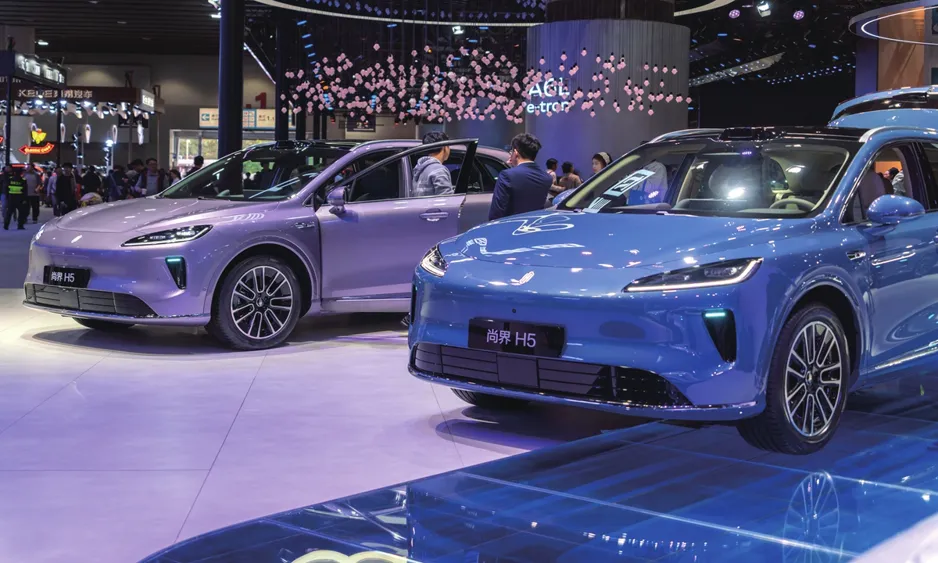
Chinese new-energy vehicles, once labeled as low-quality by Western media, have undergone a remarkable transformation, now heralded by outlets like Semafor that state, 'Chinese EVs can save Detroit.' This shift is largely attributed to China's strategic governmental policies and a unified market that drives innovation.
What is behind this substantial evolution in China's electric vehicle industry? Experts and industry insiders highlight that this transformation is a result of meticulous scientific planning and its steadfast execution, the advanced maturity of industrial chains, and substantial gains in China's high-level opening up, each element invigorating the momentum for high-quality economic development.
Throughout history, we have seen that what many consider a 'miracle' often arises from a deep understanding of historical opportunities paired with strategic foresight. The Communist Party of China has long employed Five-Year Plans as a strategic tool for governance, with the rapid ascent of the NEV sector exemplifying how effective planning can guide a formerly trailing industry toward global leadership.
The long-term commitment to consistently executing a solid blueprint has established a stable policy foundation and a conducive market atmosphere for NEV development, enabling Chinese automakers to outpace international rivals in the transition toward electrification, refining a comprehensive ecosystem across the industrial spectrum.
This landmark achievement transcends the automotive sector, showcasing the potential that emerges when an active government collaborates effectively with a dynamic market under a long-term national agenda. As some Western nations continue to view industrial competition through outdated frameworks of subsidies and tariffs, China intentionally fosters an environment conducive to sustained industrial expansion.
In May 2014, during a visit to SAIC Motor, Xi Jinping underscored the vital role of NEVs in China's ambition to evolve from an automobile power to an automobile powerhouse. This vision prompted the Chinese government to set in motion an array of supportive policies.
The implementation of these guidelines marked a critical development, establishing a comprehensive policy framework that detailed numerous requirements and plans for the NEV sector. Consequently, the market stabilized, allowing for remarkable growth, as seen in 2015 when NEV sales in China soared past 330,000 units.
With policies in place that facilitated wider capital entry into the market, including the lifting of foreign joint venture shareholding limits, Tesla broke ground on its Shanghai Gigafactory, setting the stage for a transformative role within the Chinese NEV landscape.
Initially, Tesla dominated the global NEV market, but the establishment of the Shanghai Gigafactory, Tesla's first facility outside the United States, has become a significant feature of this narrative, achieving an impressive production capacity of over 900,000 vehicles annually.
The prominent success of the Shanghai plant not only bolstered Tesla's strategic growth in the Asia-Pacific region but also exemplified how China plays a pivotal role in supporting the development trajectory of global EV manufacturers.
Read These Next
Jiangsu Lianrui's Strategy to Hedge Currency Risks
This commentary analyzes Jiangsu Lianrui New Materials Co., Ltd.'s annual report, focusing on its expansion of overseas operations and proactive hedging strategies, while examining the inherent risks and broader economic trends.
China NEV wholesale set to grow 13% to 173 million units by 2026
China's wholesale sales of new-energy vehicles expected to grow 13% this year, driven by advances in self-driving tech and global expansion.

Fitch Warns Saudi Banks May Stop Growth Amid Iran Conflict
Fitch warns that ongoing Iran-Saudi conflict could stall Saudi banking growth and dividends, raising concerns for regional stability.